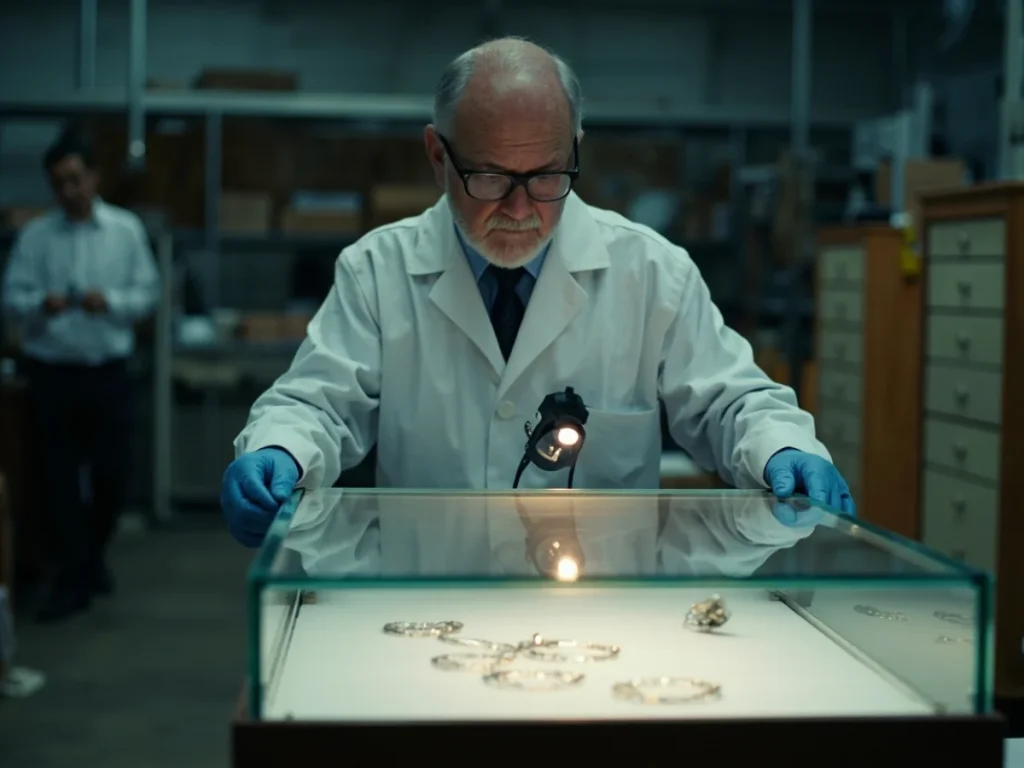
A well-lit display cabinet sells the product before a customer reads a single price tag. That is why most jewelry stores, watch boutiques and museums have moved to LED lighting — it runs cool, draws little power and renders colors accurately. But LED is not permanent. A quality LED strip rated for 50,000 hours may still lose 30% of its brightness in half that time if it is packed into a sealed cabinet with no airflow. The rated lifespan assumes ideal conditions: stable current, moderate temperature and a clean lens. Real display cabinets rarely meet all three. This article covers what actually shortens LED life in display cabinets and the concrete maintenance routine that keeps showcases looking sharp for years.
Why Rated LED Hours Do Not Match Real-World Performance
LED manufacturers rate lifespan using LM-80 and TM-21 data, which measure lumen depreciation rather than outright failure. A chip rated L70 at 50,000 hours still produces output at that point, just at 70% of its original brightness. Two factors dominate in display cabinets:
- Junction temperature. Every 10°C rise above the rated test temperature can cut LED life by roughly half. A strip pressed against a solid wood panel with no ventilation easily runs 15-20°C hotter than one with a 10 mm air gap.
- Drive current. Running a strip at 12V when the driver output drifts to 13.5V increases current and heat, accelerating depreciation. Cheap unregulated drivers are a common culprit.
In practice, a well-designed cabinet with an aluminum channel, air gap and regulated driver can hold 80% brightness for 40,000+ hours. A poorly designed one may start dimming visibly within 12,000 hours — about 3-4 years of 10-hour daily retail use.
Signs Your Cabinet Lighting Needs Attention Now
LED failures are rarely sudden. Watch for these early signals before the cabinet looks tired:
- Color shift. Whites drifting toward blue or green usually means phosphor degradation, often from heat exposure.
- Uneven brightness. One section dimmer than the rest points to voltage drop along the strip, a loose connector or a failing driver channel.
- Flicker or stutter. Almost always a driver or dimmer compatibility problem, not the LEDs themselves.
- Dead segments. A single dark chip breaks the series circuit and takes the whole segment with it.
- Yellowing diffuser. Acrylic lenses discolor from UV and heat, scattering light and reducing apparent brightness even when the LEDs are fine.
A Practical Maintenance Cycle for Display Cabinet LED Systems
Retail lighting does not need constant attention, but it does need a schedule. This cycle works for most jewelry and watch showcases:
- Monthly: Dust lenses with a dry microfiber cloth. Dust on a diffuser can cut light output by 5-10% and traps heat.
- Quarterly: Check every connector and end cap. Thermal cycling loosens push-fit connectors — reseat them and confirm no browning on the solder pads.
- Every 6 months: Vacuum the driver compartment and confirm ventilation slots are clear. A clogged grille on a 12V driver can raise internal temperature by 10°C.
- Annually: Measure driver output voltage with a multimeter. If it has drifted more than 5% from spec, replace the driver before it damages the strip.
- Every 3-5 years: Evaluate lumen output against a photo taken when the cabinet was new. If output has dropped visibly, plan a strip upgrade — LED technology improves on roughly a 5-year cadence, so replacement often means better color rendering for the same cost.
Design Choices That Extend LED Lifespan
Maintenance starts at the design stage. If a cabinet is still being specified, these choices add years to the lighting system:
Use aluminum channels instead of bare adhesive strips. The channel acts as a heatsink and can reduce junction temperature by 10-15°C, which is the single biggest lever on LED lifespan. It also makes future strip replacement a 10-minute job rather than a cabinet disassembly.
Leave an air gap. A 10-15 mm clearance between the LED channel and the cabinet back panel allows convection. Fully sealed enclosures need a low-voltage vent or a heat-dissipating back panel; otherwise the LEDs are effectively cooking themselves.
Choose constant-voltage drivers with a margin. Size the driver at least 20% above the strip load. Drivers running at 90%+ capacity run hot and fail earlier than the LEDs they power.
Match dimmers to the driver. Trailing-edge or 0-10V dimming systems must be compatible with the driver’s input. Mismatched dimming is one of the most common causes of premature LED failure in retail environments.
Go for 4000K-5000K neutral whites for diamonds and gemstones and 2700K-3000K warm whites for gold. Higher color-rendering (CRI 90+) LEDs cost slightly more but maintain color accuracy far longer, which matters for jewelry where subtle tints change perceived value.
When to Repair vs. Replace Cabinet Lighting
Replacing a single failed LED chip is rarely economical. The labor usually exceeds the part cost, and the surrounding chips are the same age and likely close to failing. Better rules of thumb:
Replace the strip, not the chip, if one segment has failed and the rest is over 3 years old. Replace the driver first if the entire strip is dim or flickering — drivers fail more often than LEDs in display cabinets. Replace the whole lighting module if the strips are over 5 years old, the diffuser has yellowed, or you are upgrading to higher CRI. Customers notice the difference immediately, and the resale value of a well-lit case often justifies the upgrade alone.
For museum and high-end watch cabinets, keep a small stock of spare strips and drivers matched to the original specification. Color consistency between batches varies, so a 5-year-old strip may not match a new one even from the same supplier.
If you are specifying new display cabinets or updating an existing store, Libafang Showcase builds custom LED-lit showcases for jewelry, watch and museum retail, with lighting modules designed for serviceability. A well-engineered cabinet makes display cabinet LED maintenance a matter of quarterly dusting rather than annual rewiring — and that is the point.
Request a free design consultation and quote to see how our lighting layouts perform in real retail conditions.