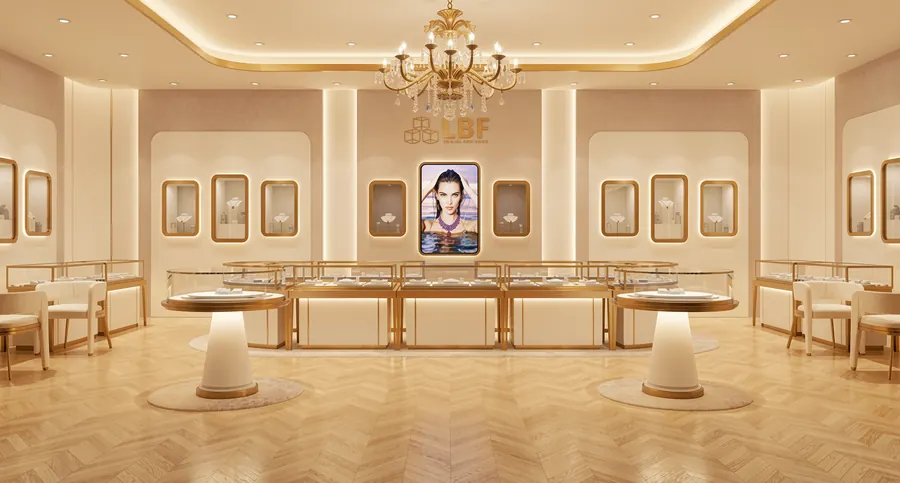
In a cosmetics store, the shelf is not storage — it is the salesperson that never takes a break. The average shopper spends 6 to 8 minutes in a beauty store, and roughly 70% of purchase decisions are made in that final metre before the counter. If your cosmetics retail display forces a customer to bend, squint, or hunt for a shade, you lose the sale to the shelf, not to the brand. The good news: display performance is engineering, not guesswork. Shelf heights, depth, lighting temperature, unit capacity and replenishment rhythm can all be specified to numbers, tested, and repeated across every door in your chain. This article sets out the rules that matter most, with figures you can actually put into a drawing or a purchase order.
Why the Cosmetics Shelf Behaves Differently from Any Other Retail Fixture
Beauty products are small, high-margin, high-variety and heavily tactile. A single lipstick line can carry 30 shades; a foundation range can run to 40 SKUs across six undertones. That combination breaks normal retail shelving logic in three ways.
First, density without confusion. You need many facings visible at once, but the customer must still read the range instantly. Second, self-service with a test ritual. Roughly 60–70% of beauty shoppers test a product before buying, which means the display must support picking up, opening, comparing and putting back — without the shelf turning into a mess by 3pm. Third, restocking speed. A busy 80 m² beauty store can move 400–700 units a day; if a fixture takes more than 90 seconds to replenish per shelf, your staff spend the shift refilling instead of selling.
Six Shelf Numbers That Decide Sell-Through
These are the specifications that most consistently correlate with strong performance in cosmetics fixtures. Adjust by market and brand tier, but start here.
- Primary shelf height: 1,200–1,450 mm from floor. This band sits at natural eye-to-hand level for a 1,650 mm shopper and typically produces the highest pick rate on the fixture. Treat everything above 1,600 mm as brand theatre or backup stock, not as a primary selling zone.
- Shelf depth: 250–350 mm. Deep enough for a 30-SKU shade block in two rows, shallow enough that front-row products are not permanently hidden. Anything past 400 mm creates a dead back zone and encourages overstock.
- Shelf pitch (vertical gap): 180–250 mm. Sized to your tallest standard unit — usually a 150 mm mascara or a 170 mm serum bottle — plus 30 mm of hand clearance.
- Lighting: 3,000–4,000 K with CRI above 90. Colour-critical categories such as foundation and lipstick need a high colour-rendering index; below CRI 85, shades read wrong and returns climb. Aim for 500–800 lux on the product face without visible glare on glossy packaging.
- Front-edge lip: 8–12 mm. Enough to stop round bottles rolling forward, low enough not to hide the product label from a standing shopper.
- Load rating: 15–25 kg per shelf. Cosmetic products are light, but tester trays, acrylic risers and glass shelves add up fast.
Organise by Decision, Not by Supplier
The most common merchandising mistake in cosmetics retail display is mirroring the purchase order: brand A block, brand B block, brand C block. Shoppers do not shop that way. They shop by job — “I need a base”, “I need something for dry lips”, “I am restocking my mascara”.
Group by function first (face, eyes, lips, nails, skincare, tools), then by brand within the group, and finally by shade or variant in a logical gradient from light to dark. This cut reduces search time noticeably: in practice, shoppers find a target shade in 15–25 seconds on a well-organised fixture versus 40–60 seconds on a brand-siloed one. Category-first, brand-second also lets a store rotate brands without rebuilding the entire planogram.
Reserve the top 300 mm of the fixture for visual storytelling — campaign imagery, new-launch shelves, seasonal colour — and keep permanent, high-frequency SKUs in the lower and mid zones where hands actually travel.
Materials and Build: What Survives a Beauty Floor
Cosmetics counters are hostile environments. Spilled foundation, acetone, alcohol-heavy sanitiser and daily wiping will destroy a poor finish within 12 months. Specify for the chemistry, not just the look.
Powder-coated steel frames with 60–80 micron coating resist chipping and clean easily; electroplated or brushed stainless steel suits premium watch-and-beauty adjacencies but shows fingerprints, so budget for daily polishing. Shelf surfaces should be either tempered glass with polished edges (8–10 mm for spans over 900 mm) or high-pressure laminate with an abrasion-resistant face. Avoid raw MDF edges and untreated aluminium — both stain permanently after one leak.
For testers, plan a dedicated tester shelf or tray per category, positioned at the same height as the sellable product so the shopper’s hand learns the location instantly. Tester zones take 3–4 times the wear of sellable zones; make them replaceable inserts rather than fixed structures. Add adjustable shelf pins at 25–32 mm increments so a planogram change takes minutes, not a workshop visit.
Lighting, Mirrors and the Small Details That Lift Conversion
Beauty is bought in a mirror. Position at least one mirror per 2–3 metres of cosmetics retail display run, at 1,400–1,600 mm to the mirror centre, with lighting on the customer’s face rather than the fixture. A customer who sees her own face while holding the product is far closer to purchase than one reading a box.
Keep sightlines clear: no shelf should block the next bay’s hero product. Leave 900–1,200 mm of aisle in compact stores and 1,400–1,800 mm in flagship layouts. Price and shade information should sit within 20 degrees of the shopper’s natural downward sightline — typically a rail at the front edge rather than a tag buried behind the product. And build in a visible restock path: drawers below 600 mm, or a service corridor behind, so staff refill without stepping into the shopper’s space.
Finally, treat the fixture as a system. One bay design, repeated with modular widths of 600 mm and 900 mm, lets you fit any floor plan, expand a range without a redesign, and keep spare parts to a single shelf type. Stores that standardise on a modular cosmetic display typically cut fixture maintenance costs and reduce new-store fit-out time meaningfully compared with one-off joinery.
Getting the Spec Right the First Time
Before you order anything, measure four things: your 20 best-selling SKUs (height, width, depth), your tallest packaging, your maximum shade-count per line, and your real replenishment frequency. Those four numbers determine shelf pitch, bay width, number of facings and how much backup storage each fixture needs. A cosmetics retail display designed around actual SKU data will out-sell a beautiful fixture designed around a render every time.
Libafang Showcase Co., Ltd. manufactures custom display showcases and shelving for jewelry, watch, museum and beauty retail, exporting to more than 30 countries from our Guangzhou facility. If you are planning a new beauty store, a counter refresh or a multi-door rollout, our team can turn your SKU list and floor plan into a production-ready fixture specification.
Request a free design and quote today — send us your product dimensions, store layout and target budget, and we will return a proposal with shelf configuration, materials, lighting and lead time.