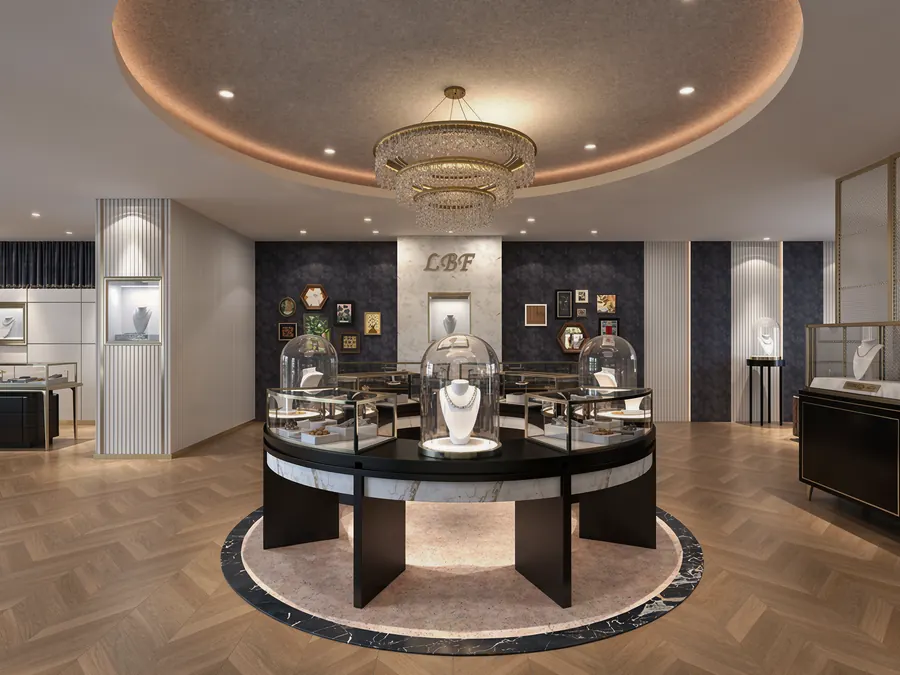
Choosing the right jewelry display deck material is more than an aesthetic decision. The surface your jewelry rests on interacts with lighting, protects delicate finishes, and silently communicates your brand’s quality. Two materials dominate the market: velvet and microfiber (often called faux suede). Both create a soft, luxurious look, but they perform very differently over years of daily use. This guide explains the trade-offs with concrete numbers so you can specify the right deck for your next collection or store fit-out.
What Exactly Are Velvet and Microfiber?
Velvet is a woven fabric with a dense, upright pile, traditionally made from silk, but today almost always polyester or a polyester-viscose blend for display use. A typical display-grade velvet has a pile height of 1.5 to 3 mm. Its density comes from a high yarn count and a tight weave. This structure absorbs light, producing that deep, rich color saturation most jewelers associate with luxury.
Microfiber, by contrast, is a non-woven or knitted fabric made from ultra-fine synthetic fibers — often less than 0.7 denier, roughly 1/100th the thickness of a human hair. It has a suede-like surface with a much shorter, denser pile, usually under 1 mm. Many manufacturers add a brushed finish to create a velvet-like hand feel. Because the fibers are so fine, microfiber repels dust and resists crushing far better than traditional velvet. In jewelry display, microfiber is often laminated to a rigid substrate like MDF or acrylic, whereas velvet may be stretched over foam or board.
Performance Comparison: Shine, Durability, and Cleaning
The practical differences show up quickly on a busy sales floor. Here is how the two materials stack up across four key criteria:
- Glare and color depth: Velvet absorbs 90%+ of direct light, which darkens colored stones and boosts contrast for diamonds. It can make a pale blue topaz look richer. Microfiber is slightly reflective; it shows stones more truthfully but can create minor hot spots under 4000K spotlights.
- Durability: Under standard abrasion testing (Martindale), quality velvet often fails between 15,000 and 25,000 rubs. Microfiber typically exceeds 50,000 rubs with minimal pilling. In high-traffic stores, a velvet deck may need replacing every 12–18 months; microfiber decks often last 3–5 years.
- Cleaning: Velvet traps dust between pile fibers and requires weekly brushing or vacuuming. Liquid spills wick into the pile and can leave permanent rings. Microfiber’s tight structure resists spills; most can be wiped with a damp cloth. For stores that rotate inventory weekly, this saves 30–60 minutes of maintenance per display case each month.
- Colorfastness: Both materials fade under UV, but velvet’s open pile exposes more surface area to light. Expect visible fading on a south-facing window display after 6–9 months. Microfiber typically holds color 2–3 times longer under the same conditions.
Cost and Manufacturing Considerations
Material cost per square meter tells only part of the story. Standard polyester velvet costs roughly $4–$9 per square meter, while display-grade microfiber runs $8–$15 per square meter. But labor and replacement change the math. Velvet’s thickness makes it harder to wrap tightly around tight radii — below 10 mm — which raises labor for small trays and ring inserts. Microfiber’s thinner profile allows cleaner folds and faster assembly, reducing per-unit production time by 15–20% on complex shapes.
For a 1,000-unit order of ring trays, that labor difference can offset the higher material cost entirely. However, if your brand identity depends on the specific light-absorbing depth of traditional velvet, the premium may be justified. Some clients use velvet for one-off high-jewelry pieces and microfiber for everyday stock lines — a hybrid strategy that balances perception and practicality.
Which Material Is Right for Your Store or Collection?
There is no universal winner. The decision depends on how the display will be used, how often it will be handled, and what story you want the jewelry to tell. Consider these scenarios:
- High-end bridal or estate jewelry: Choose velvet. The deep pile enhances diamond flash and conveys heritage. Be prepared to replace decks annually in heavy-use cases.
- Fast-turnover fashion jewelry: Choose microfiber. It withstands constant handling, resists makeup and skin oils, and keeps labor costs down.
- Museum or archival displays: Specify a microfiber with a pH-neutral backing. It is inert, won’t off-gas, and its smooth surface won’t abrade ancient metalwork. Velvet’s loose fibers can catch on fragile filigree.
- Traveling trunk shows: Microfiber wins for portability. It resists crushing when packed, while velvet pile can flatten permanently after compression.
One practical tip: request physical samples of both materials under your actual store lighting before committing. The same beige microfiber can look warm under 2700K and grey under 5000K, while velvet’s color shifts are milder.
How Libafang Helps You Specify the Right Deck
As a Guangzhou manufacturer exporting to 30+ countries, Libafang produces custom display decks in both velvet and microfiber, laminated to MDF, acrylic, or foam cores. We supply swatch books with 40+ standard colors and can match Pantone references for brand consistency. Our engineering team tests every deck material for abrasion, colorfastness, and adhesive compatibility before production. Whether you need 50 trays or 5,000, we help you balance cost, durability, and the luxury feel your customers expect.
Final Takeaway and Next Step
Velvet delivers unmatched color depth and tradition; microfiber offers superior durability, easier cleaning, and lower long-term cost. The best choice depends on your price point, traffic, and how often you refresh displays. If you are sourcing new cases or updating an existing store, get a free design and quote tailored to your collection. Libafang will recommend the ideal jewelry display deck material, provide samples, and deliver within your timeline. Contact us today to start your project.