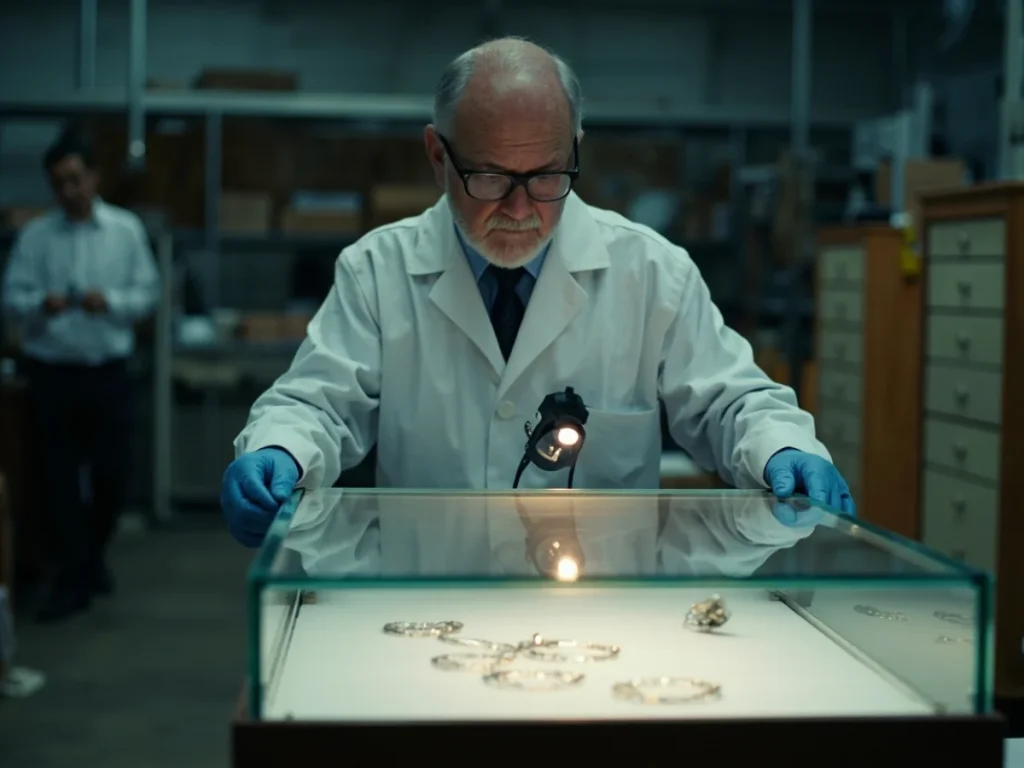
Jewelry counters are the most targeted fixtures in a retail store. Industry loss-prevention surveys consistently place display cases among the top three entry points in smash-and-grab and after-hours theft. A good jewelry showcase locking system is therefore not an accessory — it is the load-bearing security layer that decides whether a thief needs four seconds or four minutes. The difference matters: police response times in dense commercial districts average 5–10 minutes, and most grab-and-go crews abandon a case after 60–90 seconds of resistance. This guide breaks down the lock families, materials, and specification numbers you should know before ordering custom showcases.
Types of Locks Used in Jewelry Showcases
There is no single best lock. The right choice depends on who opens the case, how often, and what threat you are defending against. In practice, most manufacturers — including Libafang — work with four main families.
- Cam locks (keyed): The default for sliding glass and hinged doors. A 19 mm or 25 mm cylindrical cam lock with a 90-degree turn is inexpensive and serviceable. Weak point: single-point locking and visible keyways.
- Plunger and push locks: Common on drawers and lift-up trays. They offer a cleaner front face with no protruding cylinder, which reduces snagging and looks better on high-gloss finishes.
- Ratchet and multi-point locking bars: Used on full-vision tower cases. A single key turn drives a bar or ratchet that engages the frame at two or three points, so even if one anchor fails the case stays shut.
- Electronic and RFID locks: Increasingly used in multi-store groups where key control is a real problem. Audit trails, time-limited access codes, and remote revocation of lost credentials justify the added cost on flagship counters.
Many high-value configurations combine two of these: an electronic lock on the main sliding door plus a mechanical cam lock on the lower storage drawer.
Security Ratings and What They Actually Mean
Lock hardware is rated under standards such as EN 1300 (grades A, B, C, D, E), ANSI/BHMA, and in some museum tenders, specific resistance timings. Grade A offers roughly one minute of resistance to basic tools; Grade C and above push into 5–15 minutes against drills and picking. For retail jewelry, a practical benchmark is Grade B or better on the main compartment, especially where loose stones or watches over USD 5,000 are displayed.
Look beyond the lock itself. A Grade C cylinder installed into a 0.8 mm steel panel is a weak system. Ask for the whole assembly specification: lock grade, cylinder material (hardened steel or zinc alloy), mounting plate thickness, and whether the strike is reinforced. A useful rule of thumb is that the perimeter hardware should be at least as strong as the lock you are paying for.
How Locks Integrate With Glass and Frame Construction
Glass thickness changes everything. Standard 6 mm tempered glass is not the same security platform as 10 mm laminated glass with a PVB interlayer. Tempered glass shatters into small cubes; laminated glass holds together after impact and typically needs 20–40 seconds of repeated force to create a usable opening. Pair laminated glass with a ratchet lock and a hardened steel frame, and you materially change the attack timeline.
Frame gaps matter too. A 3 mm gap between the sliding panel and the frame is a picking and shimming opportunity. Reputable makers design to 1–2 mm clearance with overlap lips, and they mount the lock into a welded or riveted steel insert rather than directly into wood or MDF. If your current showcase has a cam lock screwed into a particle board panel, that is the first thing to replace.
Key Control, Electronic Systems, and Daily Operations
Most retail losses are not sophisticated attacks — they are key-control failures: copied keys, shared codes, or a case left unlocked during a fitting. Electronic locks solve a surprising share of this. Basic models cost 3–6 times a mechanical cam lock, but they log every open event, restrict access by employee and time window, and eliminate the “who has the key?” problem. On a 40-case store floor, that logging alone often pays for itself within a year.
For mechanical systems, follow three operational rules that cost nothing:
- Assign keyed cylinders to a restricted keyway profile so keys cannot be copied at a local locksmith without authorization.
- Number each lock and keep a signed key register with a name against every key.
- Re-key or rotate cylinders whenever a staff member with access leaves the company.
If your cases are supplied by a manufacturer, ask whether restricted keyway cylinders and numbered keys can be included as a standard option. It is a small line item on the quote and a large reduction in risk.
Specification Checklist Before You Order
When briefing a manufacturer on a jewelry showcase locking system, bring these decisions to the table. They affect cost by 15–30% and cannot be retrofitted cheaply once the cases are built.
- Lock type per compartment: main sliding door, side door, lower drawer, lift-up tray.
- Security grade target: Grade A, B, or C, and whether any client contract mandates a specific standard.
- Mechanical or electronic, and if electronic, whether you need cloud logging or local-only access control.
- Number of keyed-alike groups. A 30-case store usually wants 4–6 master groups, not 30 unique keys.
- Glass specification: 6 mm tempered, 8 mm, or 10 mm laminated with PVB interlayer.
- Frame material and lock mounting substrate: steel insert, aluminum extrusion, or wood.
- Whether an alarm contact or glass-break sensor loop is required, and where the cable exits the case.
Get these written into the drawing set. A showcase that looks correct on a rendering can still fail an insurance inspection if the lock grade, glass build-up, and frame substrate are not specified on paper.
Matching Security to the Value on Display
Security should scale with the risk, and over-specifying every case wastes budget. A reasonable tiering for jewelry retail: costume and fashion lines work fine on Grade A cam locks with 6 mm tempered glass; mid-range gold and silver warrant Grade B multi-point or ratchet locks with 8 mm glass; loose diamonds, high-value watches, and museum loans demand Grade C or electronic locks with laminated glass and reinforced frames. Applying this tiering across a store typically keeps the security upgrade at 5–10% of total fixture cost while protecting the pieces that would actually hurt to lose.
Because this is the part most retailers under-brief, the most useful thing a manufacturer can do is put the lock, glass, and frame decisions on one drawing set and review them against your insurance and loss history. Libafang builds custom display showcases for jewelry stores, watch boutiques, and museums, exporting to more than 30 countries, and we can match the locking system to your exact threat model and operating workflow.
Ready to specify your next batch? Share your case list, glass preference, and security tier, and we will return a free design and quote with lock types, keying plan, and shipping schedule included.