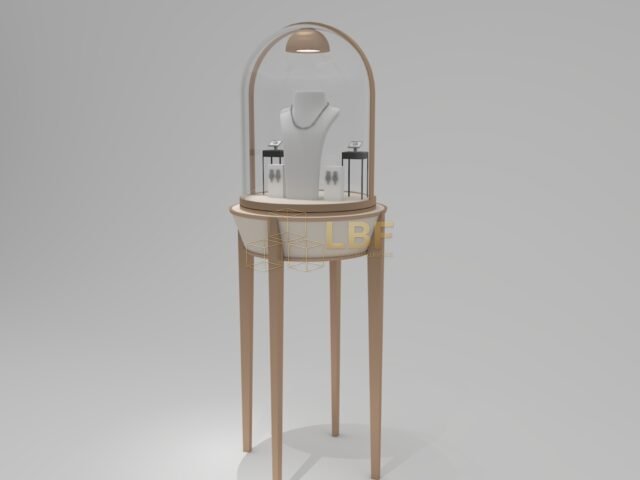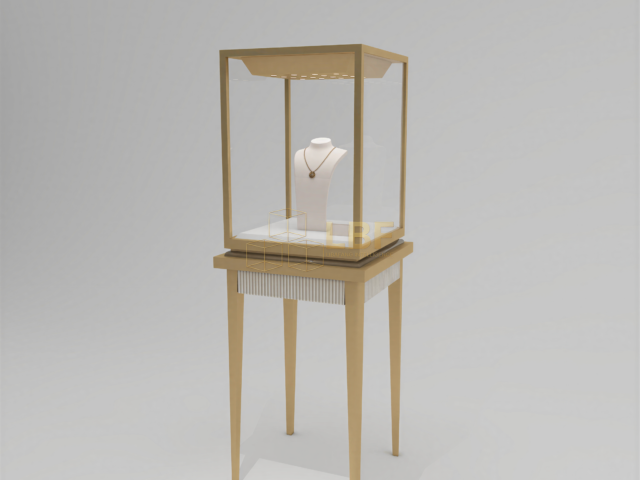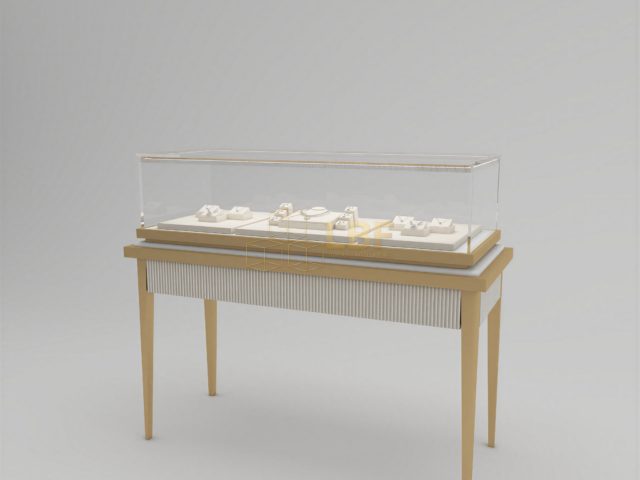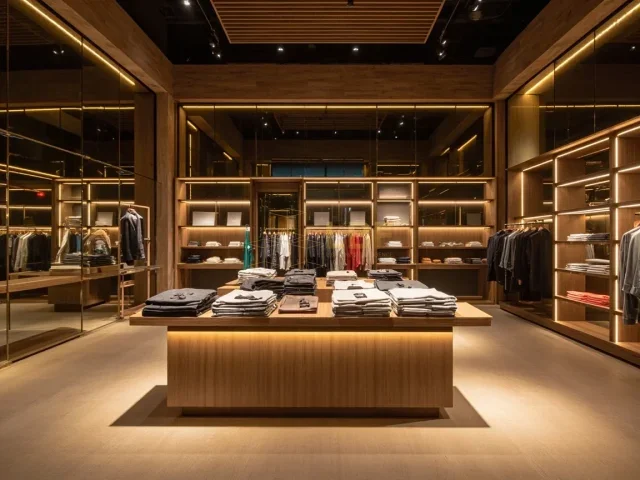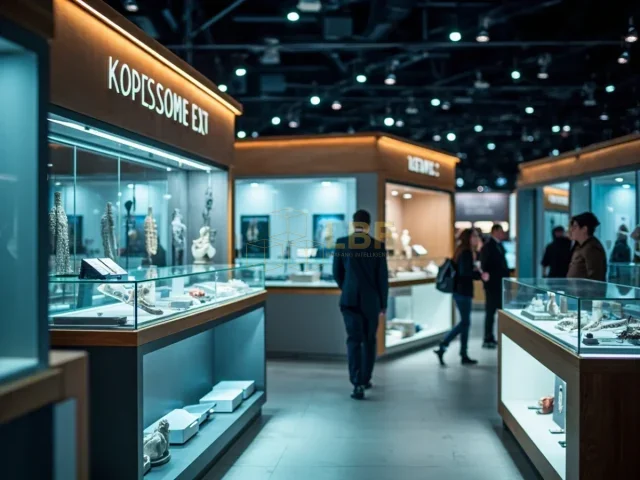
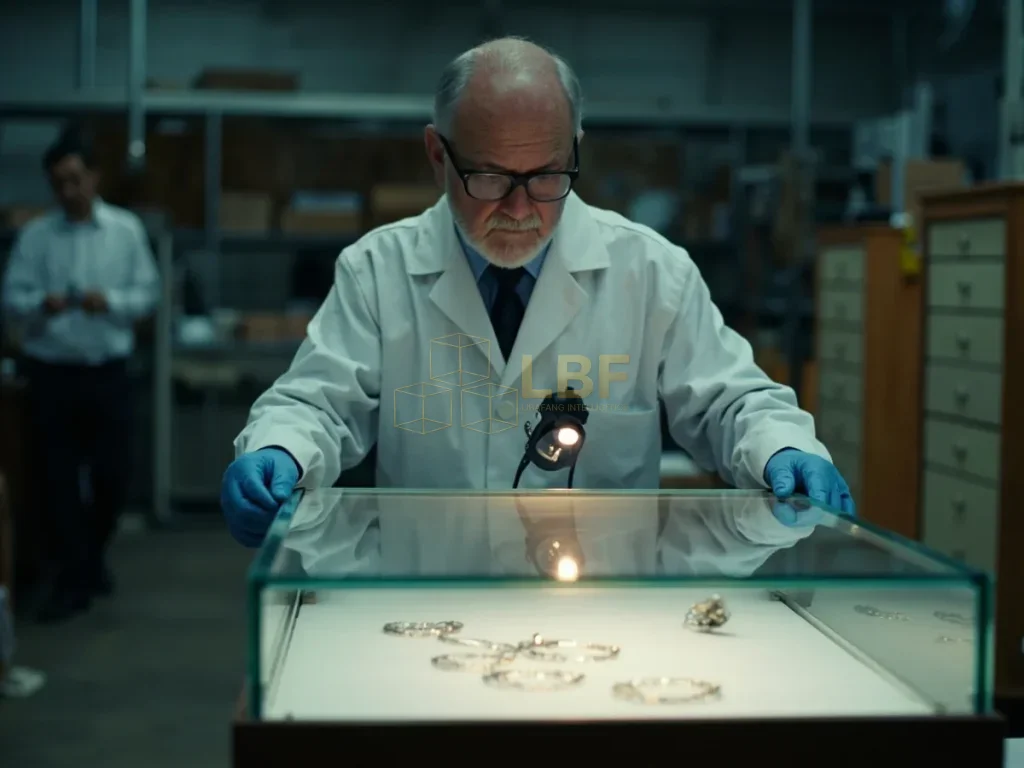
Specify the wrong glass edge and a display cabinet looks cheap from two meters away. Buyers notice edge quality before they notice the miter joints, the lacquer or the interior lighting. By that point, the paperwork is signed and the freight is booked, so edge choice has to be decided early in the design process. If you are sourcing luxury display cabinet glass details for a jewelry store, watch boutique or museum vitrine, you need to know what a polished flat edge, a ground bevel and a frameless butt-joint actually mean for cost, light transmission and long-term maintenance. This guide sets out the trade-offs we see when producing cabinets for export to more than 30 countries.
Why glass edges matter more than glass type
Many buyers spend their time on glass grade — ultra-clear low-iron, laminated, tempered — and treat the edge as an afterthought. But the edge is where light fractures. A raw cut edge looks green or gray, scatters about 15-25% of the light that hits it and shows every dust particle. A polished edge reflects cleanly, keeps the showcase looking precise, and makes the transparency visual effect work the way it should.
Poor edge finishing causes threepractical problems: hazy reflections when the LED strip hits the panel, an unpleasant green cast at the joint, and scratches on adjacent panels during cleaning. On a 900mm-tall tower display case, visible edge quality matters as much as interior lighting.
Framed edges: profiles, fit and durability
A framed edge seats the glass panel inside a metal or wood extrusion. In luxury retail this usually means an anodized aluminum alloy profile — silver (similar to anodized aluminum), dark bronze, or custom powder-coat — with or without a narrow face bead. Frame widths in custom cabinetry usually range from 6mm to 20mm.
Framed construction is the safer choice in certain situations:
- High-traffic perimeter cases where panels may be bumped, e.g. near entrances or under a customer service counter.
- Larger panels above roughly 2.0m², where a frameless design needs thicker glass (8mm to 10mm rather than 6mm) and a reinforced structural plan.
- Climate stress: frames hide expansion differences between tempered glass and wood, which matters in dry air or heated showrooms.
- Tolerance. A 2mm frame detail absorbs a 1mm panel variation invisibly; a frameless butt seam will show it.
The trade-off is visual mass. A face bead reduces the transparent area by 5-10% on small watch boxes and can obstruct sight lines, especially at the vertical edges where frames break up the outline. Choose narrow, crisp profiles and ensure the color and finish are consistent if you buy frames from the same workshop that supplies the glass.
Frameless edges: polished flat, beveled and mitred
Frameless designs come in three finishes that read very differently.
Polished flat edges are machined with a grinding and polishing line, usually diamond wheels and then cerium oxide polish, producing a clean glass edge with a 1-2mm arris. Cost is moderate, about USD 10-20 per square meter for typical panels in mainland China. Visual verdict: contemporary and thin, and it makes the frame disappear.
Beveled edges carry a wide decorative chamfer, commonly 20mm to 25mm at 45°. The bevel picks up interior LEDs and makes the case feel architectural. It adds roughly 25-40% to edge processing cost per linear meter and increases pack size. In watch boutiques, a 20mm bevel typically reads as period or classic; a narrow 10mm bevel sits better in modern interiors.
Mitred vertical corners genuinely remove frames, joining panels at 45° with a clear or structural adhesive (gaps of 0.3-0.5mm are typical). This is the appearance that most jewelry retailers photograph for social media. It adds cost and engineering; laminated glass is advisable where glass-to-glass joints carry any load.
Optical performance: what you actually see
Frameless polished flat edges produce cleaner reflections. Framed profiles can introduce a thin dark line that helps draw the eye along a case, but also can create multiple reflections that make small watch dials harder to read.
Use low-iron ultra-clear glass in both cases; 15-20% lower remnant color than standard float glass makes polished edges look icy rather than green. Light transmission is comparable. The single biggest visual difference is edge color: ultra-clear polished edges read nearly colorless even on a 10mm panel; ordinary float glass on a 10mm edge looks green at two meters.
Badd points for either option: dirty edges. Clean with a lint-free cloth and 50% diluted isopropyl alcohol. Framed profiles hold dust in the rebate; specify a removable (or pressure-fit) panel or a sealed gasket if the client has no cleaning service.
Cost, shipping and maintenance at a glance
Typical custom-cabinet cost increases are in the region of USD 150-450 for retail-sized unit. Frameless polished flat generally wins on aesthetics and perceived luxury; frames win on risk and volume. Precision matters (glass thick 6mm to 8mm) for structural and edge polish.
Shipping heavier is a real consideration: a 600 x 1,800 mm frameless cabinet travels in wooden crate, retail built, which raises delivered cost. Compare landed cost, not factory cost.
Matching edge style with lighting and materials
Frame glass in dark bronze if interior lacquer is warm wood and background is shallow; this hides green tints and softens reflections. Beveled edges show lighting quality: a 3000K LED strip with 95 CRI illuminates the bevel cleanly. Use fewer fixtures with 120° beam optics on a polished frameless panel. Lay out the edge at the lighting test stage; edge change after tooling is one of the costliest late changes.
Libafang produces display cabinets with both framed and frameless details for jewelry, watch, museum and high-value retail projects, and can provide glass samples with polished, beveled and mitred edges. Libafang handles drawings and export packing for 30+ markets, so you can compare finishes before committing. Request a free design and quote with your cabinet dimensions and preferred edge finish, and our team will advise on the best 2-3 options for your visual concept and budget.