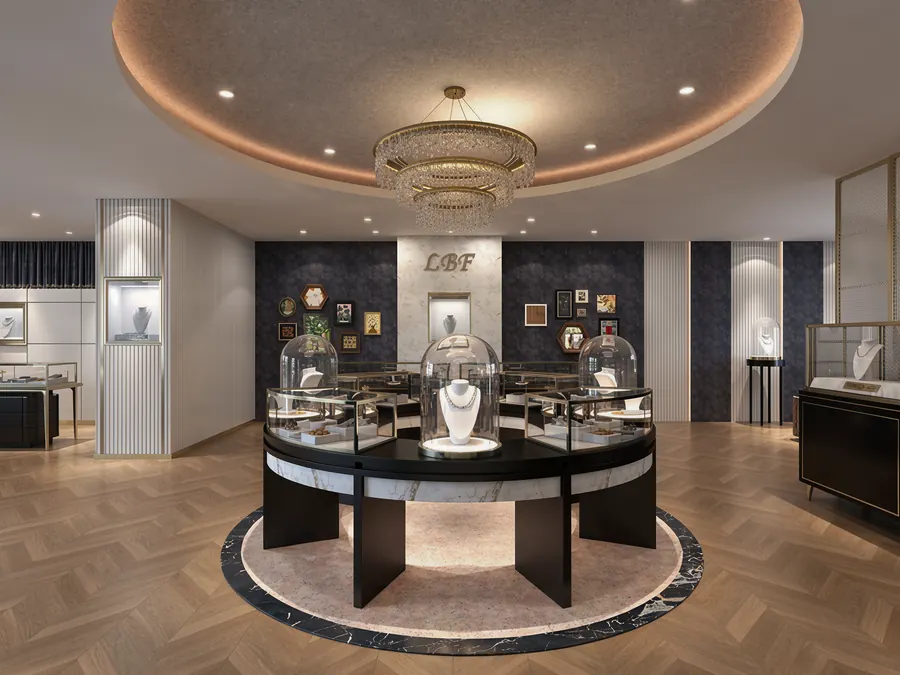
Necklace display cabinets are more than furniture—they are silent salespeople. The wrong display height forces customers to stoop or squint; poor bust spacing creates clutter; a back panel that clashes with your brand undermines the jewelry. In this guide, we break down the three most overlooked specifications—display height, bust spacing, and back panels—with concrete numbers and practical advice drawn from decades of manufacturing experience at Libafang. Whether you run a jewelry store, watch boutique, or museum, these guidelines will help you create displays that sell.
Why Display Height Matters for Necklace Cabinets
Display height directly affects how customers interact with your necklaces. The ideal viewing angle is slightly downward—around 15 to 20 degrees below eye level—so customers can see the full drape of a necklace without bending. For a standard counter-height cabinet (about 90 cm / 35 inches), place the top of the bust at 110–120 cm (43–47 inches) from the floor. This puts the necklace at a comfortable viewing height for most adults. For floor-standing cabinets, the primary display zone should be between 90 cm and 150 cm (35–59 inches) above the floor. Anything below 75 cm (30 inches) is best reserved for stock or seasonal items, as it requires customers to crouch.
Adjustability is key. Specify cabinets with adjustable shelf heights—at least 5 cm (2 inch) increments—so you can accommodate different necklace lengths and bust sizes. For children’s jewelry or petite collections, lower the display by 10–15 cm (4–6 inches) accordingly. Remember that lighting placement should complement the height: spotlights angled at 30 degrees from vertical will highlight the necklace without casting shadows on the bust.
Bust Spacing: The Balance Between Density and Elegance
Bust spacing is a common pitfall. Too tight, and necklaces tangle visually; too loose, and you waste valuable space. The rule of thumb: allow a minimum of 15 cm (6 inches) between the centers of adjacent busts for standard necklaces. For Statement pieces or long chains, increase to 20–25 cm (8–10 inches). This ensures each necklace has breathing room and can be viewed individually.
Also consider the depth of the bust. A typical jewelry bust is 10–12 cm (4–5 inches) deep at the base. For cabinets with multiple rows, stagger the heights so that back-row necklaces are visible—raise the back row by 10–15 cm (4–6 inches) or use tiered platforms. If you are displaying necklaces on T-bar stands, spacing can be tighter (10–12 cm / 4–5 inches), but ensure the bars are aligned to create a clean visual rhythm.
Here is a quick checklist for bust spacing:
- Standard necklaces: 15 cm (6 in) between centers
- Statement/long necklaces: 20–25 cm (8–10 in) between centers
- T-bar stands: 10–12 cm (4–5 in) between centers
- Multi-row displays: stagger back rows 10–15 cm (4–6 in) higher
Back Panels: The Silent Seller
The back panel is the backdrop against which your necklaces are judged. It influences perceived value, brand alignment, and even security. Common materials include velvet, suede, leatherette, and wood veneer. Velvet and suede are popular for high-end jewelry because they absorb light and provide a soft, luxurious contrast. Dark colors—navy, charcoal, deep green—make gold and diamonds pop, while light colors like cream or blush work well for silver and colored gemstones. For a modern look, consider brushed metal or mirrored panels, but beware of glare that can obscure the jewelry.
From a functional standpoint, back panels should be removable or hinged for easy access to the cabinet interior. If security is a concern, choose panels with integrated locks or tamper-proof screws. At Libafang, we often recommend a fabric-wrapped panel over a solid backing, as it allows for pinning or hooking without damage. Also, consider the panel’s thickness: 9–12 mm (3/8–1/2 in) is standard for most cabinets, providing stability without excessive weight.
Pro tip: Use a back panel that contrasts with the necklace color. For example, a white gold necklace on a black velvet panel will stand out, while a yellow gold chain might blend into a cream background. Test with sample swatches before committing.
Materials and Construction: What to Look For
Beyond dimensions, the materials and construction of necklace display cabinets impact durability and aesthetics. For the frame, options include MDF with veneer, solid wood, and metal. MDF is cost-effective and stable; solid wood offers a premium feel but requires climate control to prevent warping. Metal frames are modern and secure but can feel cold—pair with warm lighting and fabric interiors. Glass shelves (6–8 mm / 1/4–5/16 in thick) are standard for visibility, but ensure they are tempered for safety. Drawers should have soft-close slides and locks if used for high-value stock.
Lighting is often integrated into the cabinet. LED strips with a color temperature of 3000–4000K provide a neutral, flattering light for jewelry. Avoid cool white (5000K+) as it can make gold look pale. Place lights at the top front of the cabinet, angled backward, to illuminate the necklaces without glare.
Customization: Tailoring to Your Collection
Every jewelry collection is unique, so off-the-shelf cabinets rarely fit perfectly. Customization allows you to optimize height, spacing, and back panels for your specific needs. For example, a boutique specializing in layered necklaces might need taller busts (up to 30 cm / 12 in) and wider spacing (25 cm / 10 in) to prevent tangling. A museum displaying antique pieces may require climate-controlled cases with UV-filtering glass and non-reactive back panels.
When ordering custom cabinets, provide detailed specifications: overall dimensions, number of busts, spacing between centers, back panel material and color, lighting type, and security features. A reputable manufacturer will offer 3D renderings and material samples before production. Lead times for custom cabinets are typically 4–8 weeks, depending on complexity and shipping destination.
Ready to elevate your necklace displays? Libafang Showcase Co., Ltd. specializes in custom necklace display cabinets for jewelry stores, watch boutiques, museums, and luxury retail worldwide. Contact us today to request a free design consultation and quote—our team will help you specify the perfect height, spacing, and back panels for your collection.