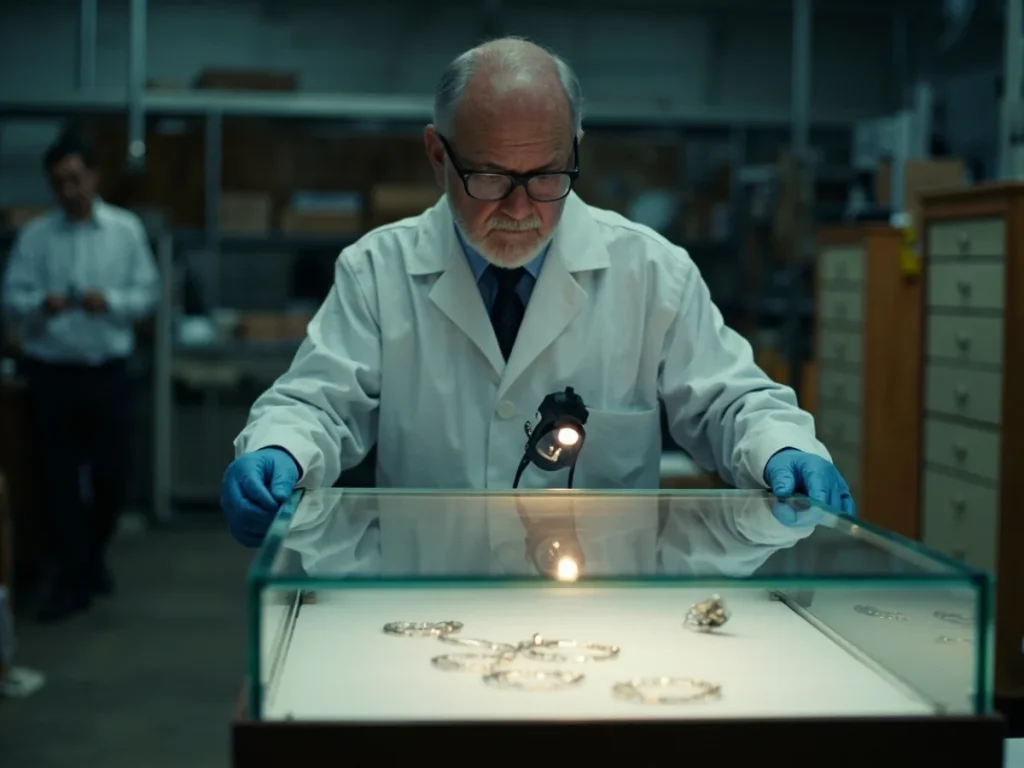
Books are among the most demanding objects to display well. A closed volume sits flat and hides its cover; an open volume shows two pages at once but puts strain on the sewing, the spine lining and the paper at the gutter. Manuscripts add another layer of risk: iron gall ink, flaking pigments and cockled parchment all react to light, humidity and handling. Well-designed museum display cases for books solve these problems together. The case must hold the object at a chosen angle, present the page to the viewer without glare, allow a page change without opening the case to the room, and keep the microclimate stable for months at a time. This article sets out the practical numbers and design decisions we work through with curators and registrars.
Support systems: cradles, wedges and page-holding
The support is the heart of any book case. A book should never be displayed open at more than about 120 degrees unless its binding is known to be flexible; 100–110 degrees is a safer default for tightly bound volumes from the 18th century onward, and 90–100 degrees for fragile manuscripts. The opening angle is set by a pair of rigid or foam wedges cut to the book’s exact thickness at the fore-edge, so the text block rests on its full surface rather than hanging from the sewing.
For books thicker than about 40 mm, a stepped or curved cradle made from archival foam (polyethylene or ethafoam) distributes weight under the spine. The cradle should support the spine’s curve but not force it open. A common mistake is to pack the spine void too tightly, which pushes the text block upward and stresses the joints. Leave 2–3 mm of clearance and let the wedges control the angle.
Page-holding is the detail that most affects whether a case is genuinely usable. Options include:
- Mylar or polyester page strips weighted with small archival clips — effective, low-cost, but visible to visitors.
- Acrylic page-holding bars bent to follow the gutter curve — nearly invisible and suitable for long display runs.
- Gravity or magnetic page tabs concealed behind the page — the cleanest look, but requires bespoke fabrication.
Whichever system is used, the retaining force should never exceed a few hundred grams at the page edge. If the page lifts or buckles when released, the tension is too high.
Viewing angles: matching the object to the visitor
Viewing angle is a compromise between the book’s comfort and the visitor’s sight line. Standard museum practice sets open-book cradles at 30–45 degrees from horizontal. At 30 degrees the page is comfortable for reading and the light falls more gently across the surface; at 45 degrees the text is easier to see from standing height but the pages catch more reflected light. For a case positioned at 900–1100 mm (adult eye level for a standing visitor), 30–35 degrees usually reads best. For seated or child-height viewing at 750–850 mm, 40–45 degrees works better.
Glare control matters more than angle alone. Specify anti-reflective coated glass or acrylic with less than 1% reflection, and check the geometry with a lighting model before fabrication. A ceiling spot at 45 degrees to the case front and 1.5–2 m away will produce a reflection band across the page on a flat glass lid. Deep-set glass — a lid recessed 40–60 mm behind the case frame — lets the viewer see past their own reflection, and is one of the most reliable glare fixes we recommend.
Keep illumination on the page at 50 lux or less for sensitive paper, with a maximum of 50,000 lux-hours per year for the most light-sensitive manuscripts. UV content below 75 µW/lumen is essential; LED sources with UV filtering are now standard.
Page changes without compromising the case
A case that cannot be serviced without disturbing its microclimate will discourage page changes, and a book left open on the same spread for months will fade along a hard line at the gutter edge. Design for change from the start. Options range from simple to sophisticated:
- Hinged or gas-strut lid with a soft-open stop at 70 degrees — cheapest, but the whole case interior is exposed during the change.
- Sliding glass drawer on the case front or side — allows the cradle to be withdrawn on a tray while the main volume stays sealed.
- Double-door airlock — an outer door opens to a small antechamber, the inner door then opens; the main case atmosphere is disturbed minimally.
- Removable cradle cassette — the entire support, book and all, lifts out through a sealed hatch for bench work under controlled conditions.
For long-term loans and high-value manuscripts, option 3 or 4 is worth the additional cost. Record the change interval on the case label — 3 months is typical, and no more than 6 months for fugitive inks. Handle every change with nitrile gloves, and allow the book to rest closed for at least 24 hours between display periods to let the binding relax.
Microclimate, materials and construction
Books prefer stable conditions more than any particular set point. Target 45–55% relative humidity with a daily fluctuation under ±3%, and 18–21°C. A well-sealed case with 1–2 kg of conditioned silica gel can hold humidity for 6–12 months, depending on the case volume and the room’s stability. Seal quality is set by the gasket: silicone or EPDM profiles, compressed to 30–40%, with a magnetic or cam-lock closure that pulls the lid down evenly.
All interior materials should pass the Oddy test or an equivalent emission test. Powder-coated steel, anodised aluminium, archival board and inert foams are safe; avoid MDF, PVC, and fresh solvent-based adhesives. Libafang builds museum display cases for books with sealed gasket systems, conditioned silica compartments and removable cradles as standard options, which keeps servicing straightforward.
Case types and specifying your brief
Five configurations cover most manuscript and rare-book projects: table cases with sloped or flat lids; wall-mounted display cases with hinged fronts; free-standing vitrines with sliding drawers; wall niches with frameless glass; and climate-controlled cabinets for high-value items. Table cases dominate because they put the book near the visitor’s hands and allow a range of cradle angles, but wall cases suit tight galleries and reduce the risk of visitor contact.
When writing a brief, include the object’s dimensions, weight and binding type, the display angle you want, the expected page-change interval, the room’s environmental range, and any loan-agreement light limits. Those five data points let a fabricator size the case, choose the seal and hinges, and price the cradle accurately. For complex manuscripts, request a mock-up cradle in 1:1 scale before production — it is the cheapest way to avoid discovering a fit or angle problem after installation.
Ready to specify a case for your collection? Send us your object dimensions, display angle and page-change plan, and request a free design and quote — we will return a proposed cradle geometry, glazing and sealing specification, and delivered pricing within a few working days.