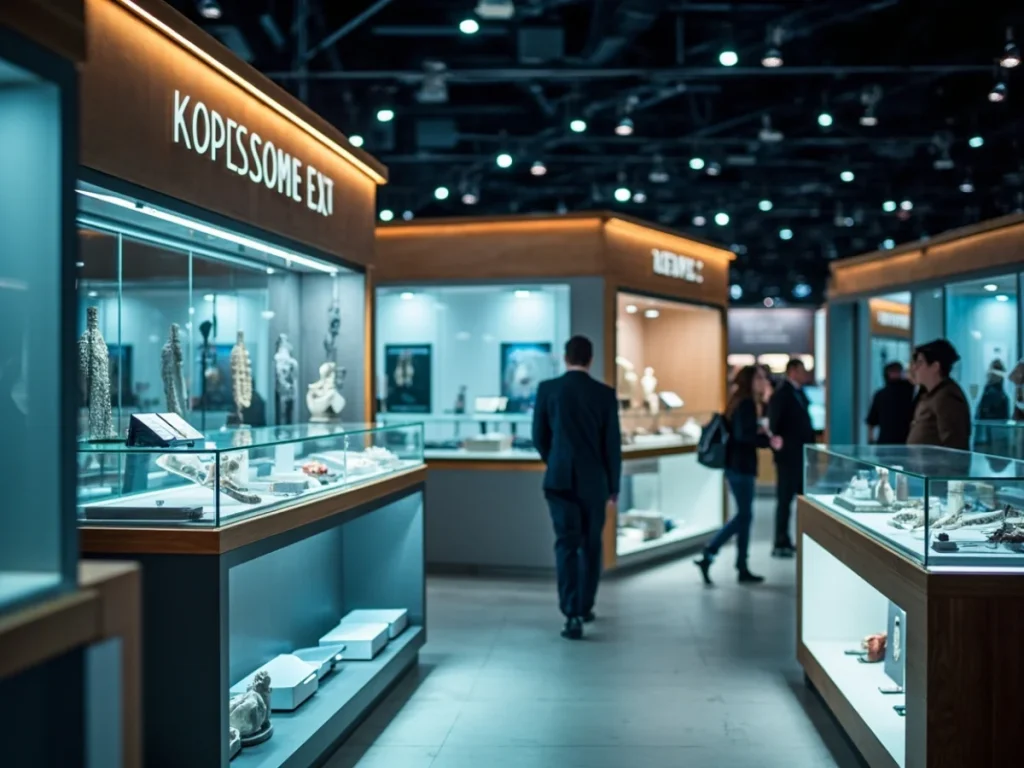
A luxury pop-up has a brutal calendar. A three-week tenancy may arrive with a 24-hour load-in window, an elevator that stops at 900 mm of turn space, and a storefront that cannot be touched. The showcase finishes still have to read as fine jewelry-grade from three meters away. Most pop-up failures are not design failures — they are logistics failures hiding behind expensive materials. Designing luxury pop up store displays for assembly and reuse means treating the fixture as a product with a spec sheet, not a one-off sculpture. The payoff is measurable: a well-engineered modular kit can shave 30–40% off load-in labor and survive 8–15 reconfigurations before refurbishment.
Start with the site survey, not the mood board
Before any render, capture the physical constraints in numbers. Door width and height, elevator cab dimensions and weight limit, corridor turns, freight dock hours, floor loading, ceiling height for lighting or truss, and the nearest power drops. A typical mall pop-up in Europe or the Middle East offers a freight elevator of 1,200 × 2,000 mm with a 1,000 kg limit; a flagship retail unit may allow a 1,600 × 2,400 mm cab. Those figures set the maximum shipped module size, and every downstream decision follows.
Also record floor condition and level tolerances. Old mall floors can vary 5–10 mm over a 3 m run, which will telegraph through a rigid plinth and make a glass showcase rock. Build in adjustable feet with at least 15 mm of travel, and confirm the showcase stands stable before glass goes on.
Standardize modules around pallet and man-lift limits
Reusable fixtures succeed when the design resolves into a small number of repeating parts. Aim for a base counter, a tower or wall unit, a vitrine, and a lighting pelmet, each breaking down into panels that one or two people can carry. A practical target: no single piece over 25 kg and no panel longer than 2,000 mm, so it fits in a standard lift and moves without a crane.
The kit below is a working prototype for a 40–80 sqm jewelry or watch pop-up:
- Two 1,000 × 500 × 950 mm base counters with removable tops and cable routes, flat-packed to 120 mm thick each.
- Four vitrines of 600 × 400 × 1,800 mm, shipped with glass in protective crates, removable LED bars clipped to adjustable shelves.
- One back-wall system in 600 mm bays that accepts hooks, shelves, and graphic cassettes without drilling.
- One cash wrap with lockable drawer and 30 mm riser, doubling as packing for small accessories.
- Six to ten adjustable platforms in 50 mm steps for necklace and bracelet height tuning.
Standardize fasteners to one hex key and one torque setting. Mixed hardware is the most common cause of slow installs and stripped threads across cycles.
Specify materials for repeated handling, not just first night
Pop-up budgets tempt you toward thin MDF with sprayed lacquer. It looks right once, then chips at every edge after the second move. For reusable luxury pop up store displays, choose substrates with edge integrity: 18 mm plywood or aluminum honeycomb panels with 2 mm PVC or HPL faces, 1 mm solid-core edging, and replaceable corner bumpers. Brushed stainless and anodized aluminum hold up better than powder coat on high-touch edges; powder coat is fine for recessed faces and pelmets.
Glass should be 6 mm tempered or laminated where local code requires safety glazing, with polished edges and no sharp corners. Specify UV-filtering laminated glass for light-sensitive pieces and keep 30–50 mm clearance behind glass for air circulation where humidity matters. Interior finishes in matte satin or soft-touch laminate resist fingerprints better than high gloss over a two-week run with daily cleaning.
Engineer assembly: tools, sequence, and time budget
Write a one-page install sequence and time it against your crew. A two-person team should install 40 sqm of modular fixtures in 4–6 hours, excluding lighting programming and product. If the plan calls for 8 hours, reduce parts rather than add people. Sequence the build from the back wall forward, level each base before setting vitrines, and lock modules to each other with concealed connectors so the run acts as one rigid line under crowd load.
- Protect the floor, mark datum lines, and place back-wall bays.
- Level bases, fix to wall or floor anchors where code requires, then link adjacent units.
- Install vitrines and verify door alignment and lock action.
- Run LED power on dedicated circuits, then test at 100% output.
- Wipe glass, place product, and photograph for the dismantle reference set.
Photograph every stage of the first build. The image set becomes the install manual for every operator who ships the kit afterward.
Protect the asset between activations
Reuse is a storage problem as much as a design problem. Budget for reusable flight cases or aluminum crates with foam cradles, one case per module type, and label cases with contents and build-step numbers. Damaged glass is usually damaged in transit, not on the floor. Build a 3–5% budget for touch-ups per cycle, and insist on a hardware kit that includes spare fasteners, edge touch-up lacquer, spare LED bars, and spare shelf pins.
Finally, consider whether the fixture can carry your brand forward. A neutral shell with changeable graphic cassettes and removable logo plates lets the same kit serve a bridal event, a watch launch, and an artier capsule with no structural work.
At Libafang Showcase Co., Ltd. we build custom display showcases for jewelry stores, watch boutiques, museums, and luxury retail across more than 30 export markets, and we design pop-up kits with the same tolerances as permanent work — plus exploded drawings, case schedules, and install notes the crew can follow. Send us your floor plan, lift dimensions, and open date, and we will return a free design and quote with an assembly sequence and a reuse plan.