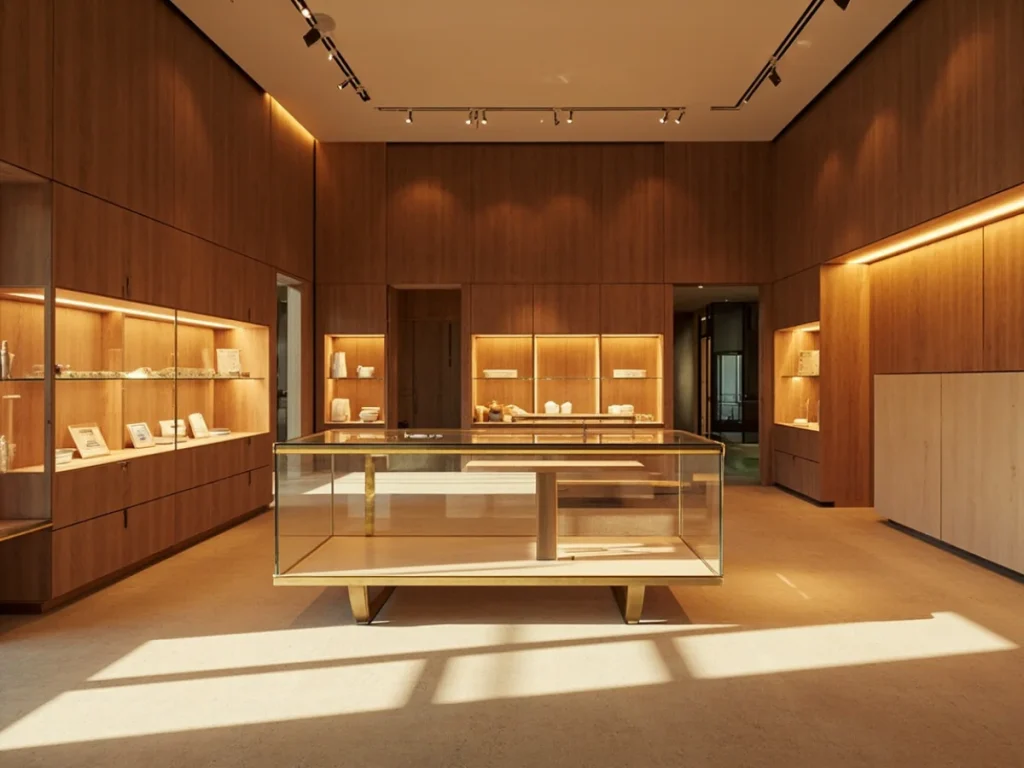
A VIP presentation table is the point where a high-value sale either accelerates or stalls. Unlike a standard glass counter, a luxury boutique presentation table combines three jobs in roughly one square meter: it displays hero pieces under controlled lighting, it creates a seated consultation zone that changes the psychology of the conversation, and it stores stock, trays and security items out of the client’s sight. Get the geometry or the storage wrong and the sales associate spends the appointment walking back to a distant safe. Get it right and the client stays seated, the product stays on the table, and the close happens within arm’s reach. What follows is a specification guide drawn from custom showcase manufacturing for jewelry stores, watch boutiques, museums and luxury retail environments.
Why the Table Replaces the Counter for High-Value Clients
The commercial case is simple: a seated consultation holds attention longer than a standing one at a counter. Boutiques typically run VIP appointments of 30 to 60 minutes, and during that time the associate may present 15 to 40 pieces. Standing at a 1,000 mm-high counter, every tray exchange involves a reach, a turn and a visual break. At a presentation table with a working surface around 750 to 780 mm high, both parties sit at the same level, the display area sits flat between them, and the associate can reach a tray, an loupe, a mirror and a tablet without leaving the chair. The table also signals discretion — a visible shift from browsing to being hosted — which matters when the average transaction value is measured in thousands rather than hundreds.
Dimensions, Ergonomics and Materials That Hold Up
Most boutique presentation tables land between 1,400 and 2,000 mm long, 700 and 900 mm deep, and 740 to 760 mm high. Depth is the number people underestimate: below 700 mm there is no comfortable zone for a presentation tray plus the client’s hands plus a cup, and above 900 mm the associate cannot reach across without standing. Allow 600 to 700 mm of legroom on the staff side if the table has a solid apron, and specify a 20 to 30 mm radius on exposed edges — sharp corners at knee height are the most common damage and injury complaint in high-traffic retail.
Surface materials should match the store’s finish schedule but must survive daily wear. Tempered glass tops of 10 to 12 mm with polished edges are standard for jewelry; sintered stone and lacquered MDF with a hardened topcoat are common for watch and fashion retail. Under-table trays should be rated for the load: a full tray of gold or gem-set pieces can weigh 8 to 15 kg, and drawer runners rated at 25 to 30 kg per pair give a sensible margin. Lock every storage compartment with a keyed or electronic cylinder and keep the master key off the sales floor.
Display, Lighting and the Consultation Surface
A presentation table usually needs two lighting temperatures: 2700 to 3000 K for warm gold and coloured stones, and 3500 to 4000 K for white metals and diamonds. CRI should be 90 or above, because low-CRI LEDs flatten colour and make clients hesitate. If the table includes a lit vitrine section, specify dimmable drivers and keep the light source at least 150 mm from the product to limit heat and glare. Glass display sections benefit from low-iron glass, which removes the green edge tint that shows on white leather and pale stone.
Plan the working surface in zones rather than treating it as one plane: a display zone (400 to 600 mm deep), a handling zone directly in front of each seat, and a utility strip at the back for a tablet, a loupe, a cloth and a card terminal. Under-counter power and USB outlets, positioned on the staff side, keep devices charged without cables crossing the display.
Secure Storage and Service Access
Storage design is where most presentation tables fail in daily use. A practical specification includes:
- Two to four lockable drawers of 500 to 600 mm width, with felt-lined removable trays.
- A lockable lower cupboard for larger items, cleaning kits and paperwork, with a shelf height of at least 250 mm.
- A concealed rear service panel so cables and power supplies can be reached without moving the table.
- Anti-tip anchoring or counterweights, particularly for tables over 1,600 mm that clients may lean on.
- Optional biometric or digital locks with audit logs where insurance or compliance requires named access.
If the table sits away from the main safe, add a lockable transit tray and set the drawer capacity so a full appointment’s stock can be cleared in one trip. Reinforced glazing, laminated glass and alarm contacts on storage compartments are worth specifying early rather than retrofitting.
Matching the Table to the Room and the Brand
The table has to work with the flooring, sightlines and store flow. Allow at least 900 mm clear circulation behind occupied chairs, and 1,200 mm on the main walkway. Think about sightlines from the entrance: a VIP table positioned so the tabletop is visible but the client’s face is not is usually the right balance. Finish consistency matters — repeat the metal tones, veneers and stitch details used elsewhere in the store, and use the table as a brand anchor rather than an isolated piece.
Order lead times for a custom presentation table typically run 4 to 8 weeks depending on finish complexity, with prototypes adding 1 to 2 weeks. Approve a sample of the laminate, veneer and metal finish before production; screen colour is not a reliable reference on its own. Libafang builds these tables as part of wider showcase packages for jewelry, watch and museum retail, so the presentation table, wall units and vitrines can share one finish schedule and one electrical plan.
What to Put in the Brief
A good brief shortens the design cycle. Include the room dimensions and a plan with door swings, the number of seats, the product mix and tray sizes, the required storage volume, the lighting temperature and CRI targets, the finish references with physical samples, the electrical and data points available, and any insurance or access-control requirements. Include the working height you want for staff and a note on whether the table must be relocatable. Libafang’s design team turns that brief into a drawing, a finish board and a quote, so the numbers and materials are confirmed before cutting starts.
Ready to specify a VIP presentation table for your boutique? Send your floor plan and product mix to Libafang and request a free design and quote — we will return a layout, finish options and a cost breakdown within a few working days.