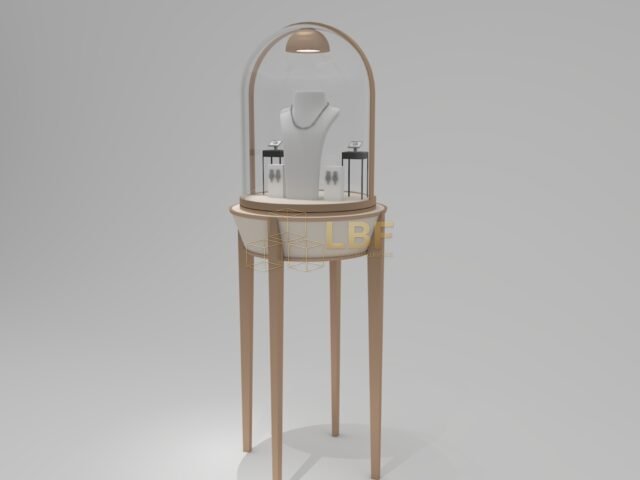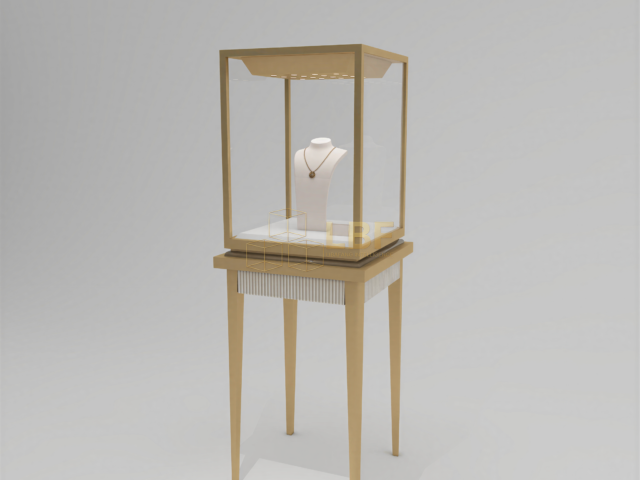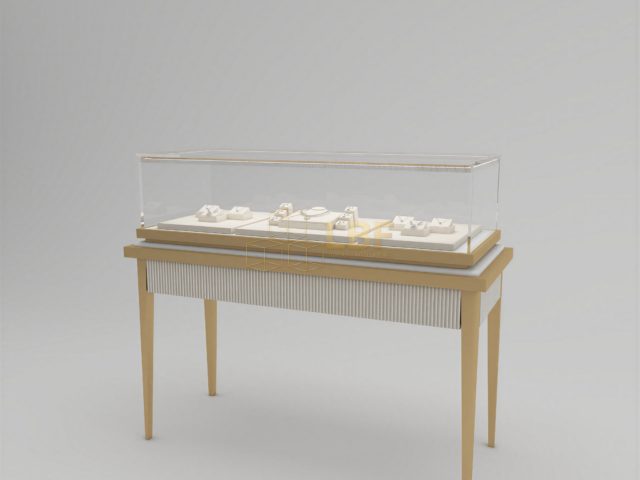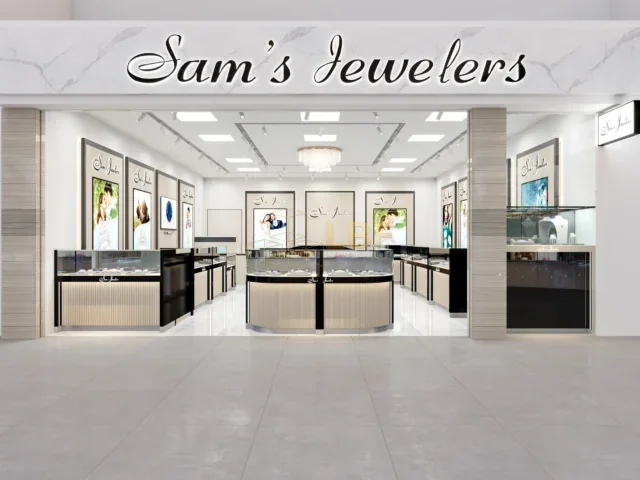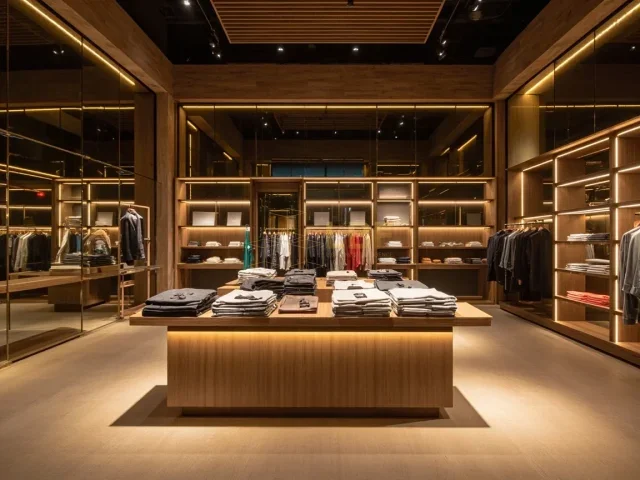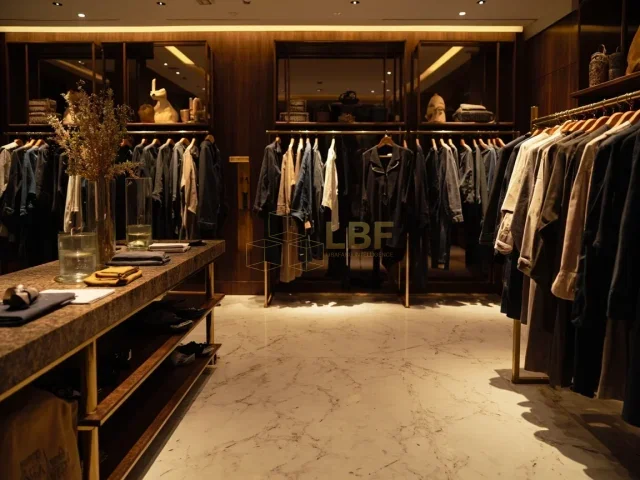
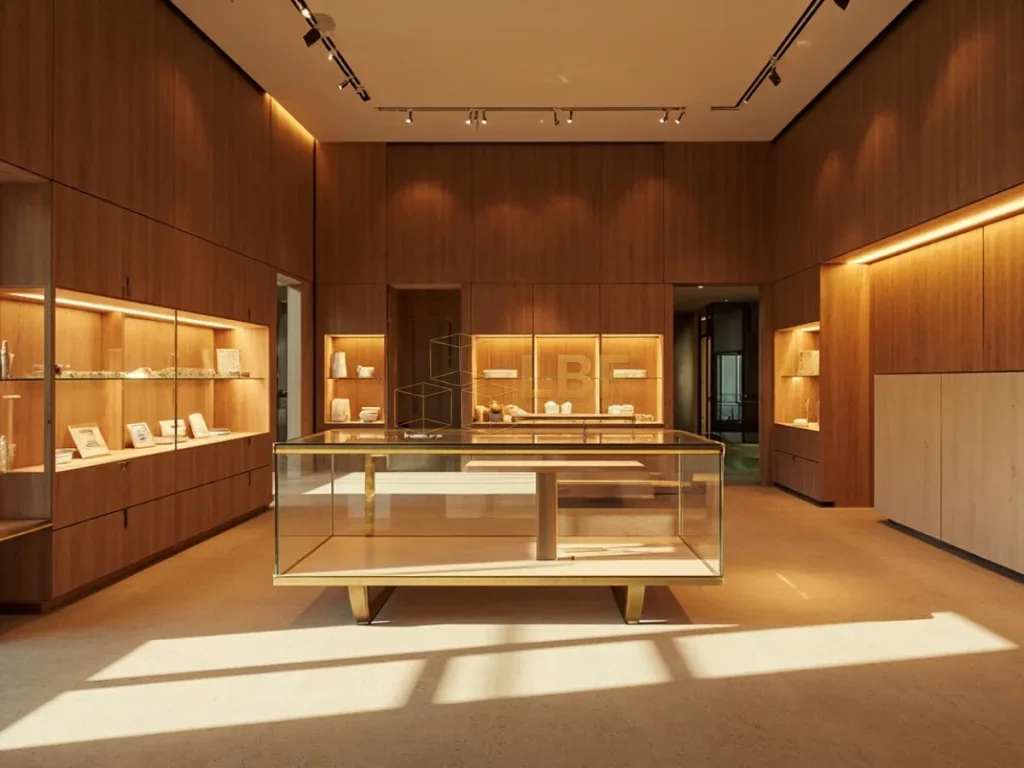
Opening a jewelry store means every square meter has to earn its keep, and the fixtures decide how much you can display, how good the merchandise looks, and how safe it stays. Jewelry showcases are not generic retail furniture; they are display, lighting and security infrastructure you will live with for a decade or more. Fixtures typically account for 15-25% of a new store’s fit-out budget, so a bad choice is expensive to undo. This guide covers the decisions that matter most when you are fitting out a first store.
Start with Your Floor Plan, Not with a Catalog
Before comparing glass finishes, measure the room and decide the customer path. In a typical 40-80 sq m jewelry store, plan for one showcase per 4-6 meters of selling wall at the perimeter, plus a central island or two, leaving at least 1.2 meters of circulation space between showcase fronts so two customers can pass comfortably. Allow roughly 0.9-1.2 running meters of display counter per square meter of selling floor; below that the store looks sparse, above it the room feels claustrophobic.
Work out capacity early. A standard 100 cm wide, 90-100 cm high, 45-50 cm deep counter with two internal glass shelving levels holds around 40-60 small pieces or 20-30 watch or necklace displays. Multiply units by capacity, compare it with your planned inventory, and you will know whether you need taller tower cases or wall-mounted cabinets. Also plan a hidden counter space where staff can use a loupe and ring sizing tools.
Choose Case Types by Product and Traffic
Different merchandise needs different cases. Map them deliberately:
- Low counter cases (90-100 cm high): fine jewelry, bridal rings and everyday gold; give a comfortable seated eye line and allow staff to serve across the top.
- Tall tower cases (120-150 cm): high-value statement pieces, timepieces and window-facing displays visible from the street.
- Wall cabinets: shallow depth (25-35 cm), ideal for high-density earring and chain displays and for maximizing perimeter wall value.
- Window and island cases: built for silhouettes and dramatic lighting; keep 20-25% of display space for rotational pieces.
Mix occupancy levels rather than filling every case tightly. A jewelry showcase reads as premium when each piece has 3-5 cm of clear space around it, not when the tray is packed.
Get the Lighting Right: Numbers Matter
Lighting is what sells a diamond, and it is where cheap fixtures show. Specify LED lighting with a CRI (color rendering index) of 90 or higher and a color temperature between 3000K and 4000K; warm light (3000K) flatters yellow gold, while neutral (3500-4000K) is better for white metals and colored stones. Aim for 800-1500 lux on the display surface, with focal spots up to 3000 lux for key pieces. Keep heat out of the case with LED only (it dissipates far less heat than halogen), and place light sources so the beam doesn’t shine into the customer’s eyes or cause glare on the glass.
Fit dimmable drivers and separate circuits per case group where possible. Daytime window displays need balancing against strong sunlight; visible window glass often needs anti-reflective coating, which cuts reflections by 70% or more.
Materials, Glass and Security Specifications
Security is not a bolt-on; it starts with the specification. Ask for laminated safety glass with an anti-scratch coating, typically 6-8 mm thick for display tops and 8-10 mm for exterior window panels. Frosted or laminated interlayers keep the show case intact on impact, slowing break-and-grab attempts. Locks should be keyed, high-security cam or cylinder locks, ideally keyed alike across the store for staff convenience while remaining inaccessible from the front.
For the body, a steel or aluminum frame with a powder-coated finish is the practical workhorse; wood veneer fronts suit classic boutiques, and mirrored or brushed metal panels lift the perceived value. Add a scratch-resistant HPL or melamine interior finish in cream, gray or black so jewelry trays stop sliding and coins and tags don’t scuff the floor of the case. Set soft-close hinges and adjustable leveling feet; a wobbly case is a security and display problem.
Budget Realistically per Linear Meter
Prices vary widely by material, lighting and finish, but as a working estimate, a standard counter case runs from roughly USD 350-700 per linear meter, mid-range designs with better lighting and finishes around USD 700-1,200, and fully custom, brass or wood-veneer pieces with dimmable lighting and premium hardware upward of USD 1,200-2,000 per meter. Import, shipping and installation add significantly, so insist on delivered quotes. Don’t fund everything at once: start with counters and window cases that drive sales, and phase in islands or a signature tower later. Keep spare lock keys and a few spare LED drivers on hand.
Work with a Manufacturer Who Understands Retail
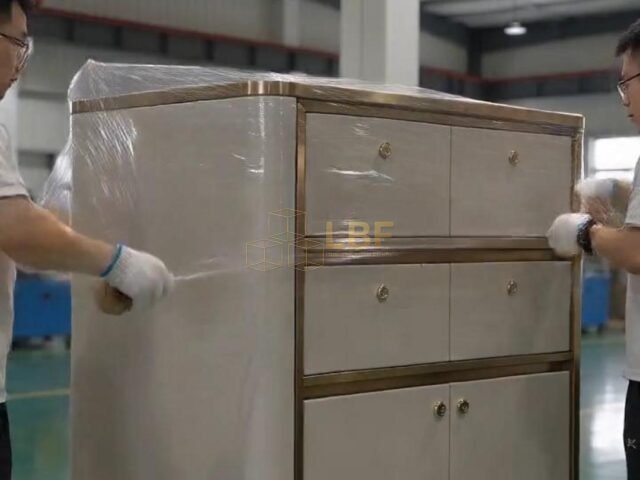
When your store opens in unfamiliar territory, having a manufacturer that can supply drawings, shop-fit photos and install guidance from Guangzhou to the destination is valuable. Libafang Showcase Co., Ltd. makes custom display showcases for jewelry stores, watch boutiques and museums, exporting to more than 30 countries. Before ordering, ask any supplier for a shop drawing with dimensions, glass spec, lighting layout and load rating, and for references in your climate. A small sample of materials beats any catalog photo.
If you are planning a new store, share your floor plan, product mix and budget. Libafang can prepare a free design and quote so you can compare real specifications and timelines before committing.