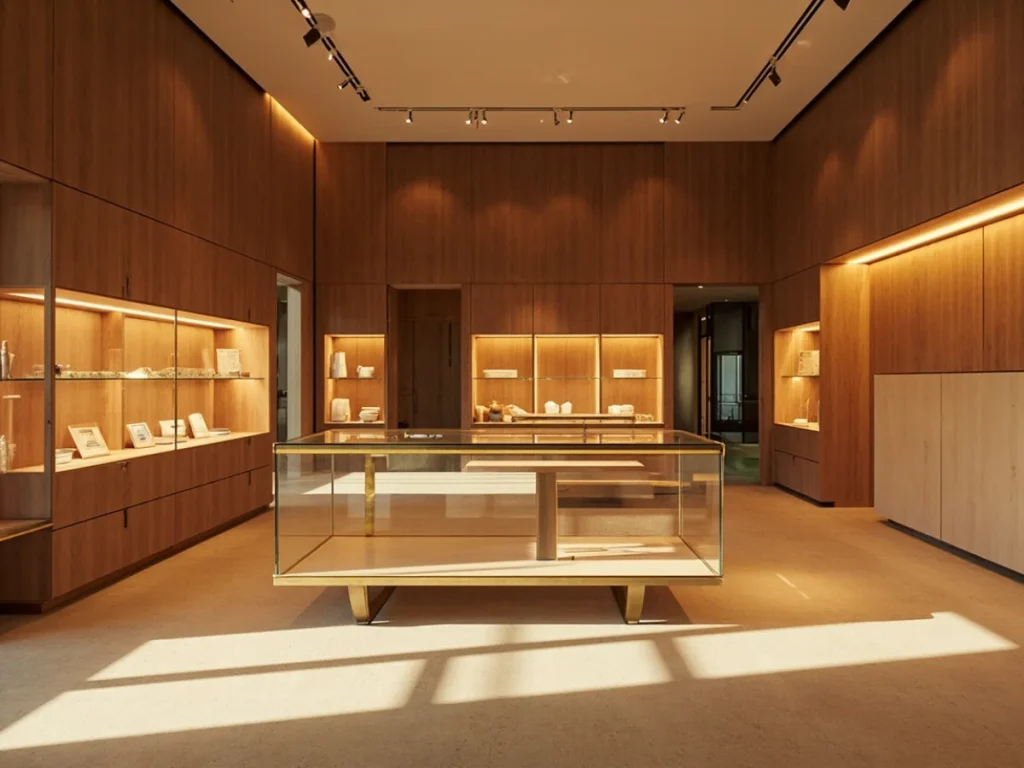
A turnkey jewelry store fit-out is a single-contract delivery model where one partner handles design, manufacturing, logistics, and on-site installation, handing you a store that is ready to open. Instead of coordinating an interior designer, a millwork shop, a lighting supplier, a glass fabricator, and a general contractor separately, you sign once and receive one finished retail environment. For jewelers opening a 60–150 sqm boutique, this typically compresses the schedule to 10–14 weeks from approved drawings to handover and reduces the number of site visits required from the owner.
The term “turnkey” is often misused. Some suppliers call themselves turnkey but only deliver showcases. True turnkey scope means they own the outcome — not just the furniture. This guide breaks down what is actually included, what it costs, how long it takes, and how to evaluate a fit-out partner.
What a Turnkey Jewelry Store Fit-Out Actually Includes
A complete fit-out integrates six workstreams. If any one is missing, you are managing a gap — and gaps cost weeks.
- Concept and space planning — layout drawings, customer flow, security zoning, and 3D renders approved before production begins.
- Custom display showcases — wall-mounted, island, counter, and window units built to your dimensions, with LED lighting, locks, and cable management.
- Interior millwork and finishes — counters, back-wall panels, cash wrap, seating, mirrors, and material selection.
- Lighting design — 3000K–4000K accent lighting at 90+ CRI to render diamonds and gold accurately; typically 3–5 spotlights per showcase meter.
- Security integration — alarm conduit, camera positions, safe room provisions, and lock coordination with your security vendor.
- Logistics and installation — crating, sea or air freight, customs documentation, site assembly, and snag-list resolution.
On a 100 sqm store, a full turnkey package usually includes 15–35 showcase units, roughly 40–70 linear meters of millwork, and 2–4 weeks of on-site installation. Anything less than this and you are likely buying partial scope.
Turnkey vs. Managing Multiple Suppliers
The conventional route splits the project among five or more vendors. Each has its own lead time, tolerance standards, and payment terms. A common failure point: the millwork is built to a 5 mm tolerance while the glass cases are built to 1 mm, and they do not align on site. Someone pays for that rework — usually the retailer, in delay.
Turnkey centralizes accountability. One party measures the site, controls the manufacturing tolerance chain, and is responsible if a showcase does not fit its recess. In practice, retailers report 30–40% shorter total project timelines and fewer change orders because drawing revisions happen inside one team rather than across three.
Typical Costs and What Drives Them
Turnkey pricing varies widely by region, material, and finish level. As a working benchmark for a 60–150 sqm jewelry or watch boutique, expect the following ranges in USD:
- Showcases and display units: $3,000–$9,000 per unit depending on size, lighting, and lock specification.
- Millwork and wall systems: $600–$1,400 per linear meter.
- Lighting package: $80–$200 per sqm of retail floor.
- Design and project management: 6–12% of total project value.
- Logistics and installation: 10–18% of hardware value for international projects.
Three factors swing the total most: material selection (brushed stainless steel and lacquered MDF cost far less than solid brass and stone), glass specification (low-iron tempered glass and laminated security glass carry premiums), and site conditions (uneven floors and non-standard ceiling heights add installation labor).
Timeline: From Brief to Opening Day
A realistic schedule for an international turnkey project looks like this. Allow extra time for shipping during peak seasons and for customs clearance in your market.
- Week 1–2: Brief, site survey, measurements, and concept direction.
- Week 3–5: 3D design, revisions, material samples, and sign-off.
- Week 6–11: Manufacturing of showcases and millwork.
- Week 11–13: Crating, freight, and customs.
- Week 13–16: On-site installation, lighting commissioning, snag list, handover.
Domestic projects compress to 8–11 weeks. Anything quoted at four weeks for a full fit-out should be treated with suspicion.
How to Evaluate a Turnkey Partner
The right partner has its own factory, not a trading desk. Ask for factory video, current production photos, and the name of the finishing line your project will run on. Verify export experience — a partner shipping to 20+ countries understands customs documentation, fumigation certificates, and climate-related packaging requirements. Confirm who holds responsibility during installation, and get the snag-list policy in writing before you sign.
Libafang Showcase Co., Ltd., based in Guangzhou, manufactures custom showcases and delivers turnkey fit-outs for jewelry stores, watch boutiques, museums, and luxury retail in over 30 countries. Because design and production sit in the same facility, drawing changes do not cascade into three separate vendor negotiations.
Common Mistakes to Avoid
Most fit-out delays come from decisions made too late. Lock the layout before manufacturing starts — moving a wall after millwork is cut is the single most expensive change. Specify lighting temperature and CRI in the brief, not on site. Budget 10% contingency for site surprises. And appoint one decision-maker on your side; projects with three approvers routinely run 3–5 weeks longer than those with one.
If you are planning a new boutique, renovation, or shop-in-shop, request a free design and quote. Send your floor plan and brand direction, and you will receive a layout concept, itemized scope, and a timeline you can build a business plan around.