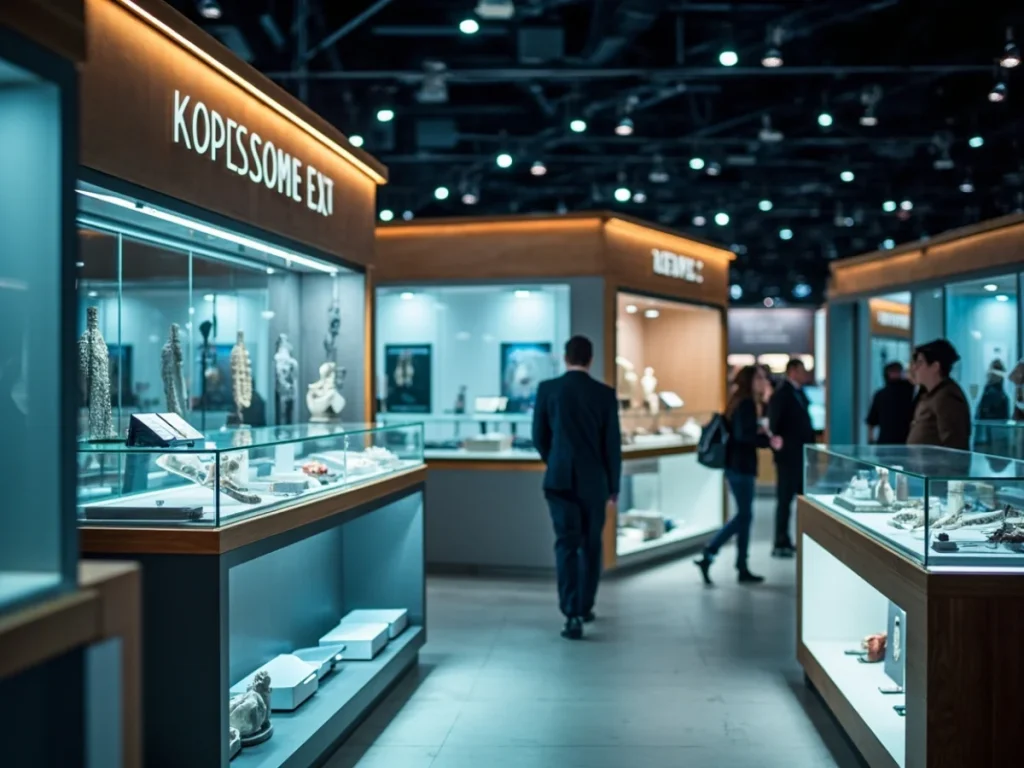
Small leather goods are the quiet profit center of most accessory stores. A customer who walks in for a watch strap may leave with a cardholder, and a wallet buyer is often one belt away from a second purchase. But that only happens when the products are organized so shoppers can compare finishes, sizes and price points without handling chaos. A well-planned run of small leather goods display counters does more selling than any sign in the store. This guide covers the dimensions, zoning and merchandising rules that keep wallets, belts and cardholders visible, tidy and easy to restock.
Start With Capacity Math, Not Aesthetics
Before choosing a design, count what you actually carry. A typical mid-size boutique holds 60 to 120 SKUs of small leather goods at any time, split roughly 40% wallets, 25% cardholders, 20% belts and 15% miscellaneous items such as key rings and pouches. If a counter offers 1.2 m of usable display width and each SKU needs 8 to 10 cm of frontage, you can show around 12 to 15 styles per level. Stacking two rows deep inside a 15 cm high tier doubles capacity but hides the back row, so reserve depth stacking for bestsellers you restock daily.
For belts, plan on coils or half-rolls rather than long hanging lengths. A 110 cm belt coiled to 25 cm diameter needs a drawer or shelf cavity at least 28 cm wide and 30 cm deep. Flat-folded belts fit in 12 to 15 cm deep trays but crease; if you must fold, use a soft insert and rotate stock weekly.
Zone The Counter By Decision Type
Shoppers browse small leather goods in three modes: replacement (a specific item), gifting (price-led) and impulse (color-led). A counter that serves only one mode underperforms. Divide the surface into zones that answer each behavior.
- Hero zone at 90 to 120 cm from the floor for eye-level wallet and cardholder statements in the season’s lead color.
- Comparison zone beside it, where 6 to 8 similar items sit at the same height so texture and price are easy to compare.
- Gift zone near the end panel, grouped by price band with visible boxed options.
- Belt station at the corner or end, with sample straps and a buckle tray so sizes can be tried quickly.
- Restock reserve in lower drawers, with a 20 to 30% buffer of each hero SKU.
Keep aisles at least 90 cm wide in front of the counter. If two shoppers cannot pass while one browses, the fixture is too deep for the space.
Angles, Trays And Slots That Actually Help
Flat items vanish on a flat counter. Tilt wallet trays 15 to 20 degrees toward the shopper so the top edge of each wallet is readable at a glance. Cardholders, being smaller, work best in shallow stepped risers with 5 to 6 cm of lift per row; this keeps the fronts visible without turning the display into a wall. A 5 mm felt or suede insert prevents sliding and protects glazing on patent finishes.
Slots beat piles. Nine wallet slots across a 1.2 m counter give every style a fixed home, which cuts restocking time to a few seconds per item and makes gaps obvious to staff. Number each slot on the back edge or on a stock list; after closing, one glance shows what sold and what needs pulling forward.
Lighting And Materials For Leather
Leather shows texture best under 3000K to 3500K light with a color rendering index of 90 or higher. Fair skin tones and tan leathers are the first to look wrong under low-CRI LEDs, and returns often follow. Aim for 300 to 500 lux on the counter surface, with adjustable heads so you can lift contrast at the hero zone without washing out the comparison area. Avoid direct heat: keep light fixtures at least 15 cm from product surfaces and never place countertop lamps where a wallet sits within 20 cm of the beam, as prolonged radiant heat can dull and dry leather finishes.
For materials, powder-coated steel and matte laminate hold up best in daily retail use. Glass tops look premium but show every fingerprint on a product customers must touch. Soft-close drawers matter more than you expect; in a busy store the counter opens 200 or more times a day, and a slamming drawer marks both fixtures and patience.
Pricing, Signage And Loss Prevention
Small items are easy to move, so pricing must be attached to the slot, not only to the product. Use a printed price strip along each tray edge and update it when price bands change; mismatched pricing is one of the most common causes of checkout friction. Keep no more than three price levels visible per zone so shoppers can self-select quickly.
For security, a locked display drawer under the counter for high-value exotic leathers works better than cable alarms across the surface, which interfere with handling. Keep the most theft-prone items at the staff end of the counter rather than at the aisle end. A modest 1.5 m counter with 4 drawers holds a full day’s stock comfortably while keeping staff within arm’s reach of the hard-to-replace pieces.
Custom Counters For Different Store Formats
An airport store needs a compact counter under 1.2 m with drawers sized for quick restocks during short peak windows. A jewelry showroom in a mall typically wants a matching wood or lacquer finish that blends with the main cases, plus a glass vitrine section for limited editions. A museum shop needs lockable and accessible flexibility, since stock and themes change seasonally. This is where custom build pays: adjusting drawer depth from 30 to 35 cm, or adding a felt-lined belt tray under the hero zone, costs little at design stage and much more as a retrofit.
Libafang Showcase Co., Ltd. produces custom display counters in Guangzhou for jewelry stores, watch boutiques, museums and luxury retail, exporting to more than 30 countries. When planning a counter run, share your SKU list, store dimensions and finish samples early; a design built around your actual product mix usually needs fewer fixtures than a generic solution and holds up better under daily use.
If you are refreshing a store or opening a new location, send us your floor plan and product counts to request a free design and quote. We will come back with a layout, material options and a timeline, sized to what you actually sell.