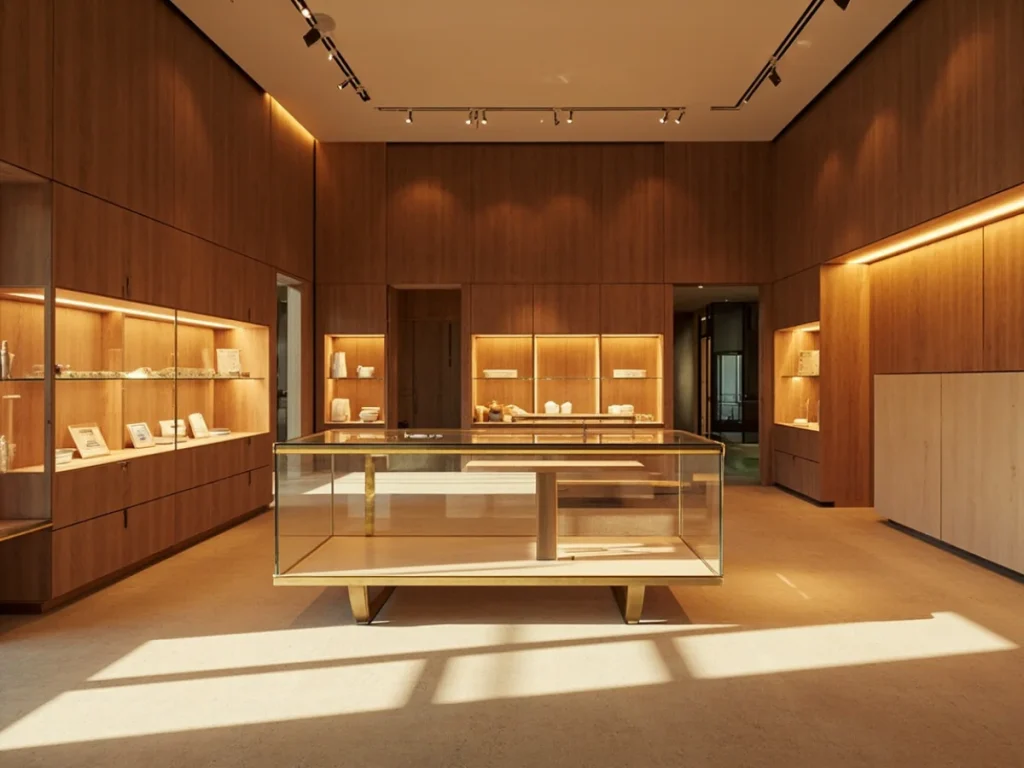
Luxury handbag display cabinets fail for predictable reasons: shelves too shallow for structured bags, spacing that makes a $3,000 tote look crowded, and supports that sag under the weight of a single oversized piece. This guide gives retail designers, brand visual merchandisers, and store fitters concrete numbers for planning shelf depth, product spacing, and structure—so your cabinetry presents handbags the way they deserve to be seen. Whether you are specifying a single feature cabinet or a full boutique rollout, these guidelines will help you avoid costly rework and deliver a display that sells.
Shelf Depth: Matching Cabinet Dimensions to Handbag Types
Shelf depth is the single most common specification error in handbag display. A shelf that is too shallow forces bags to overhang or sit at an angle; one that is too deep wastes premium retail space and hides product in shadow. Plan depth by bag category, not by average size. For clutches and mini bags, a clear internal depth of 250–300 mm is sufficient. Shoulder bags and crossbody styles typically need 300–350 mm. Structured top-handle bags and medium totes require 350–400 mm. Oversized travel totes and weekenders call for 400–450 mm. As a rule, add 20–30 mm of clearance behind the bag so it does not press against the back panel, which can distort shape over time. If your assortment is mixed, design the cabinet around the largest category and use adjustable shelves or removable risers to adapt deeper bays for smaller items. Glass or acrylic dividers can segment a deep shelf without changing the cabinet footprint, but they add visual clutter—use them only where display density genuinely requires it. Libafang manufactures custom cabinetry to these depth ranges and can advise on glass thickness and shelf adjustability for your specific bag mix.
Product Spacing: Ratios That Keep Luxury Intact
Spacing communicates value. A handbag that touches its neighbor reads as merchandise; one with clear negative space reads as an object of desire. For hero bags—the pieces you want customers to notice first—allow a minimum of 150 mm between bags and ideally 200 mm. For secondary or color-story groupings, 100–120 mm is the practical minimum; below that, handles and straps tangle visually and staff struggle to remove and replace items without knocking neighbors. Vertical spacing matters equally. Allow 250–300 mm of clear height between shelves for clutches and mini bags, 350–400 mm for shoulder bags, and 450–500 mm for structured totes and larger pieces, measured from the shelf surface to the underside of the shelf above. If bags are displayed on risers, account for the riser height in that clearance. Plan shelf count around your assortment rather than filling every available level: most luxury handbag cabinets work best with three to five display levels in a 2,000 mm tall unit, leaving the top level for brand signage or lighting housing. An overcrowded cabinet undermines the very perception of quality the store is trying to build.
Support Planning: Load, Span and Shelf Structure
A handbag display cabinet is a structural system, not a piece of furniture. A single large leather tote with hardware can weigh 1.5–2.5 kg; a shelf holding six such bags carries 9–15 kg, and that load is concentrated on small base areas. Glass shelves are common in luxury displays because they disappear visually, but they must be specified correctly. For 10 mm tempered glass, keep unsupported spans under 900 mm; for 12 mm tempered glass, spans up to 1,200 mm are feasible with appropriate edge support. Beyond that, add a center support or switch to a framed shelf. Wood and wood-veneer shelves can span further but need internal reinforcement—25 mm nominal thickness with a honeycomb or batten core is a sensible minimum for spans over 1,000 mm. Consider these support essentials:
- Use shelf pins rated for the actual load, not decorative pins; metal pins in metal sleeves are more secure than plastic.
- Specify tempered or laminated glass with polished edges; impact damage at edges is the leading cause of glass shelf failure.
- Allow a 2–3 mm expansion gap around glass shelves in timber frames to prevent binding and stress cracking.
- Anchor tall cabinets to the wall; a 2,000 mm cabinet with loaded shelves can be top-heavy.
- Plan lighting channels and cables so they do not reduce usable shelf depth or interfere with bag placement.
Locking systems, sliding or hinged doors, and dust seals all add thickness that reduces internal depth—subtract these from your nominal cabinet depth before finalizing shelf dimensions. A cabinet specified at 400 mm external depth may offer only 340–360 mm of usable internal depth once doors, locks, and back panels are accounted for. Always work from internal dimensions.
Lighting, Security and Material Choices That Affect Layout
Lighting is part of the spacing plan. Integrated LED strips at the front edge of each shelf wash light down the face of the bags, but they occupy 15–25 mm of shelf depth and require a recess or channel. If you plan to add lighting later, reserve that space now. For security, locked glass doors are standard in luxury handbag cabinets, but the lock housing and door frame reduce internal depth by 20–40 mm depending on profile. Choose materials that suit the brand: powder-coated steel frames for a modern look, solid timber or veneer for warmth, and low-iron glass for clarity. Anti-reflective glass is worth considering where cabinets face windows or strong spotlights. All of these choices interact—thicker glass needs more support, heavier doors need stronger hinges, and a deeper cabinet needs more robust shelf spans. Fixing the layout early prevents expensive compromises later.
Planning Checklist Before You Request a Quote
Before approaching a manufacturer, gather your bag dimensions, store layout, and security requirements. A clear brief speeds up design and reduces the risk of a cabinet that looks right but does not work. Libafang works with retailers and designers to translate these numbers into production-ready drawings, and a free design and quote request is the fastest way to validate your plan. Bring your largest and smallest bag dimensions, the number of units per cabinet, and your preferred door and lighting configuration, and you will get a specification that matches both your merchandise and your budget.
Ready to specify luxury handbag display cabinets with confidence? Contact Libafang Showcase Co., Ltd. to request a free design and quote—our team will review your shelf depth, spacing, and support requirements and return a detailed proposal.