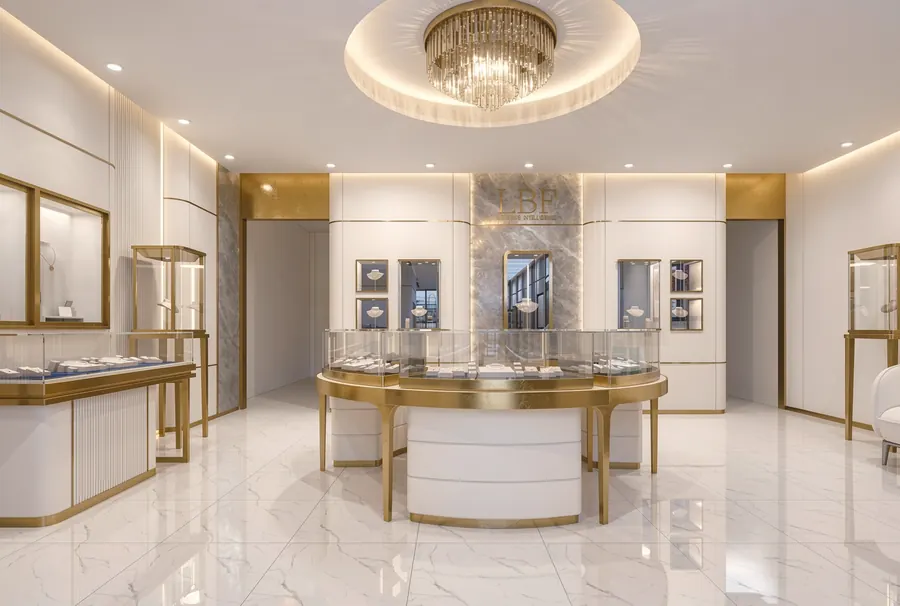
Temporary exhibitions fail or succeed on logistics. A show that opens in six weeks needs cases that arrive, assemble, adjust and light without a queue of contractors on the gallery floor. That is why so many institutions now base their case fleet on modular museum display cases: a kit of base units, frames, glazing panels, shelves and lighting that can be rebuilt into different footprints rather than replaced. The design logic is simple — standardise the joints and hardware, customise the visible finishes — and the operational payoff shows up every time a new show comes down the pipeline.
Below is a practical guide to specifying modular cases for touring or rotating exhibitions, including numbers you can use in a planning brief.
What actually makes a case modular
Modularity lives in three places: the base platform, the vertical frame and the glazing. A workable system uses base plinths in fixed depth increments (commonly 500, 600 and 800 mm) that bolt together to create footprints from roughly 500 × 500 mm up to about 2400 × 1200 mm per assembled unit. Vertical aluminium extrusions then create fixed height zones — 900, 1200 and 1800 mm are common for museum work — with adjustable shelf brackets in 25 or 32 mm increments.
Glazing must be swappable without dismantling the whole case. Front panels that lift out or hinge open with a two-point lock let registrars work quickly, and it is far cheaper to own one spare panel per 10 cases than to fabricate a new case when glass is damaged. If your collection mixes jewellery, watches, manuscripts and small sculpture, a single glazing specification (laminated low-iron glass with UV-filtering interlayer) usually covers all of it.
Reconfiguration: the numbers that matter
Most reconfiguration problems are won or lost before installation. Ask your supplier for a base-unit schedule, not just a rendering. If a typical exhibition uses 20–30 cases, aim for a fleet in which 70–80% of units are standard sizes and 20–30% are adaptable specials.
- Assembly time: a two-person team should build a standard 1200 × 600 mm case in 20–30 minutes without tools beyond a hex key.
- Changeover target: plan for 2–3 days to reconfigure a 25-case temporary show, including lighting focus and cleaning.
- Storage: flat-packed bases plus stacked frames should need roughly 40–50% of the assembled floor area.
- Crating: reuse the same road cases — one crate per 2–3 assembled units saves storage cost and protects corners in transit.
Environmental control and security across reconfigurations
Modularity must not undo the closed microclimate. Specify gasketed joints, sealed cable entries and desiccant drawers that can be re-added at any shelf level. A well-built case should hold internal RH within ±3% of the gallery condition for 48–72 hours with a passive buffer; silica gel at approximately 1 kg per cubic metre of case volume is a reasonable starting point for a designer.
Security follows the same logic: every new configuration must still accept 6–8 mm laminated glass, concealed hinges and a case-level alarm contact. Keep hard points on the base for through-bolt floor anchoring so you are not drilling into gallery floors each time a layout changes.
Specifying for reuse: details that save money later
Powder-coated steel or aluminium in a neutral RAL colour remains serviceable across years of shows; a painted MDF plinth does not. Specify replaceable toe-kick panels and reversible finishes so a case can appear as dark walnut for a decorative arts show and black for a contemporary jewellery show without refinishing.
Lighting should be modular too. Linear LED profiles at 3000K or 4000K, dimmable to 1% and CRI 95+, with magnetic or track mounting at two or three fixed heights, allow re-focusing without re-wiring. Budget roughly 15–25 W per linear metre at typical museum lux levels for sensitive works.
Finally, insist on documentation. A labelled part inventory, assembly drawings and a torque/fitting schedule turn a case system from a custom build into a genuine long-term asset. This is where experienced manufacturers matter: Libafang, working from Guangzhou with shipments to more than 30 countries, documents each panel and connector so returns to a configuration are repeatable rather than improvised.
Buying decisions and lead times
For a 20–30 case reconfigurable fleet, plan 6–10 weeks for production after drawing approval, plus sampling for finish and glass. Volume ordering of standard modules reduces unit cost meaningfully compared with one-off fabrication, and it shortens replacement lead times to roughly 3–4 weeks for a single damaged panel or frame.
Ask three questions of any supplier: can you supply spare glazing panels from stock, will you provide an assembly manual and part-numbering scheme, and how do you handle tolerances so that panels from one batch fit bases from another? Answers to these reveal whether a case system is truly modular or just styled that way.
Good modular cases are bought once and rebuilt for a decade of changing exhibitions. If you are planning a temporary show programme, send your ideal layouts and case counts to Libafang and request a free design and quote tailored to your reconfiguration cycle.