The base is the part of a jewelry showcase most buyers think about last, yet it decides how the case sits in the room, how staff clean under it, how cables reach the lighting, and how much weight the glass and stone can safely carry. A 1.2 m wide display case with a poor base will wobble on a 2 mm floor discrepancy; a well-specified plinth will feel solid for a decade. This guide compares the three base types we build most often at our Guangzhou factory — recessed plinths, legs and solid (closed) bases — with the numbers that matter when you write a specification: load figures, toe-kick dimensions, clearance heights and lighting routes.
What the base actually has to do
Before choosing a style, list the loads and constraints. A typical glass-and-MDF jewelry showcase carries 180–260 kg of its own mass, plus 30–60 kg of product and sometimes 80 kg of a leaning customer. Frameless laminated glass panels (10 mm + 10 mm) add weight fast, and a marble counter can add another 40–70 kg per meter. Point loads from a corner shelf or a heavy stone tray are what crack cheap bases, not the average load. Three more constraints matter: leveling tolerance (most retail floors are flat to about ±3 mm over 2 m), cleaning access (a 40 mm gap is enough for a vacuum nozzle but not a mop head), and lighting routes (feed cables and drivers need 20–40 mm of internal space).
Recessed plinths: the museum standard
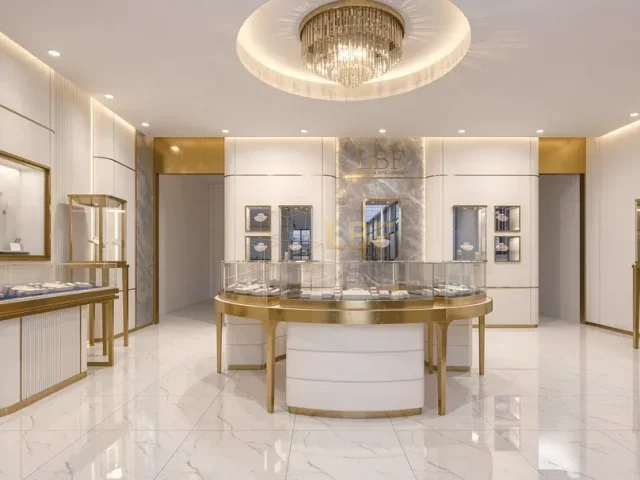
A recessed plinth (often called a toe-kick or shadow-gap base) has a smaller footprint than the case above it, creating an inset of 50–100 mm on the customer-facing and rear sides. The visual effect is that the showcase floats, which suits museums and high-end jewelry because it removes bulk from the sightline.
- Typical dimensions: 80–120 mm high plinth, 50–75 mm inset, 6–10 mm shadow gap where a reveal is specified.
- Structure: a welded steel frame or 18 mm plywood box with an integrated leveling foot every 400–600 mm; load capacity of 350 kg per linear meter is achievable without visible bracing.
- Strengths: hides uneven floors, looks premium, protects the case from kicks, and gives a clean route for cables through the plinth wall into a concealed driver box.
- Weaknesses: the recess collects dust and is harder to mop; require a removable or hinged plinth panel if staff must access wiring, and specify a 60 mm minimum gap for a floor-cleaning machine.
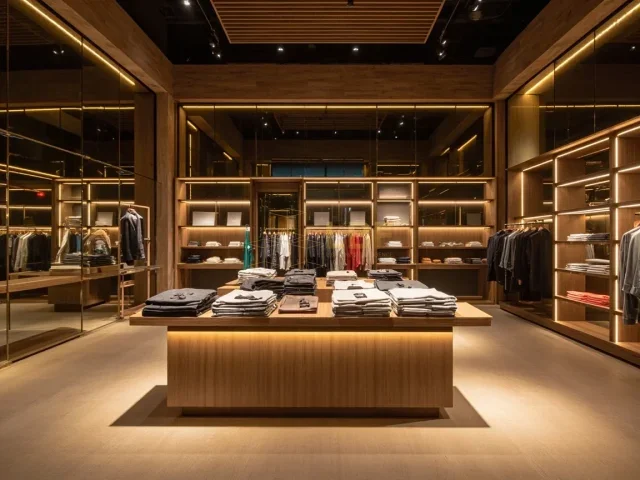
For retail, a recessed plinth works best when the case is against a wall or forming a low central island under 1,200 mm high; it reads as furniture rather than a box. For taller wall cases over 1,800 mm, the plinth must be extended in depth to resist tipping, and we generally recommend anchoring it to the floor with a 50 × 50 mm steel angle.
Legs and open frames: flexibility and visual lightness
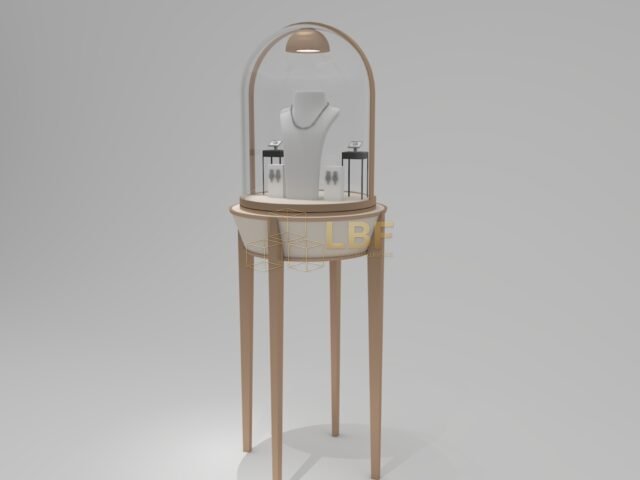
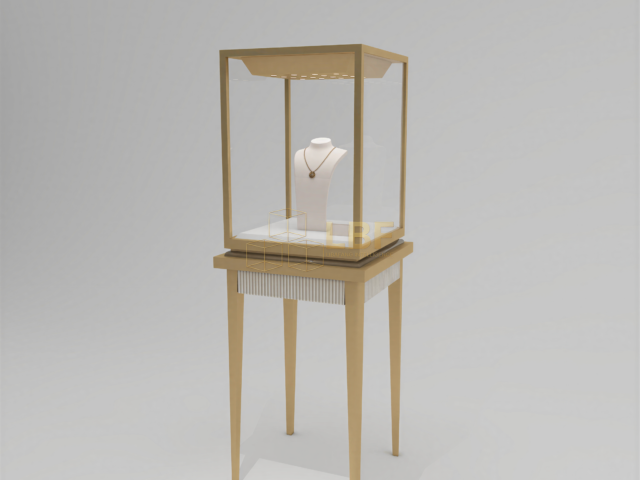
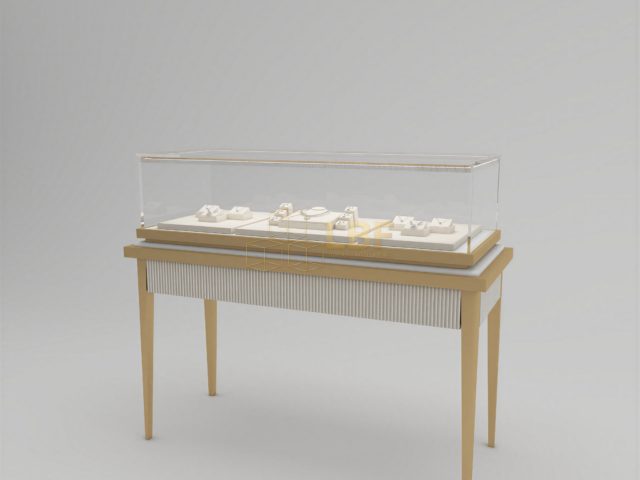
Leg bases use four to six posts — 30 × 30 mm box steel, 40 mm round tube, or solid wood turned legs — leaving the space beneath the case open. They are the most popular choice for watch boutiques because they make small cases feel lighter in a tight layout. A 600 × 450 mm watch case on four 30 mm steel legs with adjustable feet handles a 120 kg live load comfortably when the frame is welded rather than bolted.
Open frames are excellent for shop-in-shop installations where floor cleaning is daily and where chiller or lighting drivers need ventilation. The trade-offs: legs concentrate load into small floor patches, so specify 40–50 mm foot pads or adjustable glides; a 150 mm floor clearance is the practical minimum for a mop, and 200 mm plus satisfies most fire-safety clauses that limit combustible material near the floor. Avoid fully open legs on high-traffic aisle ends where trolleys and vacuum cleaners hit the frame; bronze or powder-coated legs chip and the chipped area becomes visible. A 3 mm thick protective kick strip at the bottom 100 mm reduces damage significantly.
Solid bases: maximum stability, minimum access
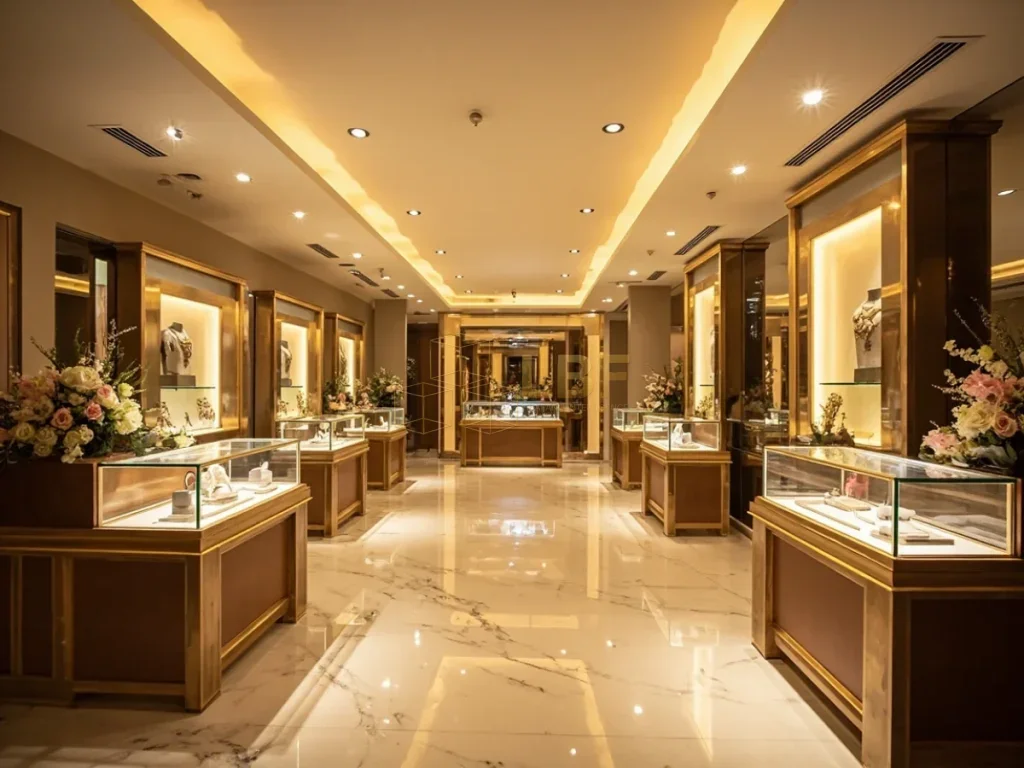
A solid or closed base — full-depth sides all round, often with a 100 mm recessed toe-kick — gives the highest stiffness. It is the right choice for heavy stone-topped counters, multi-level island cases, and any showcase wider than 1,500 mm where glass deflection is a concern. MDF, plywood, steel or stone cladding are all used; for a stone plinth, budget 25–30% more than painted MDF and allow a 10–15 mm shadow gap between cladding panels to absorb movement.
The downside is serviceability. Once closed, cables must be routed before assembly and drivers must be positioned through a removable panel at the rear. Specify one 300 × 300 mm hinged access panel per 2 m of base and annotate it on the drawing. Solid bases also make the showcase read as a cabinet rather than a vitrine, which is right for jewelry stores with a traditional or luxury identity and less suited to minimalist interiors.
How to specify the right base
Use a simple checklist for each line item on the floor plan: match base type to case height, weight and traffic, then fix the numbers on the drawing so suppliers quote the same thing. Get the base right and everything above it lasts longer.
Need help turning a plan into a buildable specification? Libafang designs and manufactures jewelry, watch and museum showcases with all three base types, and we can supply dimensioned drawings, load calculations and finish samples for your project. Contact us to request a free design and quote.