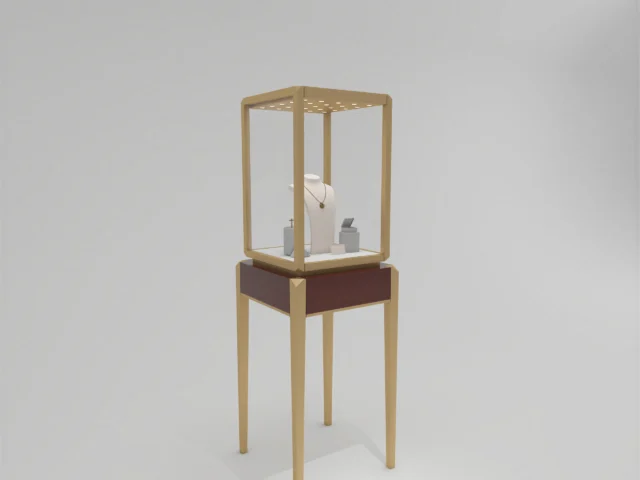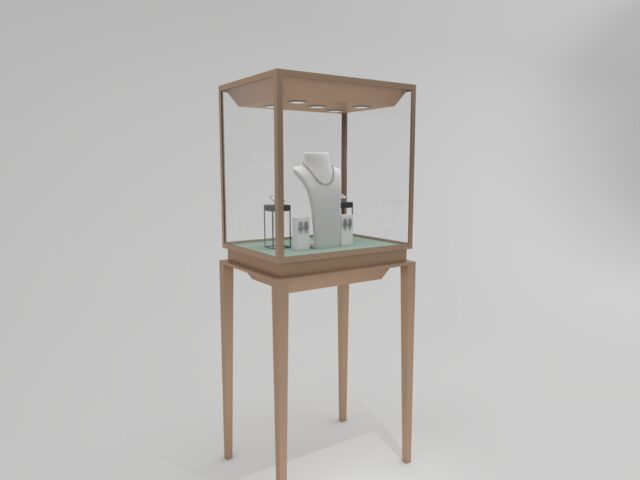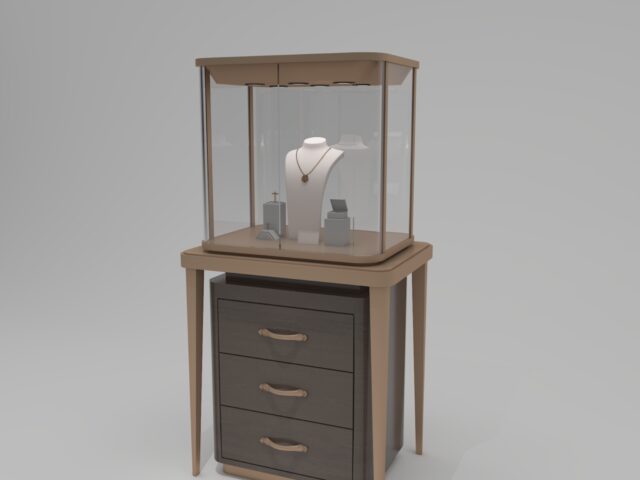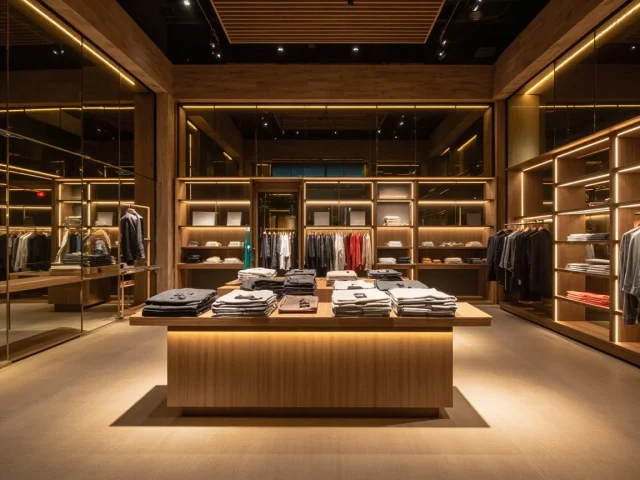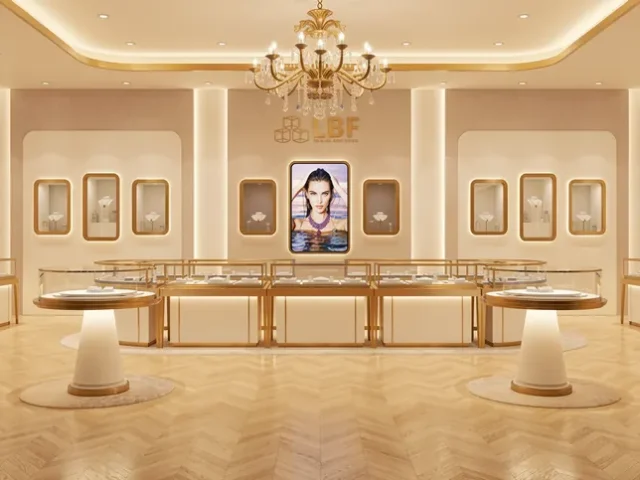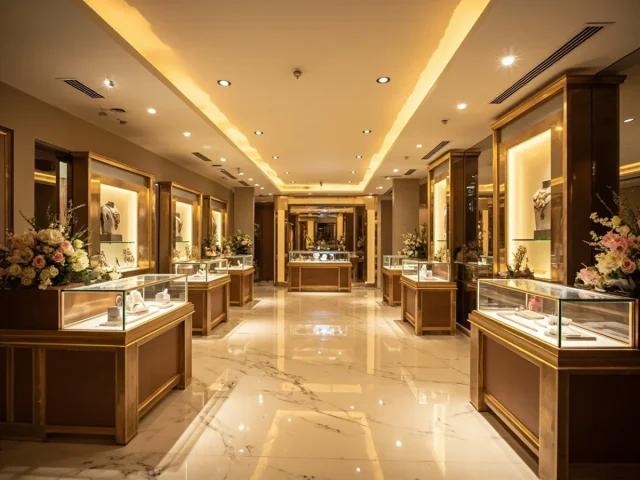
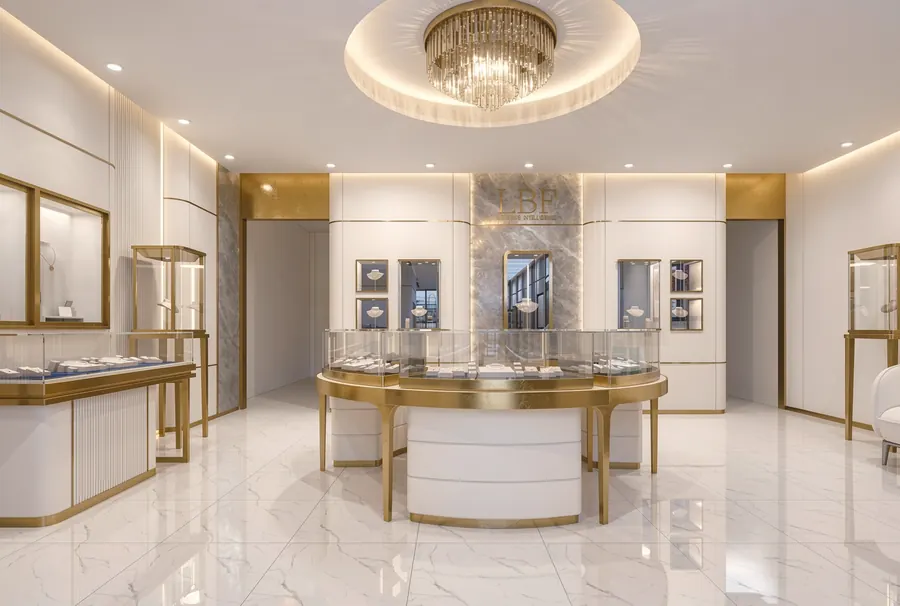
Two jewelry stores can buy identical display cabinets from the same factory, fill them with similar merchandise, and get completely different results. The difference is often not the cabinet itself but where it stands. Reflections on glass are a function of geometry: the angle between the light source, the glass surface and the customer’s eye. Move a case two meters across a showroom and those angles change — sometimes turning a clear, inviting display into a mirror that hides everything below the top shelf. Understanding this relationship before you finalize a store layout saves money on rework and, more importantly, protects sales.
Why Glass Acts Like a Mirror
A standard low-iron display glass transmits roughly 91 to 92 percent of visible light, reflecting the rest. That sounds minor until you account for contrast. A bright window, a spot-lit wall or a ceiling fixture behind the customer can be ten to fifty times brighter than the jewelry on a shadowed lower shelf. The eye adjusts to the brightest object in view, so the reflection effectively wins. This is why a diamond that looks brilliant in a hand-held loupe disappears into a gray haze once it is inside a case facing a sunny storefront.
Two numbers matter most. The first is reflectance: 8 percent for standard float glass, about 1 to 1.5 percent for high-quality anti-reflective coated glass. The second is illumination contrast between the object and the reflected background. Positioning can close the second gap dramatically, which matters when anti-reflective glass is outside the budget.
The Angle Rule: Where Reflections Land
Reflections follow the law that incidence equals reflection. If a customer stands about 1.5 meters from a 1.1-meter-tall showcase and looks down at a flat top glass panel, the reflected image is not the display below — it is whatever sits above and behind the customer’s shoulder, typically a 2.5 to 3.2-meter ceiling. A white painted ceiling with recessed downlights will produce visible bright spots across the top glass. A dark, matte ceiling over the same case will show almost nothing.
Vertical front panels behave similarly. The reflected zone extends roughly one to two meters behind the customer at head height. Retailers who design the display axis first and ignore that sightline usually end up with glare problems they mistakenly attribute to the glass supplier.
Positioning Factors That Change Visibility
When laying out a showroom or museum gallery, cabinet placement should be evaluated against four factors. Each of them can be adjusted without replacing the cabinet.
- Distance from light sources: Keep cases at least 1.5 meters from north- or south-facing windows where direct sun can strike the glass at shallow angles, and aim ceiling spots at a tilt of 30 degrees or more from the glass plane rather than straight down onto it.
- Brightness behind the viewer: A customer-facing wall that is brighter than 2,000 lux will dominate reflections. Reduce it with matte finishes, dimmable accent lighting, or simply darker wall treatments.
- Height and tilt of the viewing path: Waist-height island cases work best when customers approach almost head-on; tall towers and low tables can be angled 5 to 15 degrees toward the walking path to steer reflections toward the floor or a wall instead of the product.
- Traffic direction: A case viewed from both sides doubles the reflective problem, so two-sided units should carry anti-reflective glass or high-output interior LED lighting rather than relying on placement alone.
Matching Cabinet Position to Lighting Layout
The most effective fix is usually coordination between the lighting designer and the cabinet layout. Lighting inside the case — 4,000 to 5,000 K LED strips at the top and vertical edges — raises the product’s luminance so reflections fall below the threshold where they distract. As a rough guide, aim for 1,000 to 2,000 lux on the jewelry surface while keeping the immediate background behind the viewer under 500 lux. Those ratios reduce apparent mirroring even with ordinary glass.
Ceiling and track fixtures then need aiming rules. A fixture that stands directly above a vertical glass panel will reflect toward a customer of average height; pushing it 300 to 600 millimeters toward the rear of the cabinet avoids that geometry. Museum installations often push display cases slightly off the wall instead of flush, allowing hidden LED wash downward behind the case.
Retrofits When Moving Cabinets Is Not Possible
Sometimes a fixed island or a wall of built-in cases cannot move. In that case, three retrofits deliver the most improvement per budget unit: swap the front glass for anti-reflective laminated glass (expect a 5 to 8 percent hit on light transmission but a far larger gain in clarity); add adjustable shelf-level LED bars inside the case; and replace glossy floor tile or polish stone in the surrounding two meters with a satin or matte finish so the floor does not add a second reflection at grazing angles.
Libafang supplies custom display cabinets with a range of glass options, including anti-reflective low-iron glass, and can tailor frame, shelf and lighting configuration to the lighting plan you provide. Cabinet geometry, viewed at typical distances of 0.8 to 1.8 meters, should be checked against a simple mock-up: a sheet of cardboard at new case height and a portable LED will show the reflection pattern before the case is built.
Practical Checklist Before Finalizing Store Layout
- Locate the brightest windows and walls on the plan and mark their reflection zones.
- Sketch the customer’s eye line from 1.5 meters — the typical viewing distance where a salesperson presents a piece.
- Check the ceiling and floor colors around each case; matte is always safer than gloss.
- Specify interior LED light output before choosing glass; the brightness ratio matters more than reflectance alone.
- Plan for movable cabinets or anti-reflective glass where traffic flow needs two-sided viewing.
Every placement decision should be verified with a sample panel of the exact glass you plan to use. Anti-reflective glass from different suppliers varies significantly, and a small order of samples is cheaper than rebuilding an entire showroom wall. Libafang’s design team can produce shop drawings showing reflection angles for a given floor plan and glass specification.
If you are planning a new jewelry store, watch boutique or museum display project and want to eliminate glass reflections at the design stage, send us your layout and lighting plan to request a free design and quote from Libafang.