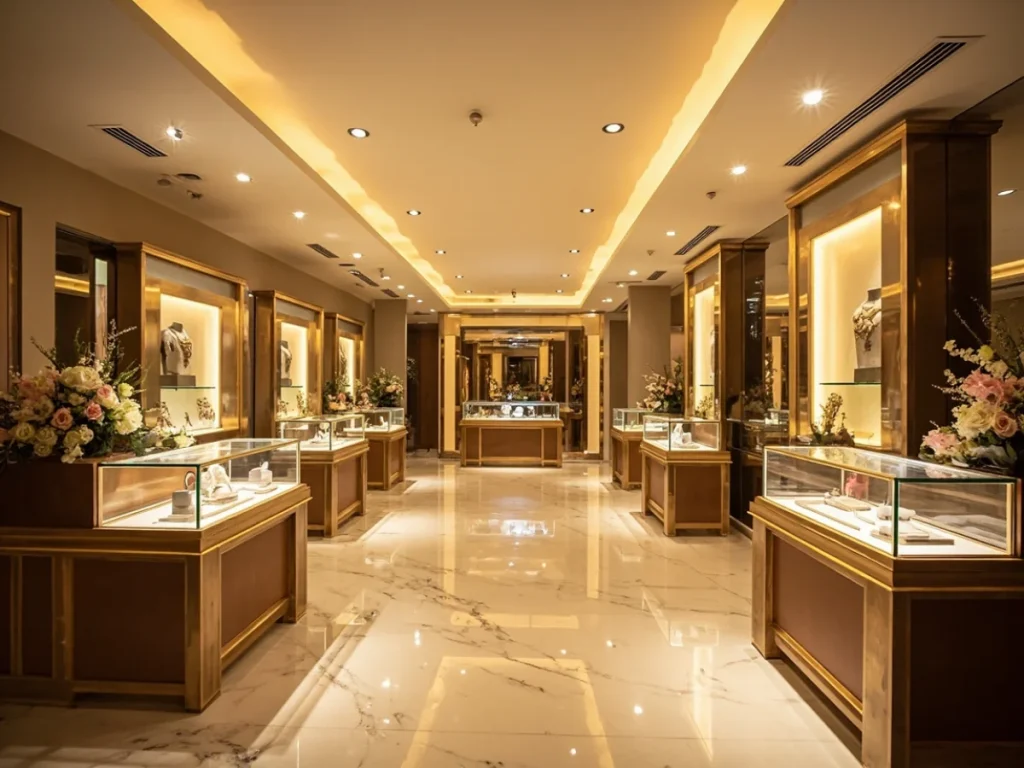
A jewelry showcase RFQ is the document that decides whether your project moves from idea to production in weeks or drifts for months in email threads. Guangzhou manufacturers receive dozens of inquiries weekly, and the ones that get fast, accurate quotes share one trait: the buyer communicated geometry, volume and performance requirements before asking for a price. When any of those three is missing, the factory is forced to guess — and a guess becomes either an inflated quote to cover risk or a cheap quote that omits what you actually needed. This guide breaks down what a professional request for quotation should contain, with specific numbers you can copy into your own template.
Start with drawings, even rough ones
You do not need a licensed architect to issue a credible jewelry showcase RFQ, but you do need dimensioned drawings. A hand sketch with millimeters beats a photo of an inspiration showcase, because photos force the supplier to reverse-engineer size from pixel ratios. At minimum, provide a front elevation, a side section and a plan view for each showcase type. Mark overall length, depth and height, the height of the glass display area above the counter, and the height of the base or storage plinth. Show door or drawer positions and swing direction, and note whether the unit sits against a wall, in a free-standing island, or in a window.
Indicate the drawing scale and units explicitly — mixing inches and millimeters is one of the most common causes of error in international orders. If you have a CAD file, send DWG or DXF plus a PDF set so the factory can read it without special software. Add a simple 3D sketch or reference photo for style direction, clearly labeled as reference only, not to scale, so the supplier knows which geometry is binding.
Quantities and the phasing plan
Quotes are volume-sensitive. A single tower case and a 40-piece rollout carry very different unit costs because tooling, jig setup, material purchasing and packing are amortized across the order. State quantities per model and per size variant separately, and say clearly whether the order is one shipment or phased across stores. Useful numbers to include:
- Quantity per SKU, for example 6 wall cases, 4 island towers, 12 counter pads.
- Total project volume, which usually determines whether the factory proposes a dedicated production slot.
- Phasing, such as 40% in the first shipment and 60% eight weeks later, with target dates.
- Spare parts required, typically 1–3% extra glass panels, locks or shelf brackets.
- Packaging preference — export cartons with foam, or returnable crates for multi-phase projects.
Specify the destination port or door address as well. Shipping method influences crate design, and crate design influences the structural bracing required inside the showcase, so it belongs in the RFQ, not in a later email.
Specifications that actually move the quote
This is where an RFQ earns its keep. Vague specifications like “premium finish” or “high security” cannot be priced, while concrete ones can. Cover the following categories and give a value or an approved choice for each:
Materials and finish. Name the body material — MDF, plywood, steel, aluminum — and the finish, such as matte lacquer at a stated gloss level, brushed stainless steel, or leather-wrapped panels. Give a color reference: RAL or Pantone numbers prevent repaint cycles. State the glass type: tempered or laminated, with thickness (8–10 mm is common for vitrines, 6–8 mm for countertops) and edge treatment.
Lighting. Provide the color temperature (3000K, 3500K or 4000K), CRI (90+ is standard for jewelry), total wattage per showcase, and voltage. Confirm whether drivers should be internal or remote, and whether you need dimming, motion sensors or a unified control system across the store. Add the destination country’s plug type and voltage so the factory builds the correct electrical assembly.
Security and hardware. Specify lock type — cam lock, central locking, or electronic — hinge brand or acceptable equivalents, and whether hidden compartments or drop-in trays are needed. For museum or high-value retail projects, state whether alarmed glass or time-delay locks are mandatory.
Compliance and documentation. List certificates needed at import, product safety standards for your market, fire performance of panels, and whether your retail clients audit factories for social compliance. Include labeling and mounting instructions in your warehouse or store language.
Commercial details to include up front
A complete jewelry showcase RFQ also answers the buyer-side questions the supplier will ask anyway. State the target unit budget or the budget envelope, because it tells the factory which materials and detailing are realistic. Give required delivery date at destination, not just ex-factory, and note whether you accept proposed alternatives where specifications are open. Clarify Incoterms, preferred payment structure, and whether samples or pre-production prototypes are expected — many suppliers quote a sample fee of roughly 1.5–2 times the unit price and credit it against the bulk order.
End with simple evaluation criteria: ask for a quote broken into showcase structure, lighting, glass, packing and freight, so you can compare offers line by line rather than chasing single lump sums.
How Libafang handles incoming RFQs
Once the RFQ includes dimensioned drawings, per-model quantities and quantified specifications, a factory can usually confirm feasibility and issue a drawing-based quote within a few working days. Libafang, a Guangzhou manufacturer of custom display showcases for jewelry stores, watch boutiques and museums, reviews submitted drawings and specs and returns a marked-up proposal with material recommendations for any open items.
Put these four sections into one PDF package — drawings, quantity table, specification sheet, commercial terms — and attach your logo for reference. Suppliers read consistent packages faster, ask fewer clarifying questions, and quote at a lower risk premium. If you are unsure which glass or lighting spec suits your store, note the gap in the RFQ rather than omitting it entirely; a good manufacturer will propose options with prices instead of asking you to resubmit the whole file.
Ready to move from concept to quote? Send your sketches, quantities and specification list to request a free design proposal and quote, and receive a line-by-line response covering structure, lighting, glass and packing.