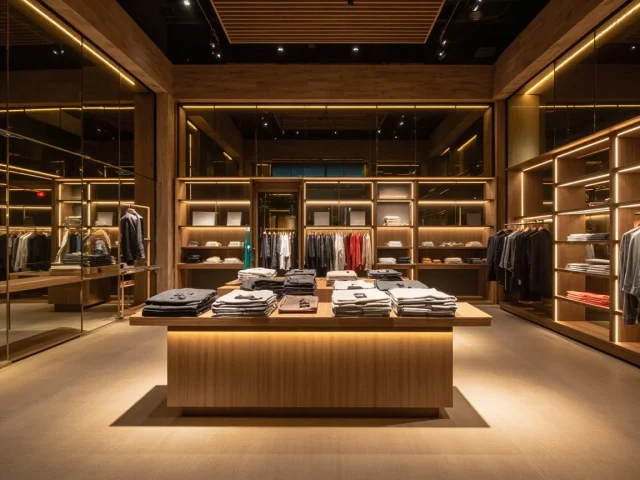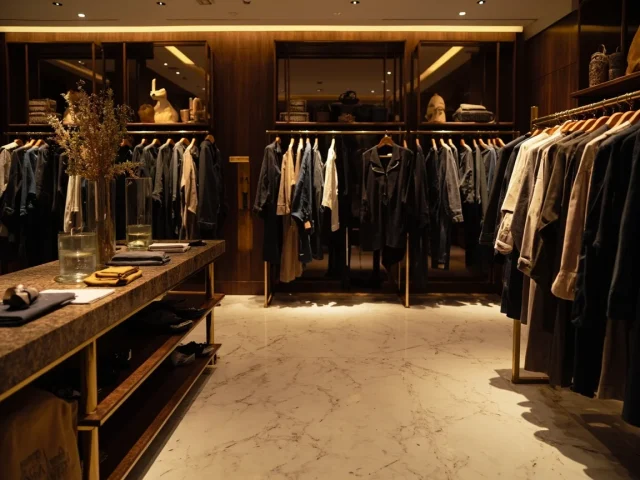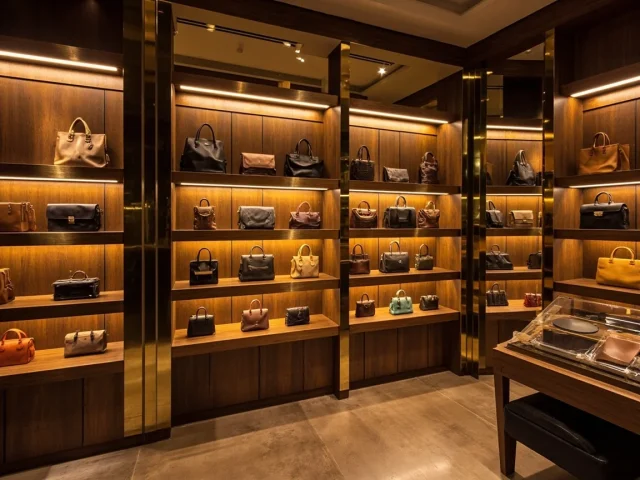
A luxury display cabinet lives or dies on details a photo cannot capture: the way a 45-degree mitre closes, whether the LED colour shifts between the top and bottom shelf, how the lock feels when a sales associate turns the key at 10 a.m. on a Saturday. For buyers sourcing custom showcases from a Guangzhou factory, the pre-production sample is the last cheap moment to catch those problems. Once tooling is committed and 200 frames are cut, a 2 mm gap becomes a 200-unit rework bill. This guide sets out what a luxury display cabinet sample approval should actually cover, with the tolerances, tests and documents worth demanding before you sign off.
Agree the specification document before you look at the sample
Sample approval starts long before the sample arrives. Approve a written spec sheet first, so the physical sample can be judged against something objective rather than against memory. The sheet should lock down dimensions with a ±1 mm tolerance on carcass width and ±0.5 mm on door reveals, panel thickness (18 mm or 25 mm MDF is typical; 25 mm reads as heavier and more premium), glass type and thickness (6 mm or 8 mm tempered low-iron), LED colour temperature and CRI, lock brand, hardware finish, and the exact paint or laminate reference. For thin-frame aluminium systems or timber extrusions, require a drawing of the profile rather than a photo — profile geometry is where cheap alternatives show worst.
Include the packing method in the same document. A cabinet that arrives flawless but chipped because foam thickness was cut from 20 mm to 10 mm is not a successful sample. Typical export packing for luxury display cabinets runs 15–25 mm EPE foam plus a 5-ply carton, with foam corner blocks on any glass-to-frame edge.
Inspect materials and finish in raking light, not direct light
Most finish defects are invisible under showroom downlights. Ask for the sample to be inspected under a raking light at roughly 15–30 degrees to the surface, ideally near a window, and photograph it that way. On a lacquered MDF panel, count orange-peel texture and check for dust nibs. On brushed stainless or anodised aluminium, check that brush lines run consistently across adjacent parts — mismatched direction is immediately visible on a joint. On PU leather lining, look for colour variation between roll cuts and check that stitching density is consistent, around 8–10 stitches per inch for premium work.
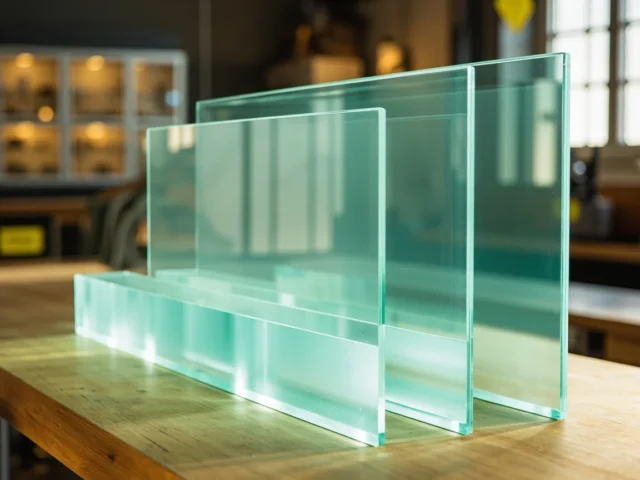
Also verify the declared grade of the glass. Low-iron glass should read almost colourless at the edges; ordinary float glass shows a green cast that makes white gold and diamonds look dull. Ask the supplier to state iron content or provide the glass certificate, and compare an offcut against a known low-iron sample if you have one.
Test lighting, hardware and function like a customer would
Lighting and hardware deserve their own test pass, because they account for a large share of after-sales complaints. Run the cabinet for at least 30 minutes and check that colour temperature is uniform shelf to shelf — 3000K to 4000K is the usual luxury retail range, with CRI 90 or above preferred so gemstones and watch dials render accurately. Look for hot spots on the back panel and visible LED dots through diffusers. Confirm whether the driver is internal or remote, and whether dimming is onboard or needs an external controller.
Then move to mechanical checks. Use this approval sequence in order:
- Door and drawer action — open and close every moving part 20 times; check reveal gaps are even, dampers land softly, and no hinge screws are proud of the panel.
- Lock and key — turn each lock 10 times, confirm the key inserts without wiggle, and check that the barrel sits flush.
- Drawer load — load sliding trays and drawers to their rated weight (typically 15–25 kg for soft-close runners) and confirm they pull level without racking.
- Stability and levelling — place on a flat floor, adjust the feet, and try to rock the cabinet; a free-standing unit should not shift under moderate hand pressure.
- Glass and edge safety — confirm all edges are polished or seamed, tempered glass carries its marking, and shelves have adequate clips or pins.
- Touch-up and finish — inspect interior surfaces, shelf edges and the back of doors, which are the areas factories routinely skip.
Insist on the same factory and the same BOM for the sample
One trap in custom showcase sourcing is the sample being built by a dedicated sample team with better parts than the production line. Require the sample to be built from the same bill of materials as production, and ask whether the sampling technician will also supervise the bulk run. Get the LED brand, driver model, lock brand and glass supplier written into the purchase order, with an agreed substitute clause. If a component is unavailable later, you want notification and re-approval, not a silent swap.
Where your volumes justify it, ask for a second sample from the actual production line once the first batch begins, and compare it side by side with the approved golden sample. Factories that manage luxury accounts well will keep your golden sample, sealed and dated, for reference on repeat orders. Libafang handles this as standard for export programmes, keeping the approved sample and its spec sheet on file so repeat orders match the original.
Document the approval so disputes never happen
Close the process with paperwork both sides sign. A useful approval pack contains the signed spec sheet, the golden sample with a dated approval label, 10–20 close-up photos under raking light, a lighting test video, packing photos with foam thickness measured, and any test reports relevant to your market — for example flame-retardant fabric certificates, RoHS declarations for LED components, or ISTA-style drop test results. Skincare and cosmetics retailers often add colour-matching tolerances; museums and galleries usually add low-VOC and off-gassing requirements for enclosed cases.
Budget your timeline realistically. Sampling for a custom luxury display cabinet typically takes 10–20 working days, and shipping a sample to Europe or North America adds 5–10 days by air. Allow one revision round, because almost every first sample needs a tweak to finish, lighting or reveal gaps. If the factory can turn a revised sample in under a week, that is a good signal about their workshop capacity.
Approve slowly and the production run becomes uneventful. Libafang Showcase Co., Ltd. builds custom display showcases for jewelry stores, watch boutiques, museums and luxury retail, and exports to more than 30 countries — with sample approval treated as the contract, not a formality.
Ready to see your cabinet before committing to a run? Send your drawings, dimensions and finish references, and our team will return a free design proposal and quotation with a clear sampling schedule.