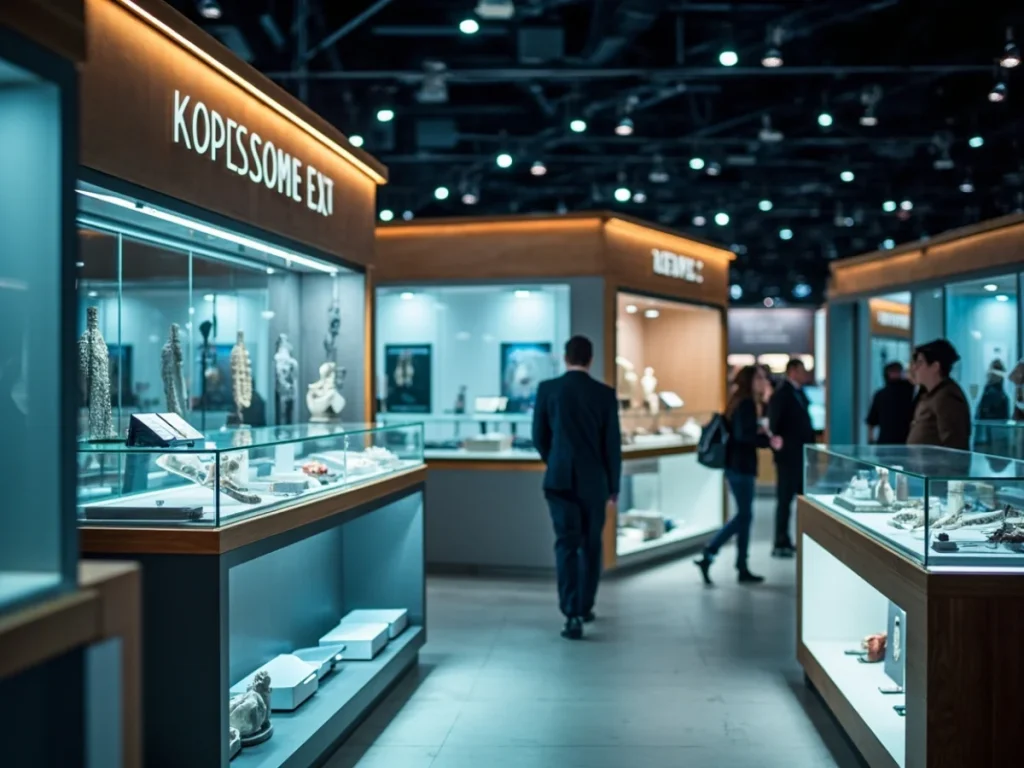
Ceramics are among the most demanding objects to display well. A 40 cm porcelain vase may weigh under 2 kg, yet it is fragile, often top-heavy, and easily damaged by a tipped base or an accidental bump. Museum display cases for ceramics must do three jobs at once: hold each piece with engineering-grade stability, keep sightlines unobstructed from every visitor height, and protect the collection from dust, vibration, and abrupt climate swings. This article walks through the practical decisions — support design, load ratings, glazing, lighting, and case layout — that determine whether a ceramic exhibition looks calm and reads clearly, or feels precarious and cluttered.
Start with the Object Survey, Not the Case
Before choosing a case, measure and weigh every ceramic piece you plan to show. Record height, maximum diameter, base diameter, weight, and centre of gravity. For a typical porcelain vase, the centre of gravity often sits at 40–45% of total height; a wide-bodied jar may sit lower. These numbers drive everything downstream. A useful rule of thumb: the support footprint should be at least 60% of the object’s base diameter, and for tall, narrow forms — a 50 cm vase with an 8 cm foot, for example — consider a concealed internal mount or a weighted base plate rather than relying on the object standing alone.
Design Stable Supports for Every Ceramic Type
Stability is a structural problem, not a styling one. Group your collection into categories and assign a support strategy to each:
- Vases and bottles: use a recessed base ring lined with archival foam, sized to the foot diameter, so the piece cannot slide. For pieces over 35 cm tall, add a hidden stainless-steel rod or a low-profile acrylic cradle.
- Plates and chargers: mount on a back-leaning acrylic or brass easel with a lip that captures the foot; the easel angle should be 75–80 degrees from horizontal to reduce forward tipping.
- Bowls and shallow dishes: set into a custom-cut foam nest that contacts the body below the rim, never the rim itself.
- Figurines and sculptural forms: use a brass or acrylic pin mount through a concealed hole or a clear film harness; avoid adhesives on glazed surfaces.
All support surfaces that touch ceramic should be covered with unbuffered, lignin-free tissue or polyethylene foam — never bare metal, wood, or standard foam, which can off-gas and stain glazes over years.
Clear Sightlines: Case Geometry and Glazing
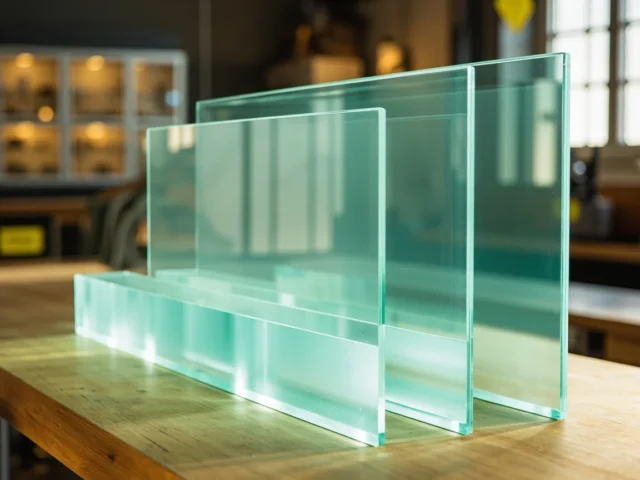
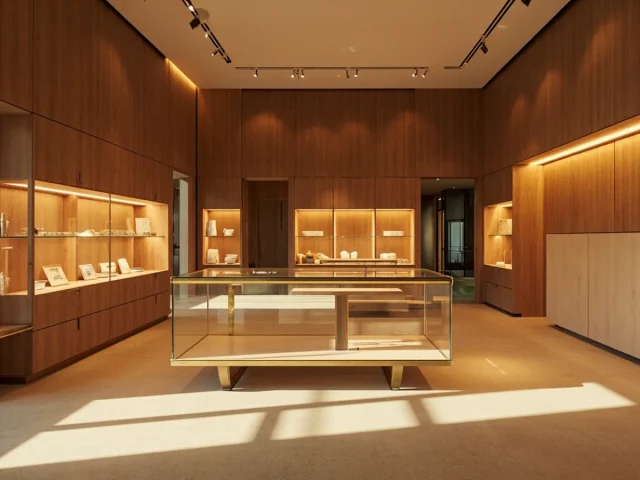
Visitors should see the full silhouette of each ceramic without stooping or peering around frames. For floor-standing cases, set the display deck at 90–100 cm above finished floor for average adult viewing, and keep the visible glazed area free of horizontal mullions between 110 cm and 170 cm — the primary sightline band. For table cases, a deck height of 95–105 cm works for seated and standing viewers alike. Glazing choice matters as much as geometry: low-iron glass with visible light transmission above 91% and anti-reflective coating reduces glare from gallery lighting by 60–80% compared with standard float glass, which is critical for glossy celadon and porcelain surfaces. Where UV-sensitive glazes or associated textiles are present, specify laminated glass with a UV filter blocking at least 98% of radiation below 400 nm.
Load Ratings, Seismic Restraint, and Environment
Ceramic displays fail most often through vibration and accidental impact, not deliberate theft. Specify cases with adjustable levelling feet and, in seismic zones, base isolation or wall anchoring rated for the local peak ground acceleration. Glass shelves should carry a safety factor of at least 4: a 6 mm tempered shelf typically supports 40–50 kg per square metre when evenly loaded, but point loads from a heavy vase concentrate stress — distribute weight with a solid deck or a load-spreading plinth. For climate, aim for 45–55% relative humidity and 18–22°C, with fluctuations under ±5% RH per 24 hours; sealed cases with silica-gel cassettes or active microclimate control help hold these targets. Lighting should stay below 50 lux for sensitive glazed surfaces and under 200 lux for robust stoneware, with LED sources that emit no UV and minimal heat.
Layout and Visitor Flow
Plan the exhibition so each case has a clear approach zone of at least 90 cm and a viewing distance of 60–100 cm from the glass. Avoid placing tall cases where they block sightlines to adjacent displays. A useful checklist for final layout review:
- Confirm every object’s silhouette is visible from 120 cm, 150 cm, and 170 cm eye heights.
- Check that no reflection from windows or ceiling lights falls across the primary viewing angle.
- Verify that case doors or removable panels open without disturbing neighbouring objects or sightlines.
- Test that support mounts are invisible from the main viewing cone.
- Ensure labels and object numbers are readable at 60 cm without leaning on the glass.
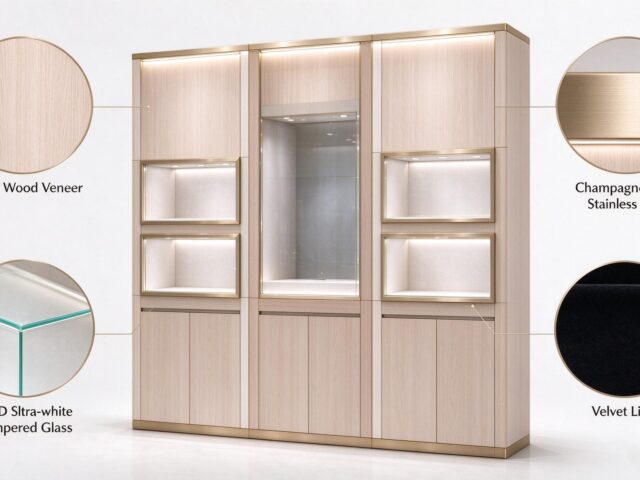
At Libafang, we build custom museum display cases with integrated support systems, low-iron anti-reflective glazing, and microclimate-ready sealed volumes; our engineers review object surveys and produce CAD layouts before production. A well-planned case is invisible — visitors see only the ceramics, exactly as intended.
Bring Your Ceramic Collection Into Focus
If you are planning a ceramic exhibition or upgrading an existing gallery, the difference between adequate and exceptional display comes down to details: correct support geometry, controlled glare, stable climate, and sightlines tested at real visitor heights. Request a free design consultation and quote from our team, and we will help you translate your object survey into a display case specification that protects every piece and shows it clearly.