Archaeological collections rarely hold one material. A single trench can yield bronze fragments, bone, waterlogged wood, glass beads, textile traces and corroded iron — each with a different appetite for moisture, oxygen and light. Putting them in one museum display case forces a decision: you either compromise on microclimate or you build the case around the most demanding objects. This guide covers the practical planning steps for archaeological display cases holding mixed materials, from material compatibility tables to humidity zoning, lighting numbers and the build details that often get missed until installation week.
Map the materials before you specify the case
The most common planning error is choosing the case before cataloguing what goes in it. Start with a table of every object, or object class, intended for the display. Note the material, the soil burial environment, whether it came from waterlogged conditions, and whether it has been treated. Then group the objects by how much humidity and light they can tolerate.
Typical archaeological materials fall into a few buckets:
- Iron, copper alloy and corroded metal: stable at 35–45% RH; above 50% RH. Active corrosion can restart within days.
- Bone, antler, ivory and shell: 45–55% RH. Should not be stored dry or they exfoliate.
- Waterlogged wood, textile and leather: 50–55% RH with minimal cycling. This directly conflicts with metal.
- Glass with crizzling, enamels and certain ceramics: 45–50% RH. Also conflicts with wet organics.
- Stone, fired ceramics and gold: tolerant at 40–60% RH; usually less restrictive.
Once you have the buckets, your display design follows from them. The key decision is whether to keep the high-RH organic group in a separate case or use a single case with internal compartments. Mixed materials in one sealed volume almost always settle at an average humidity that is wrong for at least one group. Two smaller dedicated cases often cost less than one large case with a custom hydraulic microclimate system.
Set humidity targets and accept that one case serves one group
For most archaeological mixed-material displays, a practical approach is to split into two or three case groups at 40–45% RH for metals and 50–55% RH for organics, keeping cycling below ±5% over 24 hours. Stone and ceramics can sit with either group.
Control methods matter as much as the target. Passive control with conditioned silica gel works well in tight cases under 0.5 m³, but gel needs accessibility for recharge. Active control with an internal microclimate unit, using a small Peltier or thermoelectric system, is better for large volumes above 1.5 m³, but it needs a service route. The case must accommodate the controller, its power, and the sensor cable without visible clutter. Access doors for silica gel should be 400 x 400 mm minimum so a technician can swap cassettes without removing objects.
Specify gaskets properly. A tubular silicone gasket in a machined channel is standard for museum-grade cases; a magnetic seal is acceptable for well-buffered passive cases. Ask suppliers for the air exchange rate at an agreed pressure differential, not a vague claim.
Choose case materials that release nothing into the chamber
Archaeological objects are often metal-rich and sensitive to volatile organic compounds. Off-gassing from adhesives, painted MDF, foam and fabric can cause tarnishing and corrosion. For a mixed display, the safest materials are low-emission and well-documented.
Use powder-coated or anodised aluminium frames rather than PVC or untreated steel. Interior surfaces should be low-emission MDF with a sealed, moisture-cured finish, or better still, aluminium honeycomb panels. Avoid acidic papers, uncured silicone, and standard double-sided tape. For mount and support materials, use inert polyethylene foam, conservation-grade felt, and stainless steel fixings with an insulating layer so metal does not touch the artefact directly.
Request a material safety data sheet or a corrosion screen for every internal material in the bill of materials. For displays holding mixed archaeological finds, include a period of at least 2 weeks of flushing before objects go in, and monitor with an air quality sensor or simple odour check.
Match lighting to the object, not the room
Light is the quietest form of damage in an archaeological case. The usual limits are 50 lux with UV below 75 µW/lumen for sensitive organics and pigments, 200 lux for moderately sensitive materials such as bone and some ceramics, and 300 lux for stone and gold. Most mixed displays end up choosing a single illumination level, and that level should follow the most light-sensitive object in the case.
Use LED modules with a CRI of 90 or higher, a colour temperature around 3000–3500 K for general archaeology and a narrow beam for detail. Keep UV below 1% of total emission. Put controls on a timer or dim the case when the gallery is closed, and let the light only hit the object front panel; upper-case lighting that grazes the interior is both dramatic and damaging. Plan cable routes and driver positions outside the object chamber so heat and maintenance access do not disturb the microclimate.
Design for the archaeologist, not just the visitor
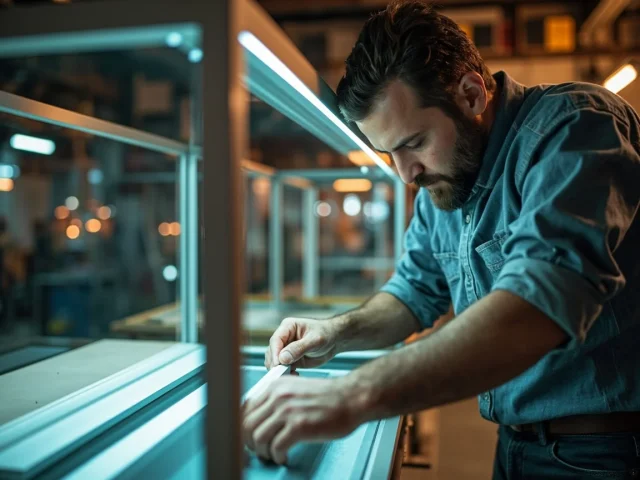
Archaeological display cases need to be serviceable. Objects arrive on trays, need periodic inspection, and sometimes require an emergency removal. A case with access doors in fixed positions and removable shelves solves most future problems.
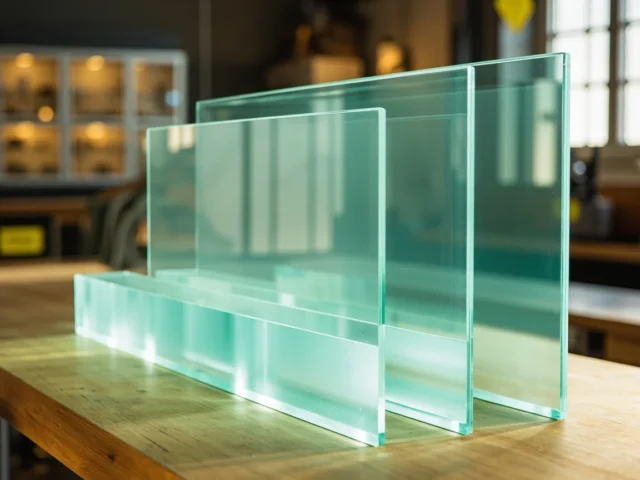
Consider a completely removable front or top glazing panel for major installations. Specify glazing with laminated low-iron glass, min 6 mm thickness, and use anti-reflective coating on museum-grade panels. For heavy stone or architectural fragments, build the base to take 200–300 kg per point, and design transport routes before the gallery is finished.
If the display mixes 30 or more objects in a single case, request an object-level layout with wall thickness drawn at scale, plus a 50 mm buffer zone around fragile items. Libafang regularly runs these layouts in dialogue with curators during prototype stages to ensure collector and fabricator agree before cutting.
Test the case before the objects arrive
Acceptance testing closes the loop. Run a 72-hour airtightness and humidity stability test with a calibrated data logger inside the closed case. Accept if the RH stays within ±3% of the target and does not drift more than 5% per day. Confirm all internal materials have had their curing period, and ensure the case is wiped clean before installation.
A well-specified mixed-material archaeological case is not expensive by default. It is precisely planned: two humidity zones are cheaper than one compromised one, low-emission materials cost little more than standard ones, and correct lighting protects objects for decades. If you are planning a gallery, Libafang can prepare a free design and quote around your object list, site dimensions and conservation targets. Send us your material schedule and we will return a layout and budget for review.