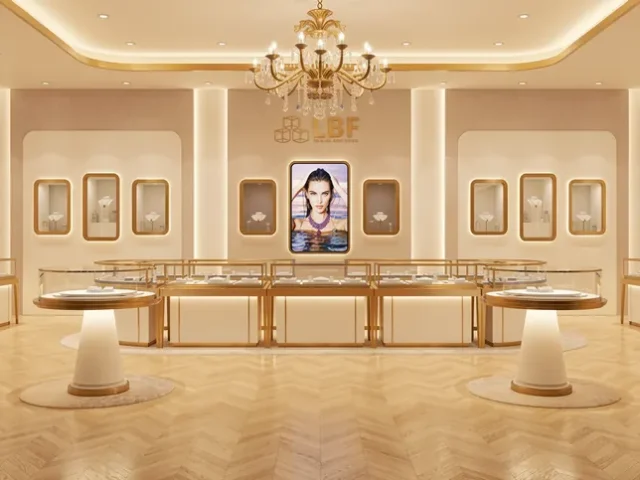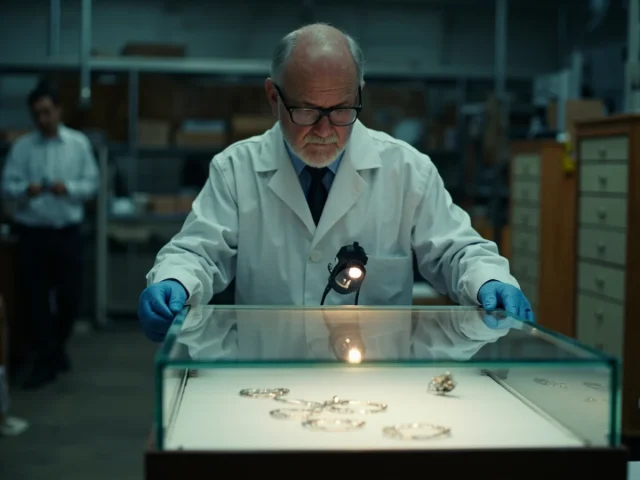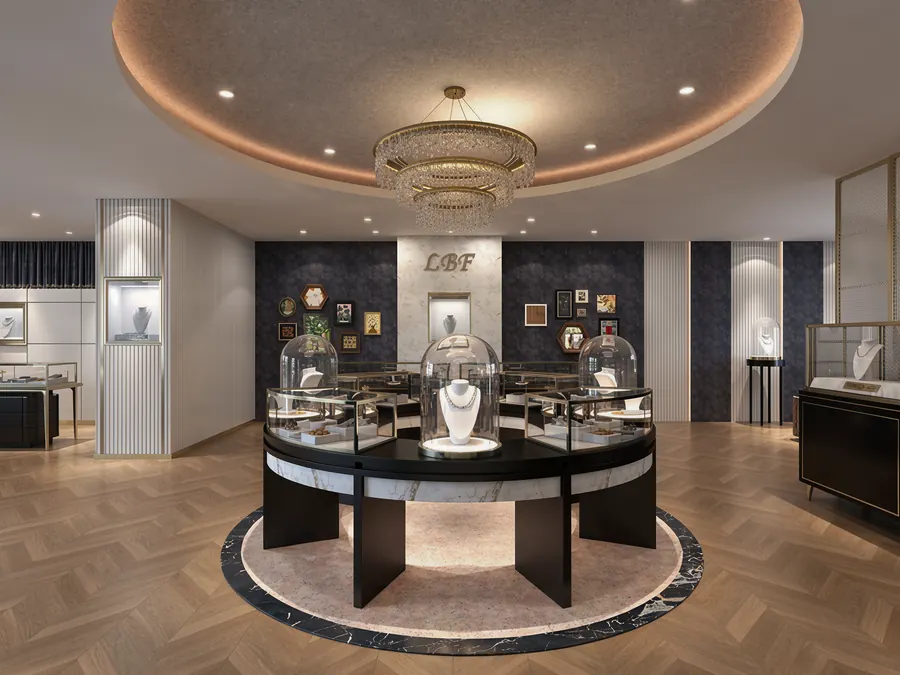
Bracelet display counters do more than hold product; they control how quickly a customer’s eye finds a piece, how easy it is to lift and try on, and how much stock a shop can show without looking crowded. On a typical counter of 1,200 mm width and 600 mm depth, the difference between a well-planned layout and a random arrangement can be 30–40% more visible SKUs at the same perceived density. This guide covers the decisions that matter: holder type, spacing rhythm and tray construction.
Start With the Counter, Not the Bracelets
Before choosing holders, fix the working dimensions. Most retail counters sit at 900–1,000 mm finished height, with a customer-facing ledge for small hand mirrors, cards and a tray pad. The display field usually starts 100–150 mm back from the front edge, which protects product from handbags and gives staff a clear sightline from behind. Inside that field, avoid using the entire depth for product; a 120–150 mm reserve at the rear holds backstock trays, price tags or a lockable drawer.
Lighting also shapes holder choice. If the counter uses 3000K LED strips at 400–600 mm above the surface, glossy acrylic holders will produce hotspots and metallic bangles will flare. Matte finishes and fabric-wrapped decks reduce reflections. If illumination is recessed or indirect, transparent holders can work well because they let light pass through to shadowed tray areas.
Choosing the Right Holder Type
Holder style should follow the bracelet form. A rigid bangle needs a different support than a flexible chain with a clasp that can scratch neighbouring pieces.
- C-rings and half-moons: best for bangles and cuffs 55–70 mm inner diameter; a 30–40 mm lift keeps the piece visible above the tray deck.
- T-bars and flat bars: suited to chains and charm bracelets; 60–80 mm bar width stops chain from bunching and lets labels sit underneath.
- Ring stands and cones: useful for stacking bracelets in graduated pairs or colour families; make sure the cone base does not exceed 50 mm or it eats tray space.
- Pillow and cushion stands: soft leather and felt cushions suit luxury presentations but hide the clasp, so pair them with a small angled card.
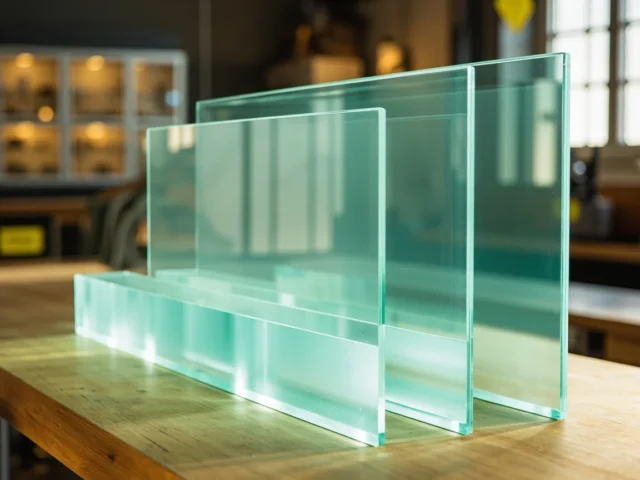
- Transparent risers: acrylic or glass blocks that raise a whole group 60–100 mm without adding visual weight; ideal in museum and gallery contexts.
Material comes down to wear and perception. Velvet-covered holders read as jewellery-appropriate but collect dust and need replacement or cleaning cycles; flocked foam is cheaper and lighter; matte acrylic is durable and easy to wipe, though it shows fingerprints under direct light. For watch boutiques that show bracelets alongside straps, a common approach is to keep metal hardware on separate elements from leather goods so scratches stay isolated.
Spacing: How Much Room Each Bracelet Needs
Space is where most counters fail. Too tight and products collide during handling; too loose and the counter looks unfinished. Practical starting points:
For horizontal T-bars, allow a minimum centre-to-centre pitch of 75–90 mm for chain bracelets, rising to 100–120 mm for chunky cuffs and bangles. For vertical C-rings, allow 70–90 mm between ring centres for pieces up to 10 mm thick, and 100 mm or more where stones or charms protrude. Grouping items at 3–5 per block reads as intentional, and leaving a 20–30 mm gutter between groups creates the breathing space that separates price bands or collections.
Height matters too. Keep the tallest pieces at the back of the display field and step downward toward the customer. A 30–50 mm height increment per row is usually enough for a counter seen by a standing customer; larger steps can hide pieces behind. Ensure the front row sits above the counter ledge so nothing is obscured from a normal viewing distance of 500–700 mm.
Tray Layout and Construction
A tray is the repeatable unit that makes display manageable. Rather than laying out a whole counter as one fixed composition, design modular trays that staff can swap during restocking or seasonal changes.
Common tray sizes that divide cleanly into standard counter widths include 300 × 400 mm, 400 × 400 mm and 600 × 400 mm. A 1,200 mm counter can hold four 300 mm trays or a mix of two 600 mm and two 300 mm units. Set tray internal depth at 40–60 mm for bracelets, with a recessed foam insert 10–15 mm thick that holds each holder base snugly. Where the store sells high-value pieces, a lockable glass-top tray or a sliding cover keeps product protected during viewing.
Give some thought to the base structure. Removable trays need grab points — a 10–15 mm finger notch at the front edge works better than lifting by the corners. If the counter is a travelling exhibition unit, add anti-slip pads and a lip on the front rail so trays do not shift in transit. For trade shows, plan trays around a 30-second reset: holders fixed in foam, price cards in defined slots, and spare pieces stored in a shallow drawer beneath the display field.
Colour, Labels and Finishing
A quiet palette supports the product. Neutral decks in warm grey, ivory, taupe or deep navy keep attention on metal and stone. Match holder covering to the tray foam so metal tones read cleanly, and avoid bright white under high-output LEDs, which can bounce light and wash out gemstone colour.
Price and specification labels should sit in a consistent position — usually 20–30 mm below or beside each holder — so customers can scan groups rather than hunt. Small angled cards or recessed label slots keep the counter surface tidy. For museum displays, printed captions in a fixed grid at the front edge read as institutional and reduce the temptation to add loose signage later.
Working With a Manufacturer
Custom counter production is mostly about agreeing tolerances early: material thickness, light positions, drawer hardware and the exact holder footprint. Libafang Showcase Co., Ltd. builds display showcase counters for jewellery retailers, watch boutiques and museums, and can produce tray inserts and holders to match an existing counter or a new design. Send the counter dimensions, holder sizes, bracelet counts and preferred finish, and the design is worked through before production, with a sample or technical drawing available at the approval stage.
Request a free design and quote with your counter dimensions, product quantities and finish preference — you will get a layout proposal and a cost breakdown for holders, trays and counter structure.