
Price labels are the smallest element in a display case and the one customers interact with most directly. A shopper leaning over a glass top will read the tag before they ask an associate for help — and if that tag is too small, smudged, or clipped to the wrong place, the sale starts with friction. The design problem is real: a jewelry counter product labels system has to carry a price, often a material and a carat or reference number, and do it inside a case where every extra square centimeter competes with the product itself. The answer is not bigger labels. It is a tighter system — consistent sizing, disciplined placement, and the right substrate for the case you are actually using.
Start With a Type Scale, Not With Font Choice
Most crowding problems begin before anyone picks a font. When each category gets its own label size, the case fills with visual noise. Fix it with a fixed type scale and apply it across every counter.
- Tier 1 — hero labels: one or two per case for feature pieces, roughly 45 × 25 mm, price at 14–16 pt.
- Tier 2 — standard labels: the workhorse size, about 35 × 20 mm, price at 10–12 pt, secondary detail at 7–8 pt.
- Tier 3 — micro labels: 25 × 12 mm for earring pairs, chains and stacked rings, price at 8–9 pt minimum.
Legibility research consistently puts comfortable reading for standing customers at roughly 1 mm of cap height per 300 mm of viewing distance. Typical counter viewing distance is 400–500 mm, so a price set below 8 pt will be squinted at. Keep the numeral itself large and the descriptive text small — the price and the SKU are what people scan.
Placement Discipline Prevents Visual Clutter
Crowding is usually a spacing failure, not a size failure. Two rules solve most of it. First, align every label to a front or rear datum line rather than floating it next to the product; a shared baseline reads as calm and lets customers compare prices down the row. Second, keep a clear gap of at least 15–20 mm between label edges and any neighboring ring, pendant or tag.
For trays, place the label forward and slightly to the right of the piece — the natural reading path from an entering customer. For high vitrines viewed from the side, angle the label 10–15 degrees toward the viewer or use a low-profile stand so it does not sit flat and unreadable behind glass. Consistent placement matters more than perfect placement: a slightly awkward but repeatable position is easier to shop than an optimized arrangement that changes case to case.
Materials That Stay Readable on Glass
Counter labels fail in predictable ways: glare wash-out under ceiling spots, curling edges on acrylic holders, ink wear on frequently wiped surfaces, and adhesive residue on velvet. Choose materials by counter type rather than by price per unit.
For glass-top jewelry cases, matte laminated card stock at 300–350 gsm with a brushed or anti-glare finish kills most reflections and can be replaced cheaply as pricing changes. For museum and luxury retail vitrines, consider 1–2 mm engraved or printed acrylic with sandblasted faces for a quiet, premium read that survives years of handling. Where the same case is re-merchandised weekly, magnetic or slot-in label holders outlast adhesive and leave no residue. Avoid gloss lamination within 300 mm of a spotlight — it is the single most common cause of unreadable price tags in a bright showroom.
Pricing Systems That Keep Labels Accurate
Readability is partly a fact of print and partly a fact of workflow. A label that states the wrong price is a trust problem, not a design problem. Build a simple discipline: one label template per category, a shared SKU and price database, and batch printing on a fixed schedule rather than ad hoc replacement whenever someone notices a mismatch.
For stores with frequent markdowns, corner-cut change labels or small printed overlay stickers in a matched typeface keep the case tidy, provided they are applied in the same position every time. If you use electronic shelf labels or QR codes, keep the printed price physically large and put the code in a secondary position — customers still need to read the number at a glance. Legible, current pricing reduces staff interruptions and shortens time to decision, which is measurable in any busy jewelry floor.
Matching Labels to the Display Case
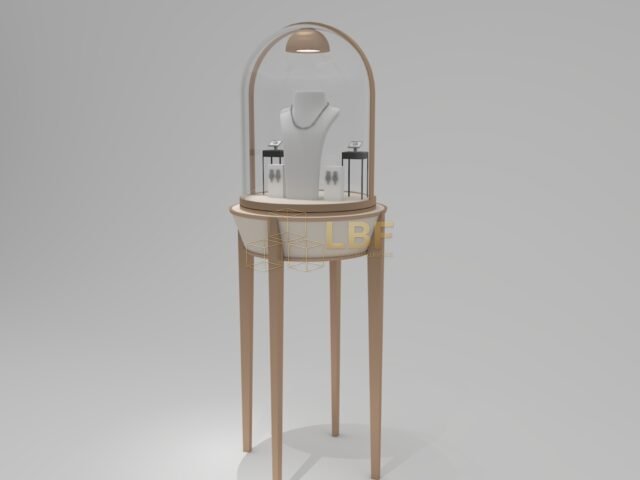
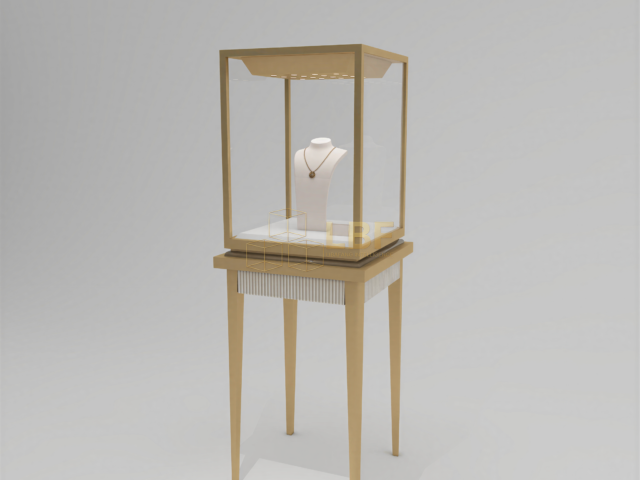
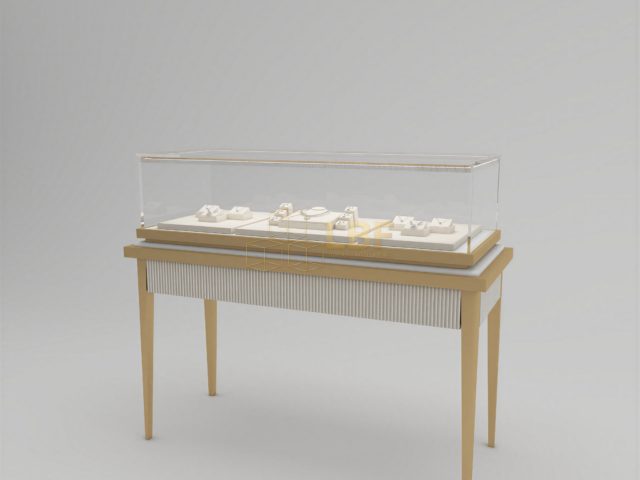
Labels and fixtures should be specified together. A case with internal LED strips, low glass fronts and dense tray layouts has different label needs than an island counter with a deep deck and open sightlines. This is where manufacturing the display and the labeling system from one supplier pays off: label angles, holder depths and signing strips can be coordinated with the tray and case geometry instead of retrofitted.
Libafang Showcase Co., Ltd. builds custom display showcases for jewelry stores, watch boutiques, museums and luxury retail, exporting to more than 30 countries, and can coordinate label holders, sign strips and case dimensions in a single design package. When the sales counter, vitrine and label system are designed as one piece of furniture, the price tags stop fighting the product for space.
Checklist Before You Reprint
- Measure the actual viewing distance in each case and set minimum type size from it.
- Audit label count per tray — if the label area exceeds roughly 15% of the visible product area, declutter.
- Standardize on three sizes and one typeface across all counters.
- Match substrate to lighting: matte near spotlights, textured acrylic in premium vitrines.
- Confirm alignment lines and minimum 15 mm clear gaps between labels and products.
Getting the label system right takes a day of measurement and a single print run; the benefit shows up in every customer who reads a price without having to ask. If you are planning new counters or refreshing an existing store, send us your case dimensions and product mix for a free design and quote — we will propose a label and signage scheme that fits the fixture, not just the printer.