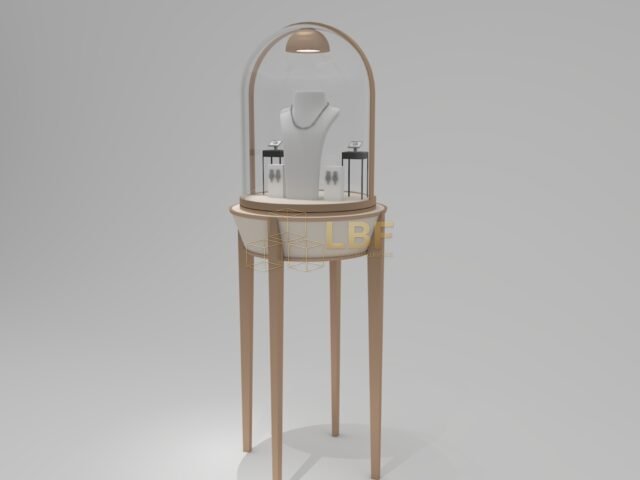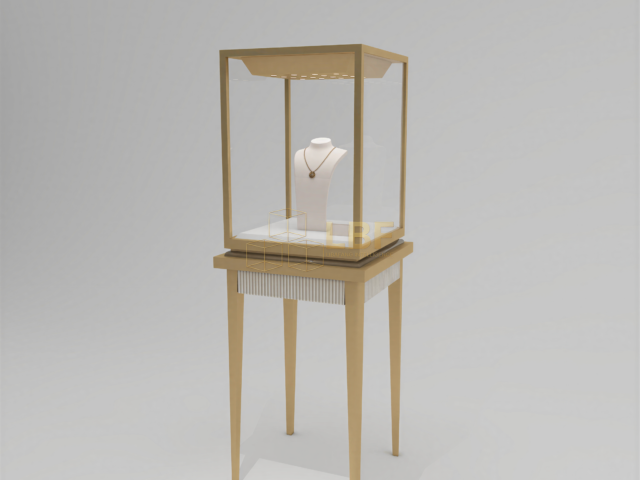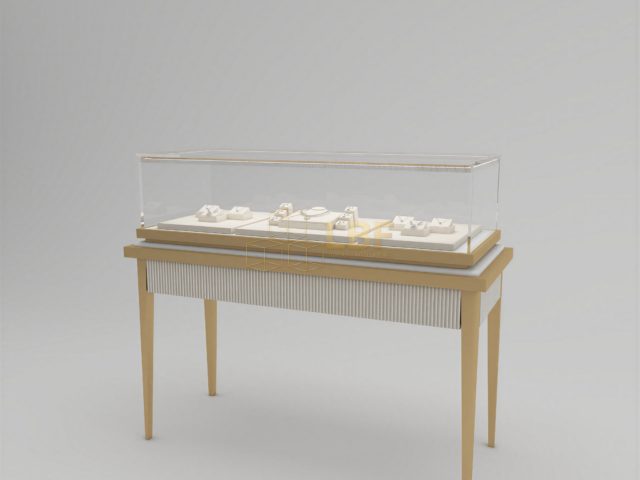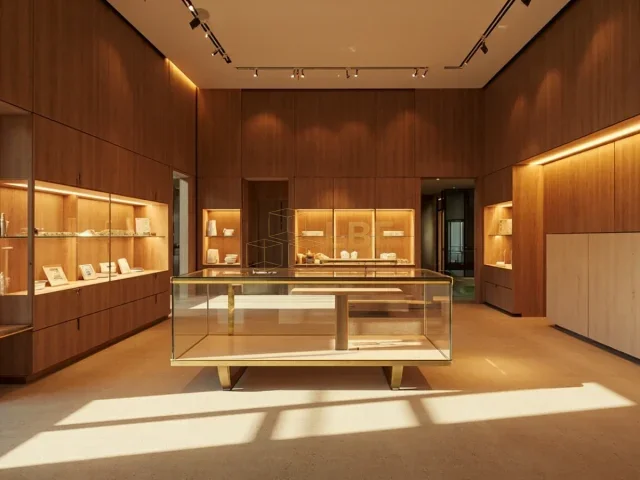

At a trade fair, your jewelry exhibition showcases do three jobs at once: they sell, they protect, and they have to be installed, powered and struck within a delivery window that is rarely longer than a few hours. Most problems at jewelry fairs are not design problems — they are logistics problems. A case without a usable cable route, a cabinet too deep for the aisle, or a lockable drawer that no one can reach from the service corridor will cost you show time you cannot buy back. This guide covers the three planning decisions that determine whether a booth runs smoothly: power, storage and access.
Plan the electrical load before you choose the glass
Lighting is the single largest electrical decision in a jewelry booth, and it drives case geometry. A typical 1.2 m wide counter case with four 3 W LED spot heads draws roughly 12–15 W; the same case with full-length LED strips under a shelf and a 4000 K top panel can reach 40–60 W. Across a 6 m × 6 m booth running 18–24 cases plus backwall graphics, that is usually between 1.2 kW and 2.5 kW — comfortably inside the 3 kW service that most European and Middle Eastern venues allocate per small booth, but not inside a single 10 A circuit shared across the stand.
Ask for the venue’s electrical order form before you finalize the case drawings. Wire jewellery displays in two or three circuits so a tripped breaker darkens one vitrine row rather than the entire collection. Specify a driver per 3–5 m of LED tape, keep drivers accessible from inside the case rather than the plinth face, and put all low-voltage connections in a service void instead of under the display pad, where they will be disturbed every morning during set-up. Where a museum-standard look matters, a 3500–4000 K, CRI 95+ light source makes diamonds and coloured stones read closer to how they look in a retail salon.
Build storage into the case, not behind it
Secure overnight storage is usually the last item on the brief and the first one to cause friction. Most international venues require high-value goods to be packed away at night, either into a vault room, into a locked safe stand, or into cases with certified locking that stay on the stand under guard. All three options work — but only if the showcase has been designed for them.
Practical numbers from typical build-outs: a 1200 × 550 × 950 mm counter case with a full-depth lockable drawer offers 35–40 litres of usable storage, enough for roughly 8–12 medium trays or 20 small ring pads. A tower vitrine with a rear locker at the base adds another 30–45 litres. That is usually the difference between a two-trip nightly pack-down and a one-trip one, which over a five-day fair saves several hours of staff time.
- Check drawer travel against aisle width. A 500 mm pull-out needs at least 600 mm of clear floor; in a 2.5 m aisle shared with visitors, that means the drawer should open into the staff side, not the public side.
- Specify lock type against venue policy. Keyed cam locks, combination locks and padlockable hasps are not interchangeable; some organisers require keys to be registered with security.
- Allow a fire-resistant filing pocket of A4 size inside each major case for overnight certificates, pouches and cleaning cloths.
- Number every drawer and tray to a packing plan so pack-down follows the same sequence every night.
Access: doors, aisles, lifts and the 45-minute reality
Booth access is where exhibition showcases fail most often. A 2000 mm high tower case cannot pass through a 1900 mm freight door, and a 1300 mm wide counter cannot be carried up a service lift with a 900 mm opening. Before you approve a drawing, measure four clear dimensions: the venue’s largest freight door, the lift door and cabin, the booth’s own perimeter opening, and the narrowest aisle between fixed stand walls. Build all cases to fit the smallest of these with 50 mm to spare, or design them as flat-pack modules that assemble on the stand.
Allow realistic handling time. A firm of two technicians can typically place and level 10–14 counter cases in an hour, but cabled lighting, glass cleaning and final polish for the same number usually add another 60–90 minutes. If your access window is three hours on the day before opening, plan for 20 cases, not 35. Where unions or venue labour rules require official contractors to do the moving, book them early; a missed lift slot can push installation to opening morning, when visitors are already queuing.
Design decisions that pay off in both retail and exhibition use
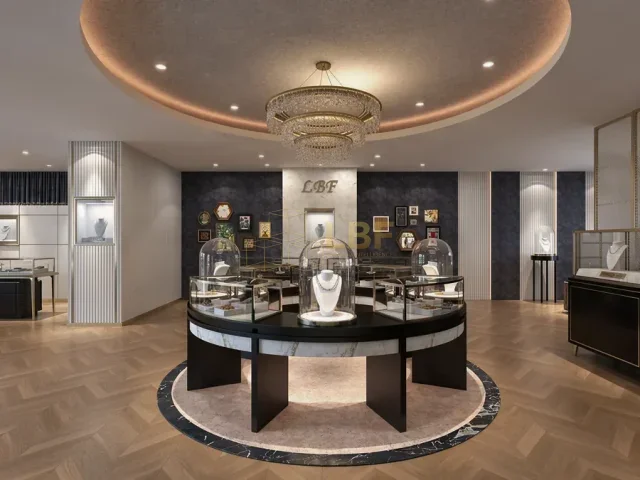
If the same jewelry exhibition showcases will later serve a store or a showroom, standardize the module sizes to common tray footprints and keep the service access identical in both environments. A 1200 mm counter, a 600 mm tower and a 900 mm wall vitrine cover most collections, and using the same lock family across all units means one key set, one security protocol and one set of spare parts. This matters when a collection travels to four or five fairs a year across different venues.
Material choice affects weight, which affects access. A 1200 mm counter in 20 mm MDF with glass and a drawer typically weighs 55–75 kg — movable by two people on a pallet truck but not by hand up a ramp. Aluminium frame systems and 12 mm glass bring that closer to 40–50 kg, which widens your installation options at older venues. Libafang builds both constructions and provides crate dimensions and weights with every drawing so organizers and freight agents can plan the move before the stands arrive.
Put the checklist in the purchase order
Every specification should end with a one-page logistics summary signed off before production: total connected load in kW, number of circuits, lock type and key count, drawer travel direction, crate dimensions, gross weight per crate, and installation time with crew size. Once those numbers are on paper, the fair’s electrical order, the freight booking, the stand plan and the security arrangement all align — and the three hours on build-up day are enough.
If you are planning a booth for a jewelry fair, a watch exhibition or a museum loan display, send us your floor plan, case schedule and venue electrical rules. Libafang will return a free design layout, material and lighting proposal, and a detailed quote with crate weights and installation timings — so power, storage and booth access are settled long before the doors open.