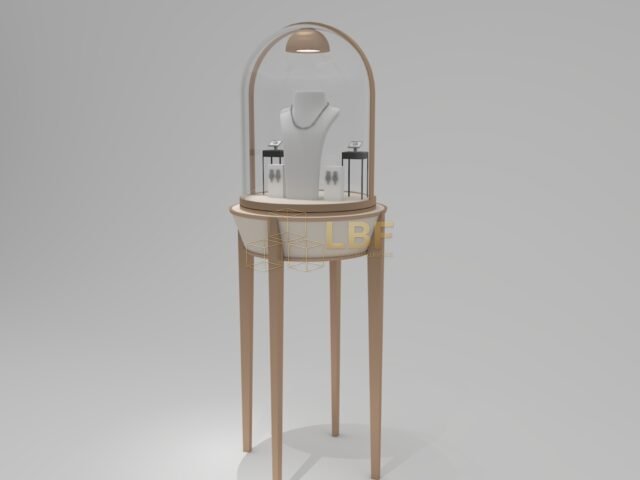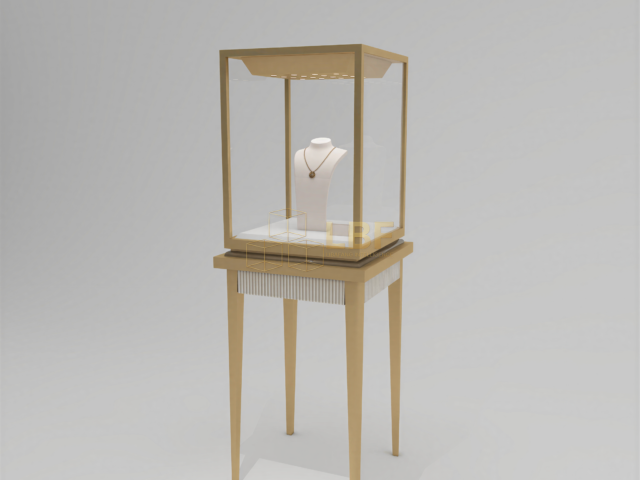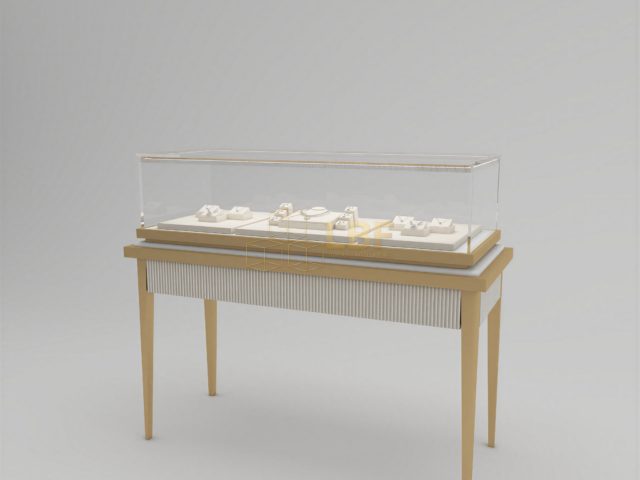
Leather wrapped display fixtures look simple in a showroom photograph and complicated in real life. A jewelry tray, watch plinth or museum case wrapped in leather has to survive daily handling, UV exposure, cleaning agents and the occasional ring or screwdriver that lands where it should not. Most failures are not dramatic. They appear as a lifted edge on a tray, a seam that opens 2 mm after a year, or a darkened patch where a client’s hand rests every day. This review checklist covers what to inspect before you approve a sample, ordered by how often problems occur.
Edge Finishing: Where Leather Wraps Usually Fail
Every leather wrap has an edge, and edges are the first place to fail. On a wrapped panel, a 0.8–1.2 mm upholstery leather is typically turned over a substrate and bonded with contact adhesive. The critical points are the radius and the turn allowance. A sharp 90-degree corner forces the leather to stretch, thinning it by 20–30 percent at the bend and creating a stress line that splits within months. A minimum radius of 2 mm, ideally 3 mm, distributes that tension.
Ask how the edge is terminated. Common options are a folded and glued turn, a stitched seam, edge paint, or a metal or wood trim cover. Each has different consequences:
- Painted edges: clean and slim, but require 2–3 coats and re-touch inspection under raking light; on high-touch trays, expect rework every 2–3 years.
- Folded and glued edges: fastest and cheapest, but adhesive creep is common in warm retail environments above 30°C.
- Stitched edges: most durable, especially with a 1.0 mm polyester thread and 3.0–3.5 mm stitch length; confirm the stitch does not puncture too close to the leather edge.
- Trim-capped edges: excellent protection and a strong luxury signal, but the trim itself becomes the wear point and needs a replaceable or refinishable spec.
Seam Construction and Stitch Specification
Seams are the second most common complaint. A seam on a leather-wrapped fixture should be specified on the drawing, not left to the workshop. Request the stitch type, thread, stitch length, seam allowance and whether the seam sits on a flat panel, an inside corner or an outside curve. On curves, a stitch length above 3.5 mm starts to look coarse, and uneven spacing becomes visible.
Check the seam end. Threads should be backstitched or locked and trimmed flush; loose tails fray and pull. On load-bearing seams, such as a stitched edge around a display platform, a double row at 8–10 mm spacing adds meaningful strength. Also confirm that the leather grain direction is consistent across panels; mismatched direction is not a wear failure, but it is the defect clients notice first under spotlights.
Wear Points to Inspect on a Leather Wrapped Display Fixture
Wear is predictable. Map it before you approve the design:
- Front edges and pull points: drawer fronts, handles, lift-off lids. Expect the heaviest abrasion here.
- Top surfaces under objects: metal watch cases, jewelry stands and acrylic risers rub against leather; add felt or a low-friction liner.
- Inside corners of trays: adhesive failure and gaps appear first in tight radii.
- Contact zones with glass: glass doors and shelves moving against leather create abrasion lines; specify a clearance of 1–2 mm.
- Base and floor contact: hidden but damaged by cleaning machines and trolleys.
- Cleaning exposure: alcohol-based sanitizers degrade many finished leathers; confirm resistance with the tannery data sheet.
For a high-traffic boutique, plan a touch-up kit and a replacement schedule for the top three wear parts rather than replacing whole fixtures. Libafang builds these replacement pieces into the original specification so a tray or edge trim can be reordered years later with matching dye lot notes.
Leather Selection and Testing for Retail Environments
Not every leather belongs on a display fixture. Pigmented or semi-aniline upholstery leathers with a protective topcoat resist handling far better than untreated aniline leathers. Ask for a Martindale abrasion figure; 25,000–50,000 cycles is a reasonable starting point for high-touch surfaces, while low-touch side panels can use lighter specs. Confirm lightfastness of at least 4 on the blue wool scale for storefront windows.
Also verify the substrate. MDF is common and stable, but edges must be sealed before wrapping; plywood is stronger but can telegraph grain through thin leather. Humidity cycling between 40 and 70 percent RH will expose poor adhesive work in a sample within days, so a short conditioning test is worth the time before mass production.
Sample Approval Checklist Before Mass Production
Review the sample under the same lighting as the store, ideally 3000–3500 K spot lighting at close range. Check edges at a 30-degree angle, run a fingernail along seams, and inspect corners for adhesive squeeze-out. Record the leather article number, dye lot, thread spec and adhesive batch on the approval sheet. This paperwork is what makes the second order match the first.
If you are planning a leather wrapped display fixtures program for a jewelry, watch or museum project, send us your drawings and finish requirements. Libafang can return a free design review and quote with edge, seam and wear-part recommendations built into the specification.