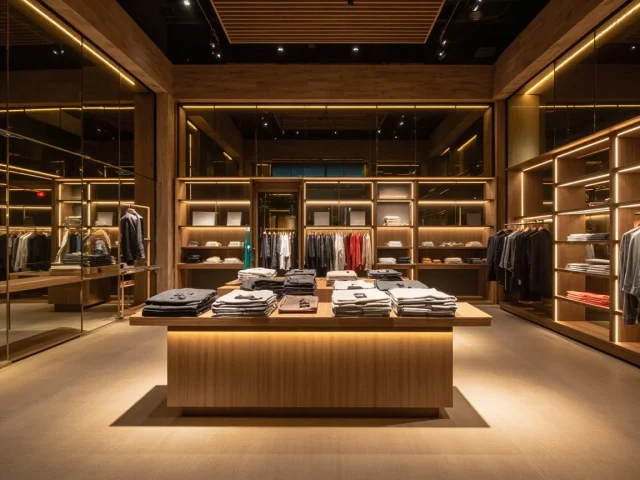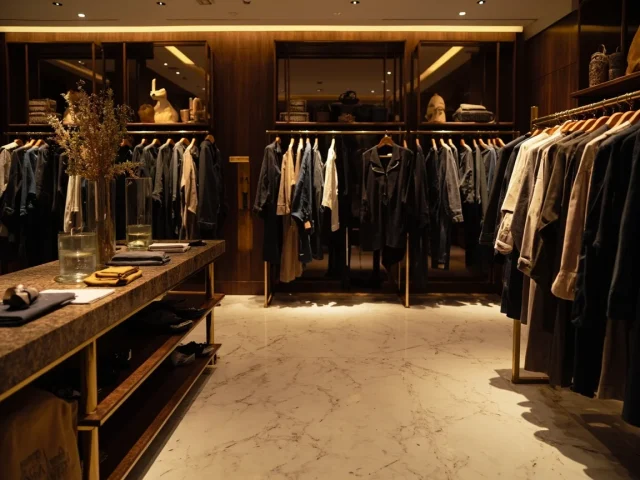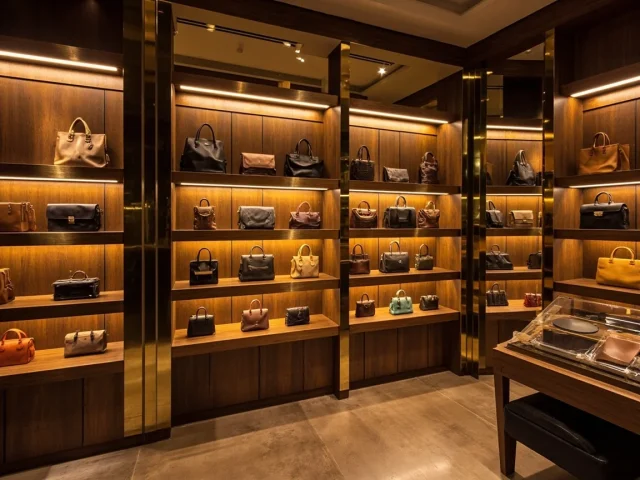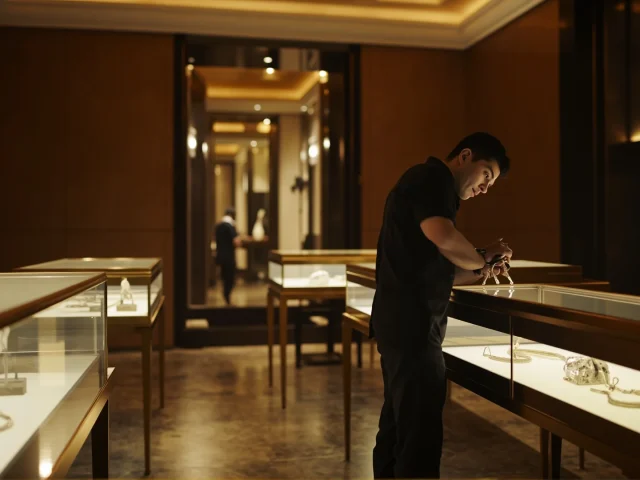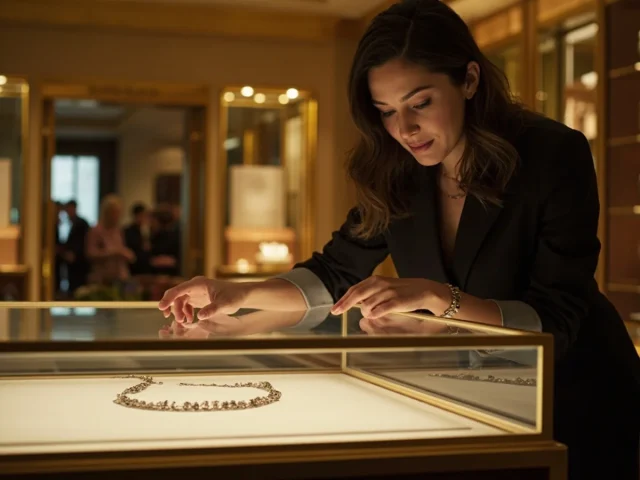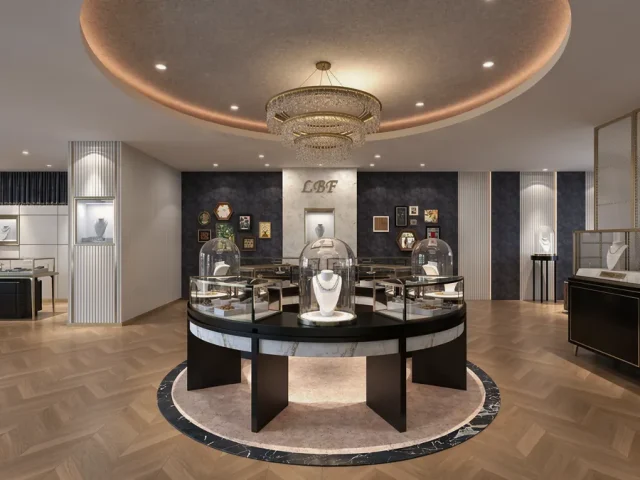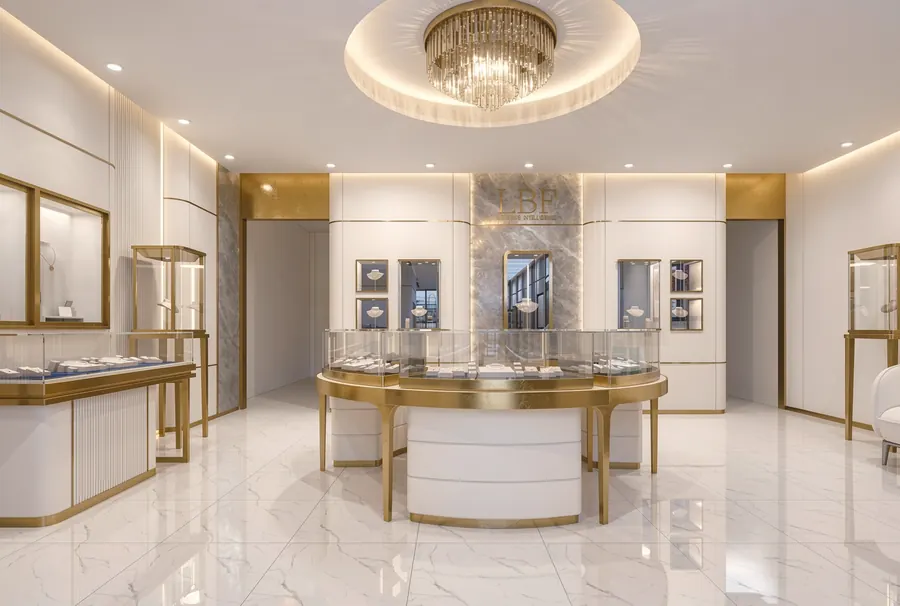
An accessories island is one of the hardest fixtures in a luxury store to get right. Unlike a wall bay that serves a single category, an island typically has to hold necklaces, rings, watches, cufflinks, small leather goods and maybe fragrance or eyewear—all within 1.5 to 3 square meters of selling space. When the zoning fails, customers see a jumble and assume the merchandise is lower value. When it works, shoppers slow down, pick items up and cross-shop between categories they did not come in for. This article breaks down how to plan a luxury accessories display island so that each category reads clearly, the fixture holds its premium feel, and the floor space earns its rent.
Start With Category Priority, Not Symmetry
The most common mistake in luxury accessories display islands is designing for visual balance: equal-size zones for every category. Real shoppers do not shop equally. Before drawing anything, rank your categories by revenue per square meter and by how much handling they require. A typical split for a mid-size jewelry boutique might allocate 40% of the island top to rings and necklaces, 25% to watches, 20% to small leather goods and 15% to seasonal or impulse items. Place the highest-value, highest-consideration category at the customer’s natural stopping point—usually the side facing the main traffic flow—and let secondary categories wrap around. Reserve at least 15–20 cm of clear surface between zones; physical gaps do more for perceived clarity than any signage. If a category cannot fill its zone convincingly, give it less space rather than spreading 12 SKUs across a meter of velvet.
Use Height and Depth to Separate Categories
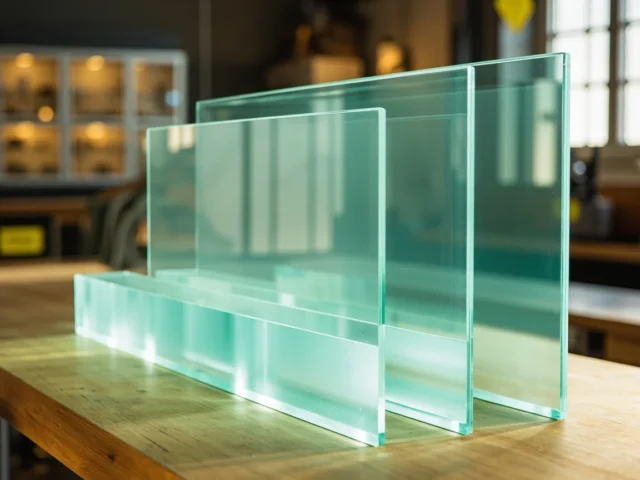
A flat island top forces every product into the same plane, which flattens perceived value. Instead, plan tiers: a raised central plinth or stepped platform of 8–15 cm separates hero pieces from the surrounding categories without building walls between them. Watches read better on a slight incline at eye level (roughly 95–110 cm from the floor for seated or standing viewing), while leather goods and eyewear suit a lower, more tactile tier. Keep the vertical envelope in mind too: total island height of 90–110 cm works for most standing customers, and anything above 120 cm starts to block sightlines across the sales floor. For deeper surfaces, use shallow glass or acrylic dividers set 8–10 cm high to contain loose items without hiding them; full cabinets in the middle of an island kill the open, browse-friendly feel that makes this fixture type valuable.
Light Each Zone for Its Materials
Lighting is where multi-category islands most often go wrong, because a single 4000K wash makes diamonds look cold and warm gold look muddy. Plan lighting zone by zone. For diamond and white-gold jewelry, 4000–4500K at 90+ CRI with a beam angle of 15–24 degrees delivers the sparkle customers expect. Warm gold and rose gold sit better under 3000–3500K. Watches benefit from focused accent light at 4,000K plus low-level ambient light so dials stay legible without glare. Leather goods need softer, diffused light to avoid drying the material and to show grain honestly. A practical target is 3–5 times the ambient light level on featured products, with dimming control so the island can shift from daytime brightness to evening drama. Use recessed or integrated fixtures where possible; visible clamp lamps on a luxury island instantly lower the perceived price point.
Match Materials to Price Point and Foot Traffic
Finish choices should follow both the brand tier and the fixture’s location. In high-traffic zones, powder-coated steel frames, tempered glass tops and easy-clean leatherette inserts outperform open velvet, which shows dust and ring marks within weeks. For premium positioning, materials such as brushed brass, walnut veneer, suede-lined trays and lockable glass cases justify a cost of roughly USD 600–2,500 per island depending on size, materials and lighting—still far less than the margin on a handful of watch sales. Specify scratch-resistant coatings on any painted surface, and confirm edge quality on glass shelves; a 1 mm chip is enough to make a customer question a product. Libafang builds these islands in Guangzhou with material samples approved before production, so buyers can compare suede, leatherette and veneer against their actual merchandise rather than a catalog photo.
Keep the Customer’s Hands and Eyes in Mind
Every category on the island should have a clear browsing logic. Apply a simple rule set:
- Place hero items at the front and center at eye level; keep them there all season.
- Set the most expensive category where staff can see it from the main counter—typically within a 6–8 meter sightline.
- Keep signage minimal and at product level; a small card naming the category and material outperforms large promotional panels.
- Allow one clearly marked “try me” zone per category so customers can pick items up without staff intervention.
- Leave the back edge of the island free of clutter—it is the background for every product photo customers take.
- Provide lockable storage or a discreet drawer of at least 10 cm depth for restocking without leaving the floor.
Test the layout with a short mock-up: place real products on cardboard templates at the planned dimensions and walk around the island from every approach angle. Most zoning problems become obvious in under ten minutes.
Plan for Restocking and Changeovers
An island that takes two hours to restock will be neglected. Design for changeovers: removable trays that lift out for cleaning, adjustable shelf heights in 32 mm increments, and labeling on the underside of trays so staff know what belongs where. If the store runs seasonal drops four to six times a year, ask for modular inserts so a watch zone can convert to fragrance in minutes rather than requiring a new fixture. Good luxury accessories display islands also anticipate security needs—cam-locks on glass, cable routing hidden inside the frame for alarm sensors, and weight distribution that stays stable when a display section is temporarily emptied. Libafang’s design team provides dimensioned drawings and a component list so store planners can verify every insert against their planogram before the build starts.
Done well, a single well-zoned island can present six categories clearly, lift cross-category attachment rates and make a compact floor plan feel generous. If you are planning a jewelry or watch retail fit-out, share your floor dimensions, product mix and brand guidelines with Libafang to request a free design and quotation—including recommended dimensions, lighting specifications and material options for your market.