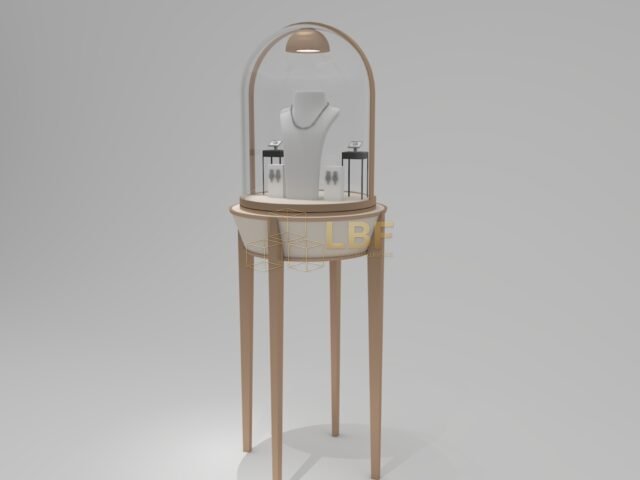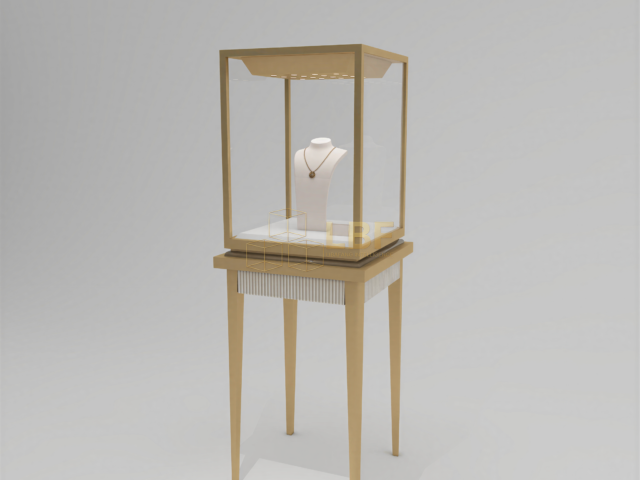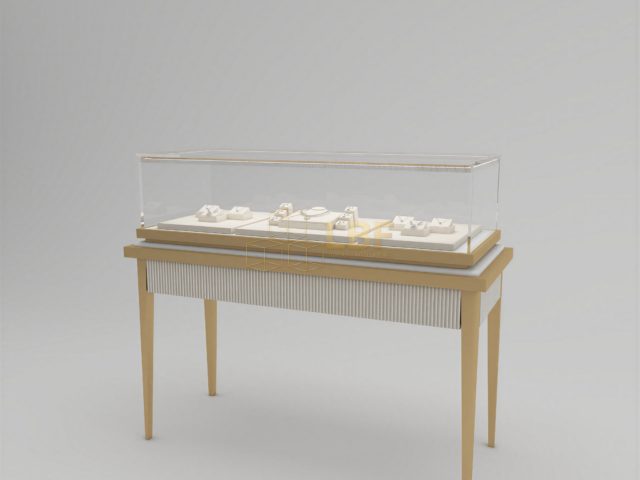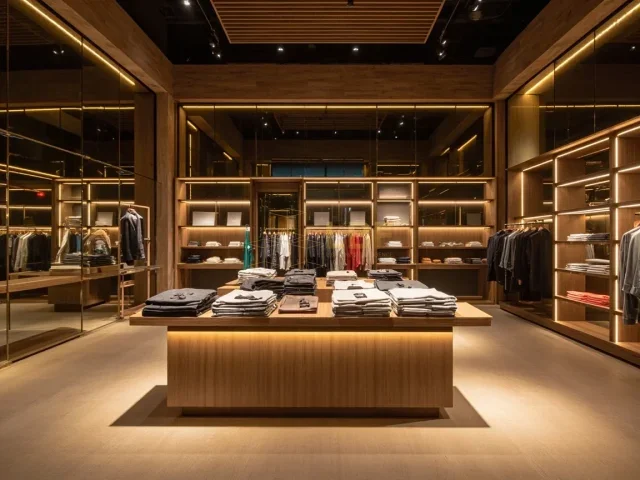
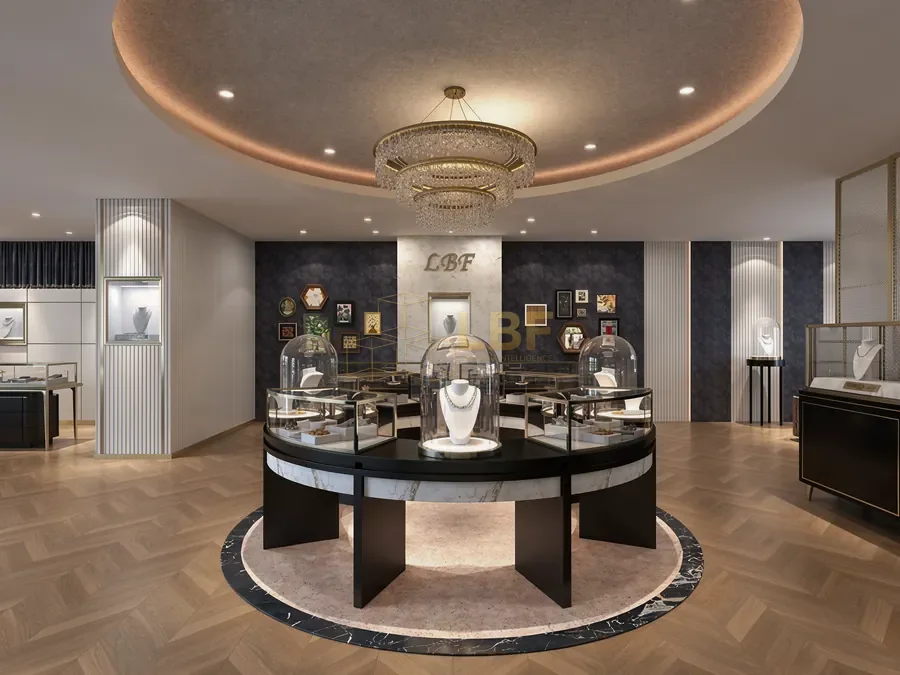
You can build a display cabinet from premium materials and still lose the sale because the brass frame looks slightly warmer than the drawer pulls. In luxury retail, finish consistency is not a cosmetic detail—it is a direct signal of quality. When a customer runs a finger along a metal edge and then touches a lacquered wood panel, the eye expects continuity. Any visible mismatch in color, gloss, or texture undermines the entire fixture. This is why luxury display cabinet finish matching is treated as an engineering discipline, not a decorative afterthought. At Libafang, we approach finish alignment across metal, wood, and painted surfaces with documented tolerances, controlled lighting, and batch-level traceability. Below is how we keep a 12-cabinet run looking like a single seamless piece—and what you should ask any manufacturer before approving a sample.
Why Finish Mismatch Happens—and Where It Shows First
Finish inconsistency rarely comes from one obvious error. It comes from small variances stacking up: a different anodizing batch on the aluminum frame, a wood stain mixed 3% darker than the previous run, or a powder coat cured at 5°C lower than specified. Under warehouse lighting, these differences vanish. Under 3000K retail spotlights, they become obvious. The first places a mismatch shows are usually:
- Adjacent seam lines where a metal frame meets a painted panel—contrast is highest at a 1–2 mm joint.
- Top surfaces viewed at a low angle, especially on glass shelves, where reflections double the perceived gloss difference.
- Handle and trim interfaces on drawers, where a brushed metal pull sits inches from a matte lacquered front.
- Vertical corners under directional light, where texture differences in wood grain become visible.
To prevent this, every finish specification must include three numbers: a color reference (typically ΔE ≤ 1.5), a gloss level (e.g., 5–8 GU for matte, 30–40 GU for satin), and a texture descriptor (grain depth, brush direction, orange-peel limit). Without all three, “black” is not a spec—it is an opinion.
Setting a Single Physical Standard Before Production
Finish matching starts with a master sample, not a digital file. We produce a physical control board that contains every material used in the cabinet: the anodized aluminum extrusion, the powder-coated steel, the stained wood veneer or solid stock, and the painted MDF or plywood panel. These samples are prepared with the exact process parameters that will be used in mass production—same pretreatment line, same cure schedule, same spray viscosity. We then measure each sample with a spectrophotometer and gloss meter, record the values, and sign the board. That board becomes the reference for every subsequent batch.
For anodized aluminum, we standardize the alloy (typically 6063-T5) and the anodizing thickness (10–12 μm for indoor fixtures), because alloy variation alone can shift the final color by ΔE 0.8. For wood, we control moisture content to 8–10% before staining, since a 2% swing changes how the stain absorbs. For painted surfaces, we use a sealed primer and a two-component polyurethane topcoat applied at 18–22°C and 50–60% relative humidity—conditions that are logged per batch. This is not overkill; it is how you avoid returning 40 cabinets because the wood looked too red under the client’s lighting.
Color, Gloss, and Texture: The Three-Axis Match
Many suppliers match only color. That is insufficient for luxury retail. A metal and a painted surface can have identical Lab values but differ in gloss by 10 units—and the eye will read them as different materials. We evaluate every pair of adjacent surfaces on three axes: color (ΔE ≤ 1.5 under D65 and ΔE ≤ 2.0 under 3000K), gloss (within 5 gloss units), and texture (visual comparison at 300–500 mm under 45° lighting). For brushed metal next to wood grain, we also align the direction of the grain or brush—vertical with vertical, horizontal with horizontal—because a 90° rotation can double the perceived contrast. If a client demands a polished metal frame next to a matte painted panel, we manage expectations: the gloss difference must be intentional and approved on a physical sample, not discovered on site.
Process Controls That Keep a 50-Cabinet Run Consistent
Consistency across a large order depends on controlling variables that change slowly. Our production line uses the following non‑negotiables:
- Single-batch material sourcing for anodized aluminum and wood veneer; if a new batch is unavoidable, we re-measure and adjust the stain or dye to the signed master board.
- Daily spray-gun calibration before the first painted panel, with viscosity checked every 4 hours.
- Cure oven temperature logging at 15-minute intervals; a deviation of more than 3°C triggers a re‑qualification of the batch.
- In-process checks every 25 panels using a handheld spectrophotometer, with results recorded against the master board.
- Final assembly matching before packing: each cabinet is assembled under 3000K and 4000K lighting, and any mismatched component is flagged for rework.
As a Guangzhou manufacturer exporting to 30+ countries, Libafang also accounts for shipping and climate. A finish that looks perfect in our factory at 25°C and 60% RH must survive a dry container and a cold warehouse. We use exterior-grade clear coats on metal and a 2K polyurethane on wood that resists yellowing for at least 5 years under indoor lighting, and we supply a touch-up kit matched to the same master board for minor site repairs.
Lighting Is Part of the Finish: Testing Where It Matters
No finish is truly consistent until it has been checked under the lighting that will illuminate it in the store. We ask clients for the CCT and CRI of their retail lighting—commonly 3000K or 3500K with CRI ≥ 90 for jewelry. Under a low-CRI light, a warm brass and a gold-painted surface can look identical; under a 95 CRI light, the difference appears instantly. For large projects, we build a mini display mock‑up with the actual materials and test it under both 3000K and 4000K lamps, and we photograph the result with a color checker. That photograph, signed by the client, becomes the acceptance criterion. This step alone eliminates most finish disputes because it aligns expectation with reality before mass production begins.
What to Ask Your Manufacturer Before Approving Finishes
Whether you work with Libafang or another supplier, a finish‑matching conversation should include these specific questions: What is the maximum allowed ΔE between adjacent surfaces? Will you provide a physical master board signed by both parties? How do you handle a new batch of anodized aluminum or wood veneer mid‑run? Can you show gloss‑meter readings for each material? And will you assemble and inspect the first cabinet under our store’s lighting temperature? If the answer to any of these is vague, the risk of mismatch rises sharply. A luxury display cabinet is expected to last 7–10 years in a retail environment; the finish must look intentional on day one and on day one thousand.
If you are planning a jewelry, watch, or museum display project and want finish consistency you can specify in a contract, request a free design and quote from Libafang. We will review your material pairing, propose a master sample, and outline the exact tolerance and testing protocol for your order—before you commit to a single cabinet.