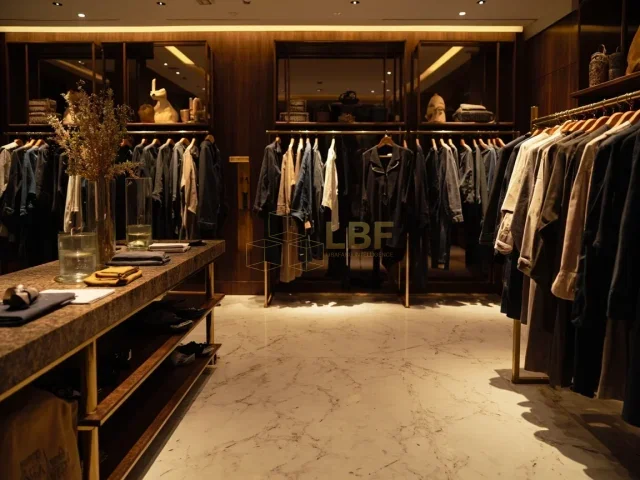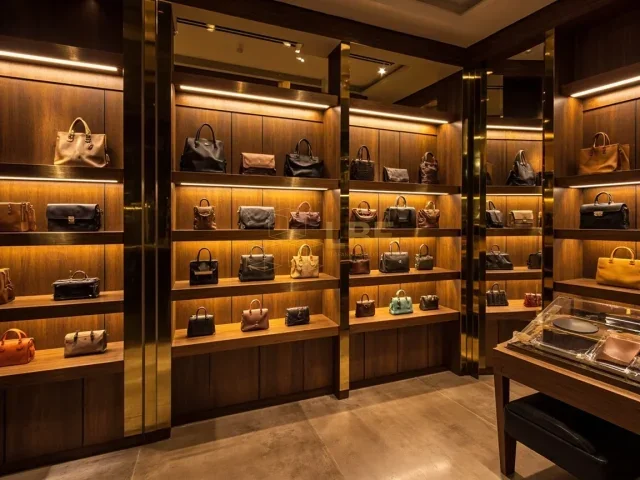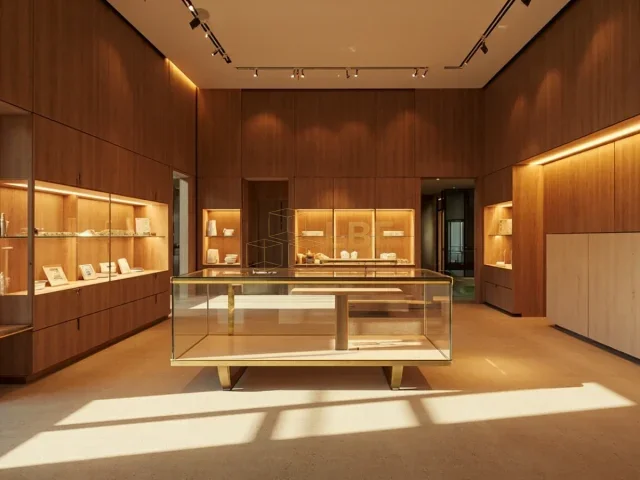
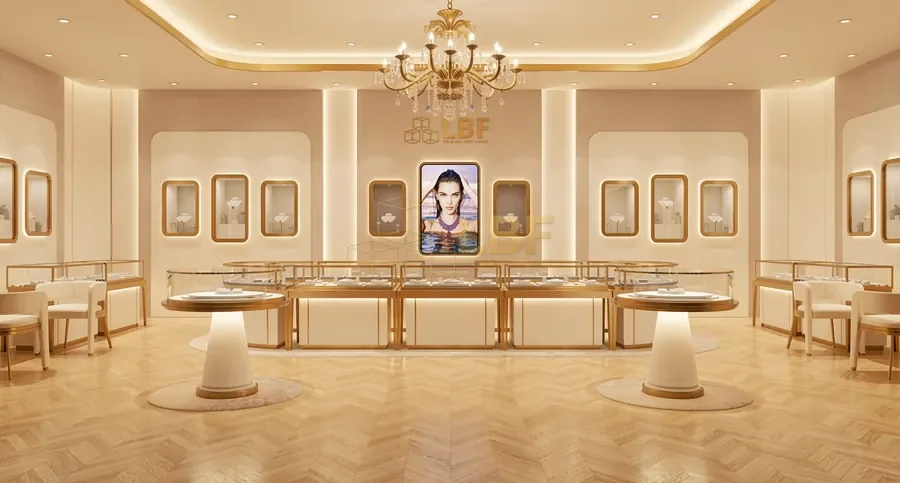
Fingerprints on a luxury display cabinet are more than a cosmetic issue—they undermine the perceived value of the jewelry, watches, or artifacts inside. In high-traffic areas such as jewelry stores and watch boutiques, staff and customers touch handles, edges, and glass dozens of times per day. According to industry studies, a typical luxury retail cabinet receives 50–100 touches daily on its most exposed surfaces. Choosing the right surface finish is therefore critical for maintaining a pristine look and reducing maintenance costs. This article examines luxury display cabinet surface finishes with a focus on fingerprint resistance, durability, and practical selection criteria for frequently touched areas.
Why Fingerprints Matter in Luxury Retail
Fingerprints are a combination of sweat, oils, and dirt that adhere to smooth surfaces. On glossy finishes, they create visible smudges that scatter light and draw the eye. A single fingerprint on a polished brass handle can be noticeable from 2 meters away under typical retail lighting (300–500 lux). Beyond aesthetics, frequent cleaning to remove fingerprints can degrade certain finishes over time—solvent-based cleaners may dull lacquers or strip wax. For museum-grade displays, fingerprints can also pose a conservation risk if acidic residues transfer to artifacts. Therefore, the ideal finish for touch-prone areas balances aesthetics with easy-clean, fingerprint-resistant properties.
Understanding Surface Finishes and Their Fingerprint Resistance
Surface finishes vary in gloss level, texture, and coating technology. Gloss levels are measured in gloss units (GU) at a 60° angle: high-gloss ranges from 80–100 GU, semi-gloss 40–60 GU, satin 20–40 GU, matte 5–15 GU, and textured finishes typically below 5 GU. Lower gloss generally hides fingerprints better because light diffusion reduces contrast. However, not all matte surfaces are equal—some can show oily marks as darker patches. The table below summarizes common finishes used in luxury display cabinets.
- High-gloss lacquer or acrylic: 90+ GU. Highly reflective; fingerprints are very visible. Best for low-touch areas or display surfaces cleaned daily.
- Satin metallic (brushed stainless steel, anodized aluminum): 25–35 GU. Directional grain helps mask smudges; fingerprints appear as slight dulling. Good for frames and handles.
- Matte powder coating: 5–15 GU. Excellent fingerprint hiding; textured surface reduces contact area. Ideal for frequently touched edges and handles.
- Anti-fingerprint nano-coating: applied over gloss or satin; creates oleophobic layer that repels oils. Reduces fingerprint visibility by up to 70% compared to untreated surfaces.
- Textured melamine or laminate: embossed patterns (wood grain, stipple) hide fingerprints effectively but may not convey luxury for high-end jewelry.
Recommended Finishes for Frequently Touched Areas
For areas that receive constant handling—handles, pulls, door edges, and countertop ledges—prioritize finishes that either hide marks or resist oil adhesion. Matte powder-coated aluminum is a top choice for handles and frames: it offers a soft-touch feel, hides fingerprints well, and withstands repeated cleaning with mild detergents. Brushed stainless steel with a No. 4 finish (grain visible) is another robust option; its linear texture breaks up fingerprint patterns, though it may show directional smudges if touched across the grain. Avoid high-polish chrome or mirror finishes on handles unless they are coated with an anti-fingerprint layer, as they require cleaning multiple times per day.
For cabinet bodies and doors, consider satin or matte lacquers with anti-fingerprint additives. These finishes maintain a luxurious appearance while reducing visible marks by 50–60% compared to standard gloss. In watch boutiques, where customers often lean on counters, a matte finish on the customer-facing side can significantly reduce cleaning frequency. For museum vitrines, powder-coated steel frames with a textured finish are preferred because they are both durable and low-maintenance.
Practical Tips for Reducing Fingerprints
Beyond finish selection, design and maintenance practices can further minimize fingerprint issues:
- Choose handles with low-contact profiles: recessed pulls or edge pulls reduce the surface area touched. A 10 mm deep recessed pull can cut fingerprint transfer by 30% compared to a protruding knob.
- Specify anti-fingerprint coatings: request nano-coatings on high-gloss surfaces; they cost 10–15% more but extend cleaning intervals by 2–3 times.
- Use microfiber cloths and pH-neutral cleaners: avoid abrasive or ammonia-based products that can degrade coatings. Clean high-touch areas daily with a dry microfiber cloth to remove oils before they set.
- Incorporate hidden LEDs: proper lighting can make fingerprints less noticeable by reducing glare and shadows. Aim for 300–500 lux on display surfaces with a color temperature of 3000–3500K.
- Consider replaceable touch panels: for very high-traffic cabinets, design handle areas as replaceable inserts that can be swapped when worn.
Balancing Aesthetics and Functionality
Luxury display cabinets must project elegance while withstanding daily wear. In practice, a hybrid approach works best: use high-gloss finishes on low-touch surfaces (e.g., top canopies, back panels) and matte or textured finishes on high-touch areas (e.g., handles, frames, countertops). This strategy preserves the luxurious look while minimizing maintenance. For example, a jewelry showcase might feature a high-gloss lacquered back panel (90 GU) paired with matte black powder-coated handles (10 GU) and a brushed stainless steel frame (30 GU). Such combinations are common in Libafang’s custom projects, where we help clients select finishes based on touch frequency and cleaning regimes.
Material costs also vary: matte powder coating is typically 10–20% less expensive than high-gloss lacquer, while anti-fingerprint nano-coatings add 10–15% to the cost of the coated part. When specifying finishes, request sample chips and conduct a touch test—apply a small amount of oil to the surface and wipe with a dry cloth to see how easily it removes. This simple test can predict real-world performance.
Get Expert Advice for Your Project
Choosing the right surface finishes for frequently touched areas requires balancing aesthetics, durability, and maintenance. With over a decade of experience manufacturing custom display showcases for jewelry stores, watch boutiques, and museums worldwide, Libafang Showcase Co., Ltd. can guide you through finish selection and provide free samples for evaluation. Contact us today to request a free design consultation and quote for your next project.