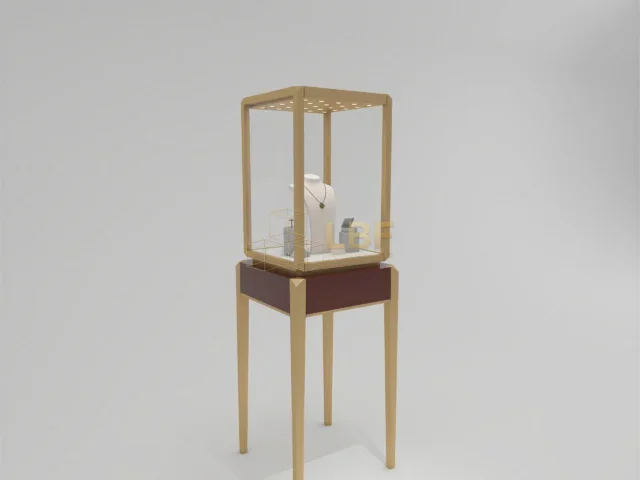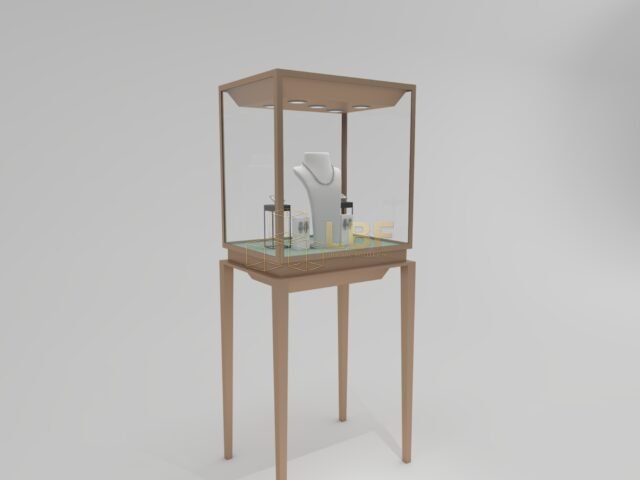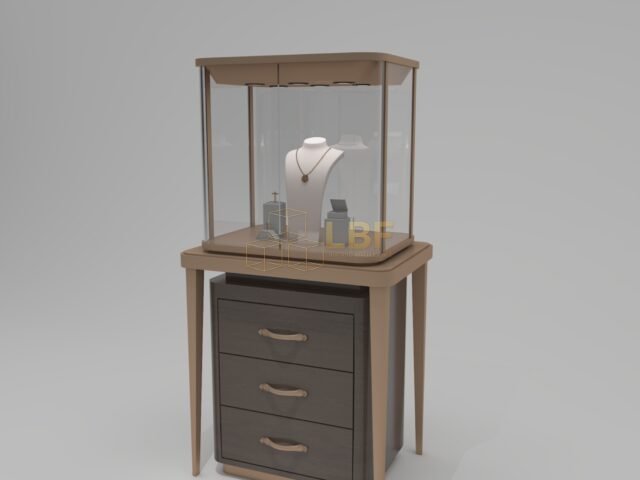
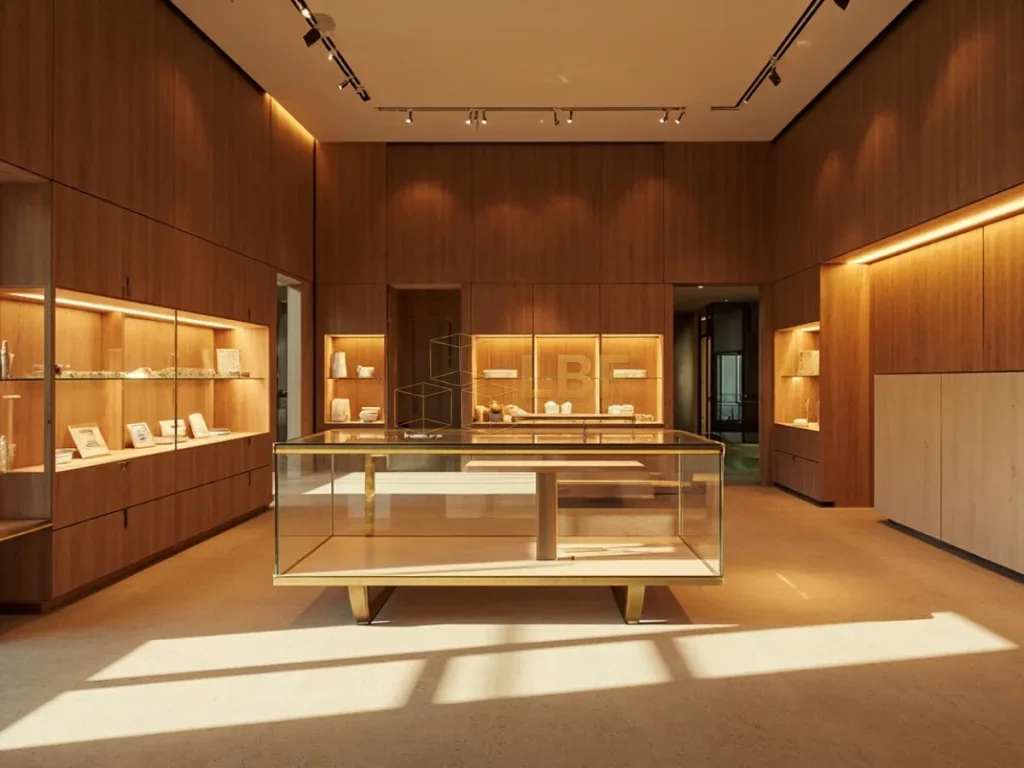
Museum display case glare is one of the most common complaints we hear from curators and exhibition designers. A specimen looks perfect in the workshop, then becomes an unreadable silhouette once it enters the gallery. The instinct is to blame the glass, order an anti-reflective upgrade, and hope the problem disappears. In practice, glare is a system problem that involves three variables working at once: the glass surface, the direction and quality of light, and the physical position of the visitor. Fix only one and the reflection usually migrates rather than disappears. This article breaks down how the three interact and gives you practical numbers you can take to a fabricator or lighting designer.
Where museum display case glare actually comes from
Glare occurs when light reflected off the glass reaches the viewer’s eye at a luminance high enough to compete with the object behind it. The controlling relationship is simple: the angle of incidence equals the angle of reflection. If a ceiling spot sits at 30 degrees from vertical in front of a case, the reflected image of that lamp or the lit floor beneath it travels toward whoever stands at a matching angle on the opposite side. Standard float glass reflects roughly 8 percent of light at normal incidence and more at steeper angles, so a bright exit sign or a sunlit window 5 meters away can easily be the real culprit even when the case is beautifully lit inside.
The correction begins with a site survey. Photograph each case from the four or five most common viewing positions, at adult eye height of about 1550 to 1650 mm and at child height of roughly 1100 mm. That record tells you whether the reflection is a lamp, a window, a wall or a visitor in a light-colored coat, and it prevents you from specifying a more expensive glass to solve a lighting problem.
Choosing glass: anti-reflective coatings, coatings and laminates
Anti-reflective glass is the most effective single intervention, but there are meaningful differences between products. Single-sided AR glass, where only the interior face is coated, typically reduces surface reflection from about 8 percent to around 1 to 2 percent. Double-sided AR brings it closer to 0.5 to 1 percent and is the right choice for cases viewed from multiple sides. Laminated AR glass adds a PVB interlayer, usually 0.38 to 0.76 mm, which gives you UV filtration plus an extra safety layer; note that the interlayer introduces a faint color cast, so ask for a sample under gallery lighting.
Glass thickness matters too. A 6 mm panel is adequate for most wall cases up to about 1200 mm wide, but freestanding cases wider than 1500 mm benefit from 8 mm or 10 mm low-iron glass to reduce bowing, which itself causes uneven reflections. Low-iron glass removes the green tint of standard float glass and matters most where you are already paying for AR coating. For conservation-sensitive objects, specify a coating that blocks at least 99 percent of UV below 400 nm and confirm that the AR layer does not affect the visible spectrum enough to shift color temperatures.
Lighting geometry: beam angle, CRI and cutoff
Lighting is where most glare is created and where it can be most cheaply removed. Work to these parameters as a starting point:
- Beam angle: use narrow 10 to 15 degree optics for small objects to keep spill off the glass; 24 to 36 degree beams suit larger vitrines.
- Aim point: tilt fixtures so the beam hits the object at 30 degrees or steeper from vertical, and keep the fixture out of the visitor’s likely reflection path.
- Lux targets: 50 lux for sensitive textiles and works on paper, 150 to 200 lux for most paintings, and up to 300 lux for robust stone, metal and ceramics.
- Color quality: CRI of 90 or higher and a consistent 3000K or 3500K across the gallery prevents the patchwork effect that reads as glare across a glass face.
- Dimming and cutoffs: fit barn doors, honeycomb louvers or deep recessed baffles to control stray light, and use dimming on a lux-linked control so midday daylight does not over-light a case.
Also check the ceiling layout against the visitor route. A fixture 800 mm in front of a case at 2.8 m ceiling height often reflects straight into the eyes of anyone standing at the case face; moving it 300 to 400 mm closer to the case or replacing it with a vertical wash on the back wall frequently solves the problem without touching the glass specification.
Visitor position: designing for real sightlines
Visitors do not stand where the render suggests. They approach at an angle, lean in, and often step back to photograph the object with a phone at chest height. Design cases around this. A viewing cabinet with a 15 to 20 degree front rake or a tilted top panel redirects reflections downward, away from the eye. Case interiors should be light in tone but matte, with the plinth or deck set back 50 to 100 mm from the glass so the object sits beyond the brightest reflection zone. Where a case faces a bright window or a glazed door, consider a screen wall, a frosted overlay, or simply relocating the case on plan; a 2 to 3 meter lateral shift is often cheaper than a glass upgrade and more durable in performance.
Accessibility standards push in the same direction: information panels and object centers should sit between roughly 1200 and 1600 mm above finished floor, and if a case is viewed by wheelchair users or children, test the critical reflection at 1100 mm eye height before approving the drawing. On final installation, recheck every case under both daylight and evening conditions, because a case that reads perfectly at noon can glare badly under a single spot after dark.
Putting the specification together
The practical sequence is to survey sightlines first, fix lighting geometry second, choose glass third, and confirm with a full-scale mock-up whenever the object is valuable or unusual. That order keeps costs in proportion: barn doors and re-aiming cost little, AR glass costs considerably more, and a rebuild costs most of all. As a Guangzhou manufacturer supplying custom display cases to museums and luxury retail in more than 30 countries, Libafang builds each case around the lighting plan and viewer heights provided, and can supply glass samples, LED test modules and dimensioned sightline drawings before production begins.
Request a free design and quote from Libafang with your case drawings, object dimensions, light levels and the main viewing positions, and we will propose a coordinated glass, lighting and geometry package designed to remove museum display case glare rather than simply move it.