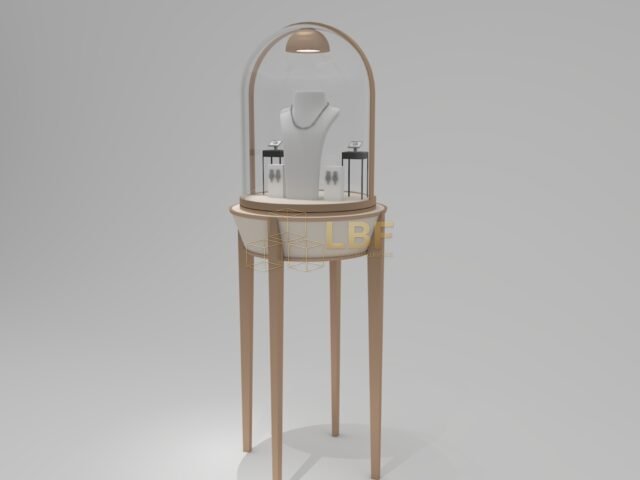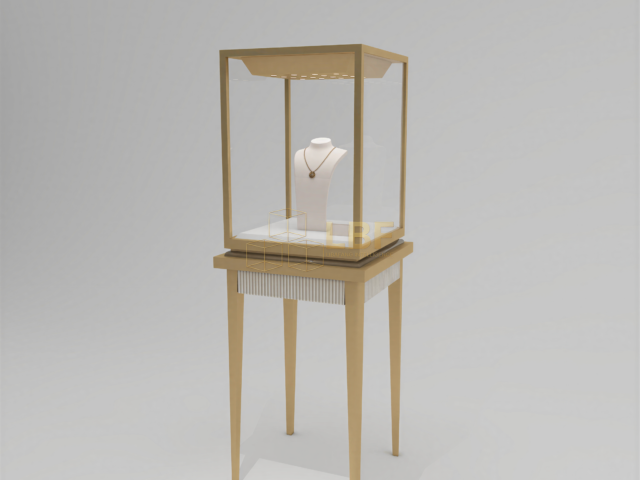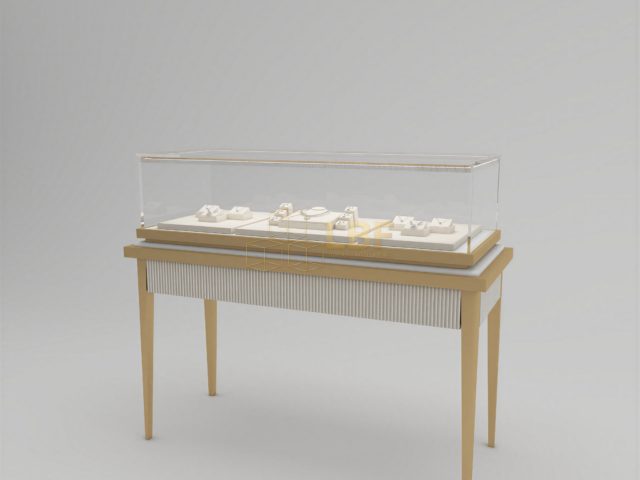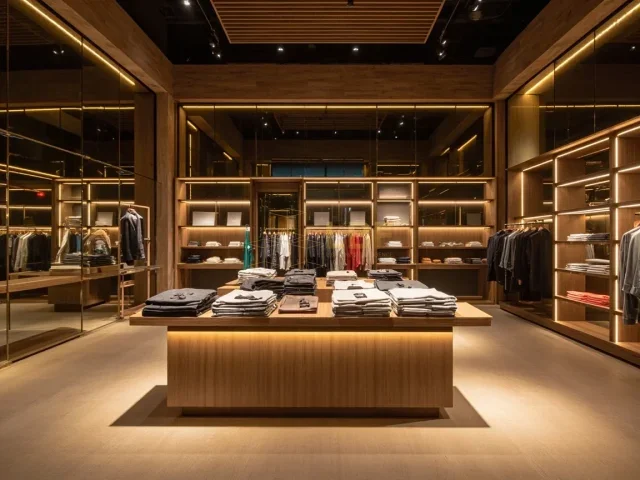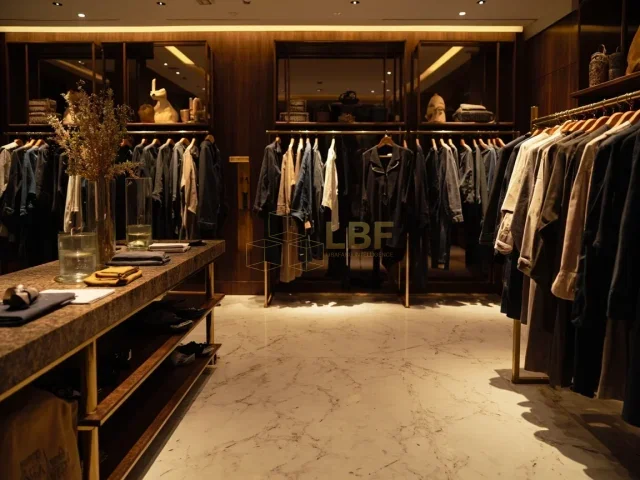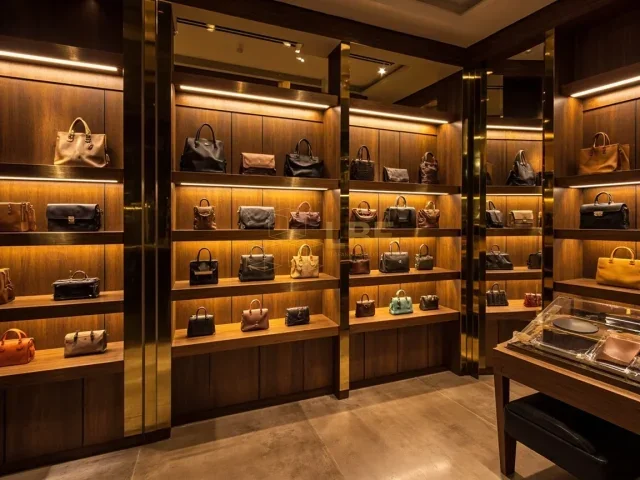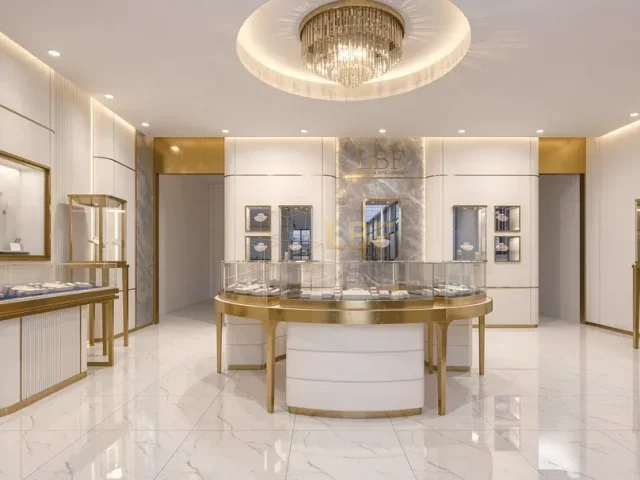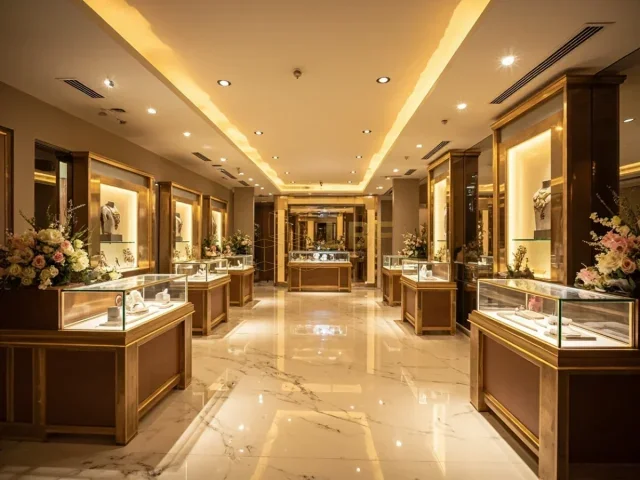
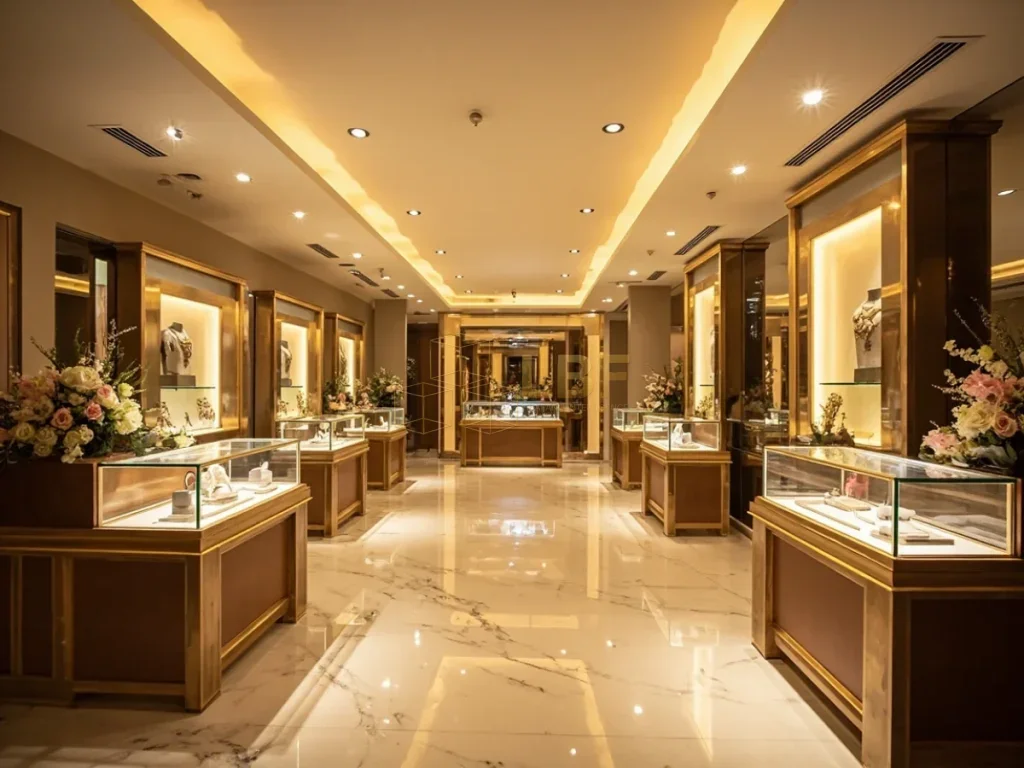
Stone surfaces bring a sense of permanence and refined luxury to retail environments. For luxury display counters—whether in a jewelry store, watch boutique, or museum—the choice of stone affects not only aesthetics but also structural integrity, installation logistics, and long-term upkeep. unlike a purely decorative element, a stone countertop must support the weight of glass vitrines, lighting, and merchandise while resisting scratches, stains, and daily cleaning. In this article, we break down the three critical factors that determine success: weight, seams, and maintenance. With concrete figures and practical guidelines, you can specify stone that performs as beautifully as it looks.
Weight: Load Capacity and Structural Considerations
Stone is heavy. A 20mm (3/4″) slab of granite weighs approximately 55–60 kg per square meter (11–12 lbs per square foot). Marble is similar, while quartz surfaces typically range from 50–55 kg/m². For a standard display counter of 2 meters long by 0.6 meters deep, the stone alone adds roughly 66–72 kg. Add a glass vitrine (often 30–50 kg for a 1.5m unit), LED lighting, and merchandise, and the total load can easily exceed 150 kg. Most commercial floors can handle this, but the counter’s internal frame must be designed accordingly. We recommend a steel subframe with cross-bracing for any stone-topped counter longer than 1.8 meters. Also consider point loads: a heavy watch display stand concentrated on a small area can create stress. Use a minimum 20mm stone thickness for counters up to 1.2 meters unsupported; for longer spans, either increase thickness to 30mm or incorporate a structural apron. Always verify the floor’s live load rating before installation—retail spaces often have limits of 300–500 kg/m².
Seams: Placement, Visibility, and Structural Integrity
Natural stone slabs are limited in size: a typical slab is 3.0m x 1.4m, but large-format quartz can reach 3.2m x 1.6m. For counters longer than the slab, seams are inevitable. Where you place them matters. Avoid seams in high-touch areas such as the front edge where customers lean, or directly under glass joints. Instead, plan seams at natural break points—e.g., at the junction between two display modules or at a back splash. For a 2.4m counter, one seam near the third point is preferable to a central seam. seam width should be minimal: 1–2mm for epoxy-filled joints, color-matched to the stone. In luxury retail, visible seams can detract from the premium feel, so consider book-matched slabs for a continuous pattern. However, book-matching increases waste and cost by 15–25%. For counters with integrated sinks or cable grommets, seams must be at least 100mm away from cutouts to prevent cracking. Always dry-lay slabs before fabrication to confirm seam placement and vein matching.
Maintenance: Protection, Cleaning, and Long-Term Care
Different stones demand different care. Granite and quartz are non-porous and resistant to stains; they require only mild soap and water. Marble and limestone are porous and etch easily from acidic spills (citrus, wine, vinegar). For luxury counters, we recommend sealing marble every 6–12 months with an impregnating sealer. In high-traffic retail, use coasters under metal objects to prevent rust marks. Avoid abrasive cleaners; a pH-neutral stone cleaner costs about $15–20 per liter and lasts months. For quartz, avoid harsh chemicals that can dull the surface. Regular maintenance extends the life of stone surfaces by decades. Implement a daily dusting routine with a microfiber cloth and a weekly damp mop with a mild detergent. For outdoor or sun-exposed counters, use a UV-resistant sealer to prevent fading. In museums, where artifacts may be sensitive, avoid solvent-based sealers; use water-based, low-VOC products.
Material Selection: Matching Stone to Application
Consider these common options for luxury display counters:
- Quartz: Non-porous, uniform, available in large slabs. Best for high-traffic jewelry stores. Weight ~50 kg/m². Cost: $80–150 per square foot installed.
- Granite: Durable, natural variation. Requires sealing. Weight ~60 kg/m². Cost: $60–120 per square foot.
- Marble: Elegant, but porous and etch-prone. Best for low-traffic boutiques or museum display. Weight ~55 kg/m². Cost: $75–200 per square foot.
- Sintered stone: Ultra-thin (6–12mm) and lightweight (~25 kg/m²). Resistant to scratches and heat. Cost: $100–180 per square foot. Ideal for weight-sensitive installations.
Each material has trade-offs. For a watch boutique with frequent handling, quartz offers low maintenance. For a heritage museum, marble provides authenticity if properly sealed.
Design and Fabrication: Working with a Manufacturer
When specifying stone for luxury display counters, engage the fabricator early. At Libafang, we integrate stone selection with counter engineering, ensuring that the subframe, edge profiles, and seam layout are optimized. We recommend providing CAD drawings with load calculations and seam plans. Edge profiles matter: a 20mm bullnose or chamfer reduces chipping risk, while a flat-polished edge is more contemporary. For counters with glass vitrines, ensure the stone surface is flat within 1mm per meter to prevent glass stress. Also, plan for cutouts for cables and lighting before fabrication—retrofitting is costly and risks cracks. Allow 2–3 weeks for fabrication and shipping of stone counters, depending on complexity.
By addressing weight, seams, and maintenance upfront, you avoid costly mistakes and ensure a counter that remains flawless for years. Whether you need a single piece or a full store rollout, Libafang’s team can guide you through material samples, structural review, and production. Request a free design consultation and quote today—we’ll help you specify the right stone surface for your luxury display counters, delivered to your door in 30+ countries.