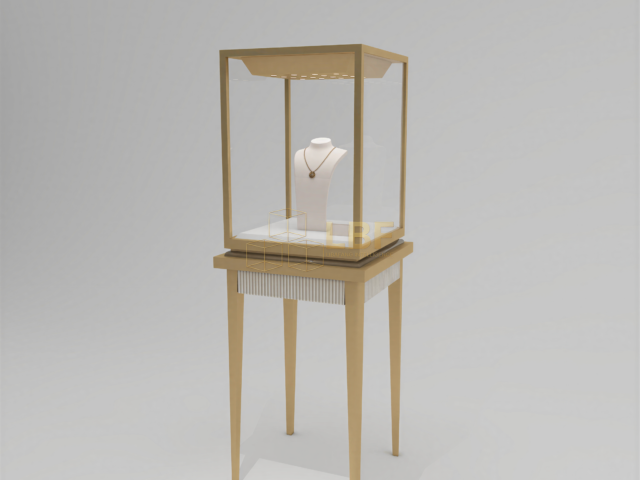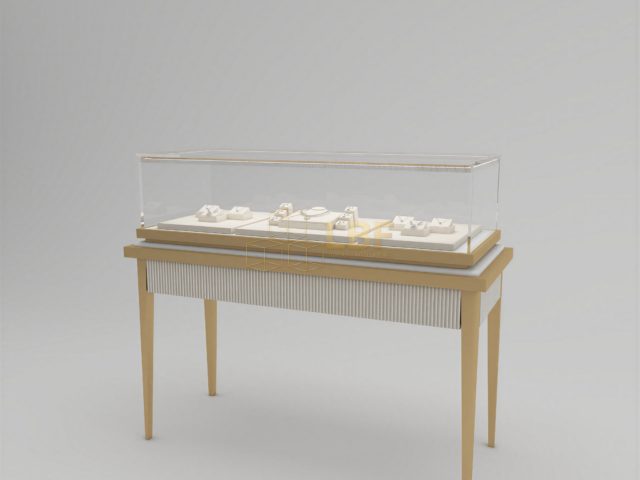

Most damage to objects inside museum display cases does not come from the public, the climate or the light. It comes from maintenance work done in a hurry — a gloved hand reaching across an object, a compressed-air can sprayed at a seal, a case left open while a technician walks away for a rag. When you plan museum display case cleaning access as a dedicated system rather than an afterthought, you remove the most common contact path between cleaning chemicals, cloths, tools and the objects themselves. The goal is simple to state: cleaning should never require handling an object, and object handling should never be done with cleaning gear in hand.
Why cleaning access and object access are different problems
An object access opening exists to move objects in and out during installation or rotation — perhaps four to twelve times a year. It must be wide, well-sealed and secure. A cleaning opening is used far more often: dust control on horizontal surfaces may happen monthly, glass and acrylic panels weekly in high-traffic galleries, and immediately after any observed visitor tampering or construction dust event. That frequency changes everything about the design brief.
When both functions share one opening, cleaning becomes a pretext for opening the object chamber. Every wipe-down then exposes contents to a burst of uncontrolled room air — 40–60% relative humidity in a typical gallery versus 50 ± 5% inside a conditioned vitrine. Panels that need removing and storing during cleaning also create trip hazards and breakage risk. Separating the two, physically or procedurally, keeps the object chamber sealed except when trained staff intentionally work inside it.
Six access options and when each is worth the cost
There is no single correct answer; the right choice depends on case size, object sensitivity and cleaning frequency. In practice, the following hierarchy is common in well-run galleries:
- Externally removable glazing panels with a locking key held by the registrar. Cleaning happens from the aisle side; the object chamber is not entered. Best for flat-wall cases under 1.5 m wide.
- Hinged front glass with a 90° stop and gas strut. Quick, but choose only where the sweep of the door cannot strike an object within 200 mm.
- Sliding front panels on low-friction tracks. Good for long cases, though the overlapping panel occupies storage space when open.
- Manually operated lift or drop-front sections sized only for the cleaning arm, not for object removal — typically 300–400 mm tall.
- Removable floor plinths or base panels giving bottom access for plinth tops and under-crate surfaces, letting the object chamber stay closed above.
- Instrumented environmental chambers where interior surfaces are cleaned through sealed glove ports or dedicated maintenance hatches that never overlap with object doors.
Design numbers that keep cleaning out of the object zone
Three dimensions drive whether cleaning stays clean. First, an interior clearance of at least 150 mm between the object’s outer envelope and any glazing — partly for fire-suppression sprinkler spray, partly so a cleaning cloth never drags on a plinth edge above an object. Second, a service aisle of 900–1200 mm in front of access panels so a technician can step back and move a damp cloth without brushing the case. Third, sill and edge profiles with no horizontal ledges deeper than 10 mm, which removes the dust traps that force frequent internal cleaning in the first place.
Material choice matters too. Polycarbonate glazing scratches at the first wipe with an unsuitable cloth, so specify sacrificial anti-glare film or hardened acrylic with a documented cleaning routine. Powder-coated steel interiors should be matte and fully welded, avoiding the bare edges and rough seams that hold dust. If the case is gasketed, budget for gasket replacement every three to five years — cracking gaskets let in dust faster than any damp cloth can remove it. A well-sealed case can cut interior cleaning from weekly to quarterly, which may reduce total maintenance hours by half or more over a ten-year service life.
Sealing beats cleaning. Where a cleaning hatch has no compression gasket, a magnetic seal or a positive-locking latch, stop the design there and fix the seal first — otherwise you have added an opening without solving the problem it was meant to solve.
Writing the access protocol your staff will actually follow
Hardware only sets the limits. The working safeguards are procedural, and they should be written, taught and audited. A useful split is by role: trained conservators handle objects; trained technicians clean cases. Neither group carries out the other’s task without a handover.
Basic protocol points to adopt:
- Clean with microfiber cloths colour-coded by surface, and use only neutral pH cleaner; never spray liquid directly onto glazing or near a case opening.
- Log every cleaning opening in a simple register (date, person, case, duration) so IMS readouts can be correlated with any humidity anomalies.
- Inspect objects visually each time a panel is removed, and record any change — this turns routine cleaning into passive condition monitoring at no extra cost.
- Remove, close and re-lock object access panels during cleaning; only the maintenance hatch may be open.
- Prohibit compressed air, aerosol dusters and abrasive pads inside any object chamber, and require gloves whenever a cleaner’s hands enter.
Two staff, one process: the same protocol applied to a 300 × 300 mm display in a hallway and to a 3 m-wide museum vitrine keeps decision-making consistent across a whole collection.
What to put in the specification before ordering
Write cleaning access into the tender documents next to the environmental specification. Ask for the number, size and location of maintenance openings; gasket type and expected service interval; panel and glazing material with cleaning-test records; and a short operating instruction with the delivered case. Require a factory witness test that opens and closes every hatch with the object door locked, and confirm that no cleaning opening provides line of sight into a high-security chamber.
Libafang Showcase Co., Ltd. designs and manufactures custom display cases for museums, jewelry retailers and watch boutiques from its Guangzhou facility, with export experience in more than 30 countries, and can engineer maintenance access as a separate layer from object access. Request a free design and quotation to map out access and sealing for your next exhibition case run before the specification is locked.