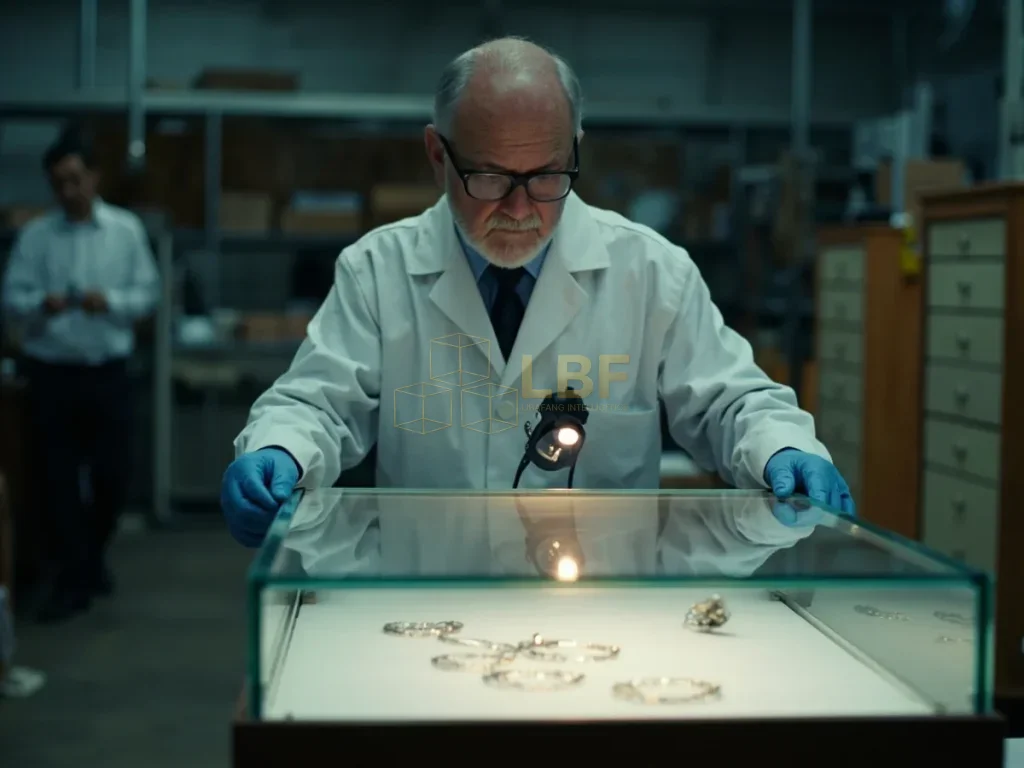
Most museum procurement teams compare display case quotes on sticker price, and that is exactly where lifecycle budgets go wrong. A case that costs $4,000 today may consume three times that amount over two decades through servicing, gasket replacement, climate control troubleshooting and premature refitting. Conversely, a $7,500 case designed for maintainability and future upgrades can end up cheaper per collection-year than its budget rival. Understanding the museum display case lifecycle cost means splitting the spend into four stages — acquisition, routine maintenance, repair and retrofit, and end-of-life replacement — and budgeting for each one honestly. The numbers below are typical ranges from international exhibition and luxury retail projects; your own figures will depend on case size, microclimate requirements and local labor rates, but the ratios hold up consistently across markets.
The purchase stage: what you actually pay for
Display case pricing scales with three variables: glass quality and security rating, environmental control capability, and finishing. A basic museum-grade case with laminated low-iron glass and silica gel passive control might run $3,000–$6,000 for a freestanding 1.5 m unit. Add active humidity control with a conditioning unit and the price rises to $8,000–$15,000</strong. Security glass exceeding EN 356 P5A and integrated alarms can push a single wall case past $20,000. Freight and installation typically add 8–15% and 3–8% respectively on exported orders — a cost many buyers forget when comparing an overseas quote against a domestic one.
Two design decisions at this stage have outsized lifecycle impact. First, specify serviceable components — replaceable gaskets, accessible control units, standard-format luminaires and hinges that do not require dismantling the case. Second, ask for a documented spare parts list with part numbers. A case whose proprietary LED driver can only be sourced from the original factory can turn a $60 repair into a $400 one plus two weeks of downtime.
Routine maintenance: the predictable annual overhead
Annual maintenance for a well-designed case is modest but rarely zero. Realistic planning figures per case:
- Cleaning and glass care: $100–$250 per year if staff handle it; two to three times that if contracted out.
- Humidity control media or servicing: $150–$500 per year, depending on whether the system is passive (silica gel regeneration) or active (desiccant wheel or compressor servicing).
- LED luminaire replacement: $80–$200 per year on average, though quality units last 30,000–50,000 hours and may need nothing for five or more years.
- Gaskets, seals and door alignment: $50–$150 per year averaged over a five-year cycle.
- Environmental monitoring and calibration: $100–$300 per case per year in a serious institution.
Taken together, budget $500–$1,200 per case per year for passive cases and $900–$1,800 for actively controlled cases. Over a 15-year first lifecycle that is $7,500–$18,000 — a figure worth putting in front of the finance department before signing the purchase order.
Repairs and mid-life refitting: the costs that surprise
Around year 8 to 12, most cases need work beyond routine servicing. Common items and their typical cost ranges: glass or acrylic replacement after scratches or a security incident ($400–$2,500 depending on size and rating), humidity control unit overhaul or replacement ($600–$3,000), lock and hinge replacement ($80–$400), and re-finishing or powder-coating bases ($200–$800 per case).
Larger refitting programs — retooling a gallery for a new exhibition — often involve changing plinths, internal mounting systems and lighting layouts. If the case carcass is sound, retrofitting internals costs 15–30% of a new case. If the case was built with non-standard fixings or sealed internals, that share can rise above 50%, at which point replacement usually wins. The rule of thumb: a case is worth refitting when the retrofit quote stays below roughly 40% of replacement cost and the glass and envelope remain intact.
Energy and climate control: the quiet line item
Active microclimate systems draw power continuously, and in a large gallery this compounds. A single actively conditioned case may use 50–150 kWh annually, costing roughly $10–$40 at typical commercial rates — negligible individually, meaningful across 60 cases. More significant is the collection risk cost of a cheap system: an unstable humidity cycle can damage sensitive objects and trigger conservation treatment costing thousands. Passive silica gel systems have near-zero energy draw and, in many climates, outperform poorly specified active units. Specify the control strategy against your actual gallery environment, not a generic default.
Comparing lifecycle totals honestly
Run the comparison as a total cost of ownership per case-year. A $4,500 passive case with annual maintenance of $1,100, a mid-life refit of $2,000 and replacement at year 15 costs about $6,700 total, or $447 per case-year. A $9,000 actively controlled case with $1,500 annual maintenance, a $3,000 mid-life overhaul and replacement at year 20 costs roughly $42,000, or $2,100 per case-year — more expensive, but it may be the only responsible option for highly sensitive collections. The point is not that cheaper is better; it is that the purchase price is only 15–35% of the true lifecycle figure, and the specification decisions that drive the other 65–85% are made before the order is placed. Libafang designs cases with accessible control units, documented spare parts and retrofit-ready internal framing specifically so that years 8 through 20 stay manageable.
Budgeting checklist before you order
- Request a written spare parts list and confirm local or regional availability.
- Ask for the maintenance schedule and the estimated annual consumables cost.
- Confirm that gaskets, luminaires and control units are replaceable without unsealing the envelope.
- Specify glass that can be replaced without discarding the frame.
- Plan a mid-life refit allowance of 20–30% of initial purchase cost.
- Set the replacement horizon (12–20 years) at the planning stage, not when a case fails.
If you are preparing a display case budget for a museum, gallery or luxury retail project, send us your object types, room dimensions and climate targets. Libafang will provide a free design proposal and itemised quote that separates purchase, consumables and expected mid-life costs, so your capital request reflects the full lifecycle rather than the sticker price alone.