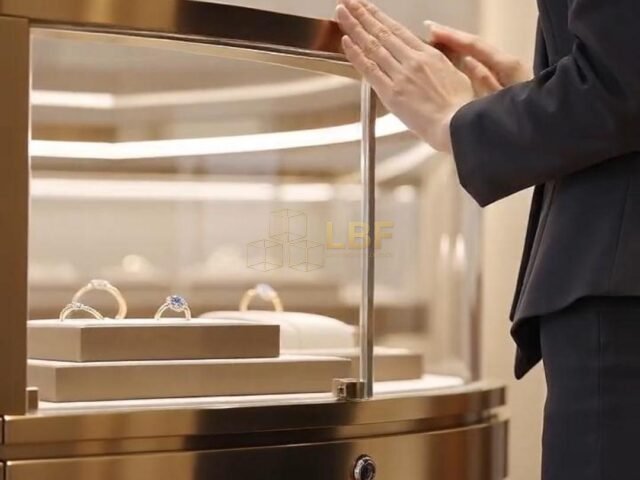

Changing objects in a museum display case sounds straightforward—until a 200-year-old ceramic bowl has to pass through a 600 mm opening without touching the frame, while registrars, conservators, and installers coordinate around a two-hour slot. Whether you manage a single vitrine or a gallery of twenty, the design of the case itself determines how safe, fast, and stress-free those changeovers are. This article breaks down the key design decisions that make museum display case object changeovers safer and more efficient, from aperture sizing to environmental recovery times.
Understand the Changeover Workflow Before Specifying the Case
Every changeover follows a sequence: condition-check the outgoing object, open the case, remove it, clean the interior, install the incoming object, close and seal, then stabilize the environment. Each step has a time cost and a risk cost. A case that opens in 90 seconds but requires two people to lift a heavy glass lid adds risk; a case with a large aperture but no gasket protection may expose objects to dust. Map your typical workflow—how many objects, what weights, what fragility, how many staff—before choosing hinges, lifts, or sliding mechanisms. For example, a 2 kg bronze can be handled by one conservator, but a 40 kg marble bust needs a team and a case design that allows a straight, unobstructed lift. Documenting the workflow early prevents costly retrofits later.
Design the Access Aperture Around the Largest Object
The single most common mistake in museum display case object changeovers is an aperture smaller than the object plus handling clearance. A practical rule is to make the clear opening at least 150 mm larger than the object’s largest dimension on every side. For a 400 mm wide ceramic vessel, that means a 700 mm opening. Also consider depth: a deep case with a narrow door forces awkward reaching. For objects deeper than 300 mm, a sliding front or a removable front panel is often better than a hinged door. If the case is built into a wall, ensure the aperture aligns with the room’s circulation path so trolleys and carrying crates can approach directly. In our experience at Libafang, specifying aperture dimensions after the object list is finalized—rather than before—eliminates most access problems.
Choose the Right Opening Mechanism for Safety and Speed
Mechanism choice affects both handling risk and changeover time. Here is a comparison of common options:
- Hinged glass doors: simple and cost-effective, but a 1.2 m wide door can weigh over 30 kg and swing into the operator. Use gas struts or counterweights for doors wider than 800 mm.
- Sliding glass panels: good for wide apertures and minimal swing space, but tracks must be kept clean; debris can cause jamming. Specify sealed bearings and stainless tracks.
- Lift-off frames or tops: useful for table cases, but require two people for anything over 15 kg. Provide clear lifting handles and a storage stand for the removed top.
- Removable front panels with magnetic or cam locks: fast for small objects, but ensure panels are tethered or have a dedicated rack to avoid damage during changeovers.
For high-traffic museums with frequent rotations, a sliding mechanism with a 1,000 mm clear opening and soft-close dampers typically reduces changeover time by 30–40% compared to hinged doors, based on timed trials in our workshop. Always test the mechanism with the actual object weight and a mock-up before final production.
Control the Environment During and After Changeovers
Opening a case disrupts internal RH and temperature. For sensitive objects, aim to keep the case open for less than 5 minutes; this requires practice and a pre-staged object. Design features that help include: a separate sealed compartment for silica gel that can be swapped without opening the main volume; a digital hygrometer with a visible display; and a gasket that compresses evenly, ideally a hollow silicone profile with a 30% compression set. After closing, most well-sealed cases recover to baseline RH within 15–30 minutes if the room is stable. If your case has a passive humidity buffer, allow 2–4 hours for full stabilization before declaring the object safe. Build this recovery time into your changeover schedule and signage.
Build In Protection for Objects and Staff
During changeovers, the greatest risks are drops, abrasion, and contamination. Simple design details mitigate them: rounded or capped frame edges to prevent snagging; a removable felt or Ethafoam pad on the case floor; and a lip or tray to catch small parts. For heavy objects, specify a case floor that can support at least 2.5 times the object weight, and provide a temporary shelf or bridge if the object must be slid rather than lifted. Staff safety matters too: a case that requires reaching above shoulder height or below knee height increases strain. Keep the primary access zone between 900 mm and 1,500 mm from the floor. At Libafang, we include a changeover checklist with every custom case, covering lock operation, gasket inspection, and handling limits.
Plan for Storage and Handling of Removable Parts
Doors, panels, and tops need somewhere to go during a changeover. Without a plan, they end up leaning against walls or lying on floors—both damage risks. Designate a stable rack or stand within 1.5 m of the case, ideally with padded supports. For glass panels, use a vertical rack with felt-lined slots; for tops, a wheeled trolley with a matching frame. If space is tight, choose a mechanism that keeps parts attached, such as a sliding panel that retracts into a side pocket. Also consider the path from storage to case: door widths, thresholds, and lifts. A 1,200 mm wide panel cannot pass through a 900 mm door without tilting. Measuring the route is as important as measuring the aperture.
Designing for safe and efficient museum display case object changeovers is not an afterthought—it is a core specification that affects object safety, staff workload, and exhibition scheduling. If you are planning a new case or retrofitting an existing one, request a free design and quote from our team to discuss your object list and workflow.