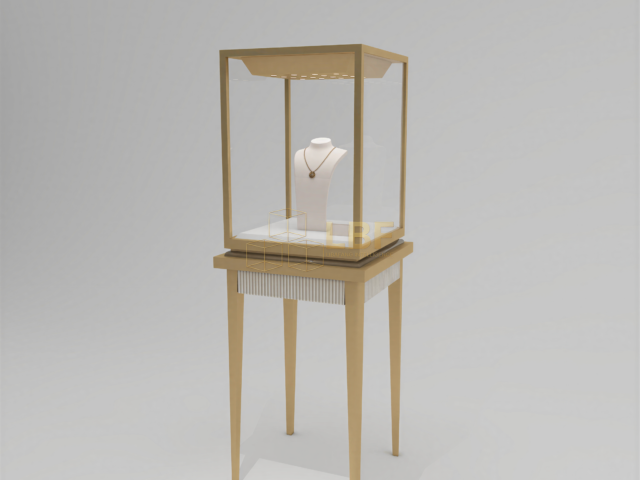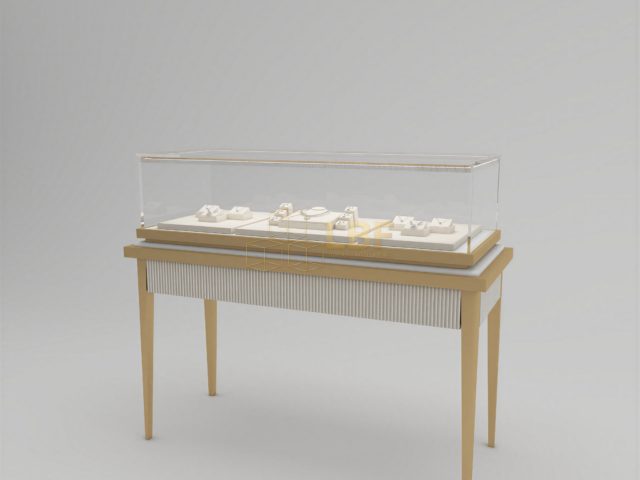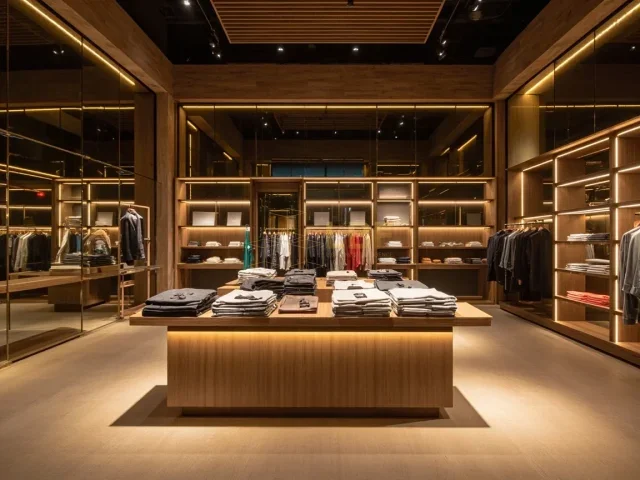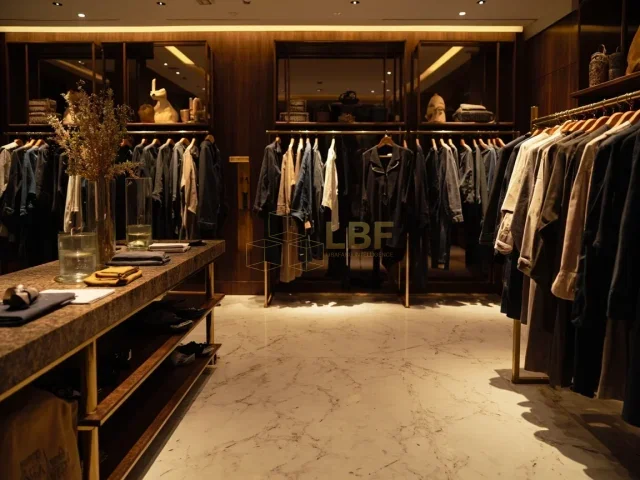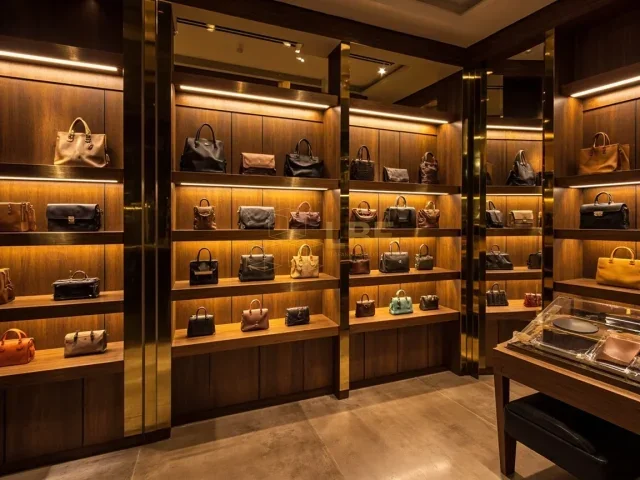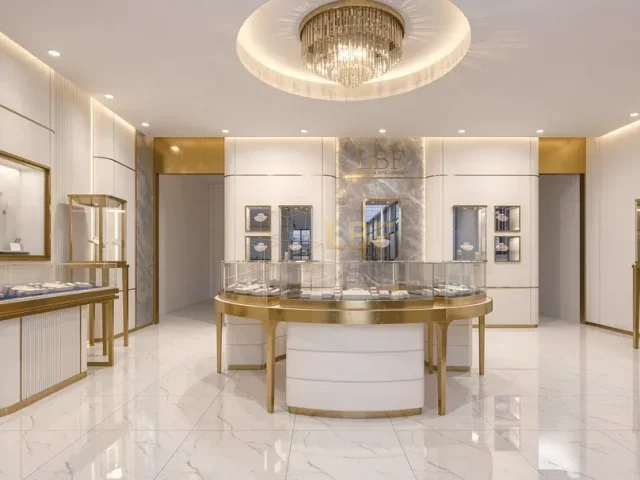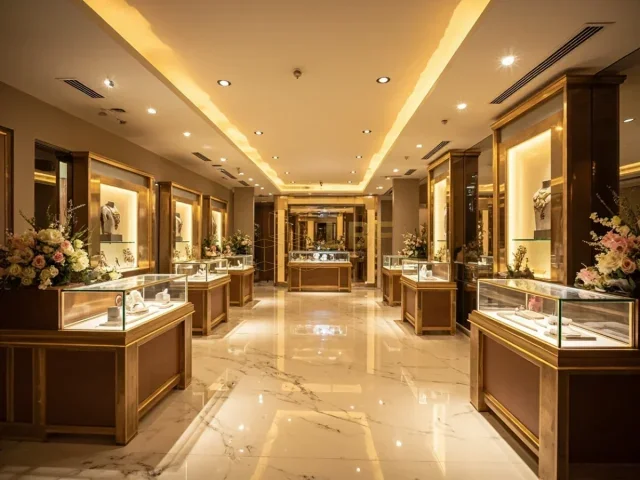
Wood veneer is the soul of high-end display cabinets. For jewelry stores, watch boutiques, and museums, the veneer’s grain and finish determine whether a cabinet whispers luxury or shouts mediocrity. At Libafang, we’ve refined veneer selection and finishing over 15 years of exporting to 30+ countries, and we’ve seen how small details—grain alignment, color consistency, and finish approval—make or break a project. This article shares practical insights on grain matching and finish approval for luxury display cabinet wood veneer, with concrete steps you can apply to your next order.
Why Wood Veneer Matters in Luxury Retail
Solid wood is prone to warping and is heavy; veneer offers stability, uniform beauty, and efficient use of rare species. A 0.6 mm veneer of walnut or ebony can clad a cabinet that would otherwise require thick, costly lumber. But veneer’s thinness demands precision: mismatched grain or inconsistent finish immediately cheapens the piece. For luxury display cabinets, veneer is not a cost-saving substitute—it’s a design statement. The grain pattern directs the eye, frames the product, and under proper lighting, creates depth that solid wood rarely achieves.
Grain Matching Techniques for Visual Harmony
Grain matching is the art of arranging veneer leaves so their patterns flow seamlessly across panels. There are four common methods:
- Book matching: Consecutive leaves are opened like a book, creating a symmetrical mirror image. Ideal for central panels and symmetrical designs, but can produce a strong ‘butterfly’ effect.
- Slip matching: Leaves are joined edge-to-edge without flipping, yielding a repeating grain that appears more uniform. Often used for long runs like counter fronts.
- Four-way matching: Combines book and slip matching to create a diamond or box pattern, suitable for large cabinet doors.
- Random matching: Deliberate mismatching for a rustic or organic look—rarely appropriate for luxury retail.
For a typical jewelry showcase, we recommend book matching on doors and slip matching on side panels, with grain running vertically to elongate the cabinet’s proportions. On curved surfaces, grain should follow the curve to avoid visual breaks. Always specify the matching method in your purchase order; otherwise, the factory may default to the most economical option. At Libafang, we provide a grain layout drawing for approval before cutting, ensuring no surprises.
Selecting Veneer: Grade, Species, and Consistency
Not all veneer is created equal. For luxury display cabinet wood veneer, insist on premium grades: A-grade for faces (no knots, uniform color), B-grade for less visible areas. Species like American walnut, white oak, and ebony offer distinct characters. Watch for color variation between flitches—even from the same log, heartwood and sapwood differ. Request a sample from the actual flitch to be used. We recommend ordering 10-15% extra veneer to allow for matching and waste. Also, consider the substrate: MDF with balanced veneer on both sides prevents warping. For high-humidity markets, use moisture-resistant MDF and seal all edges.
The Finish Approval Process: From Sample to Sign-Off
Finish approval is where many projects stumble. A finish that looks good in the factory may look wrong under retail lighting. We follow a three-step approval process:
- Lab sample: We prepare a 200mm x 300mm veneer sample with the proposed finish (e.g., open-pore matte, high-gloss polyester, or oiled). This sample includes the actual veneer species and grade.
- On-site mock-up: For large orders, we ship a mini cabinet section (or door panel) to the client’s store for evaluation under actual lighting—typically 3000K-3500K for jewelry, 4000K for watches.
- Production sign-off: Once approved, the sample is signed and dated, and becomes the reference standard for the entire production run. We retain a duplicate for quality control.
Key finish parameters to agree upon: gloss level (specify in GU, e.g., 5-10 GU for matte), color (provide Pantone or RAL reference), and texture (open pore vs. closed pore). For high-gloss finishes, expect 3-5 coats of polyester with sanding between coats to achieve a mirror surface. Always allow 7-10 days for the finish to fully cure before crating.
Common Pitfalls and How to Avoid Them
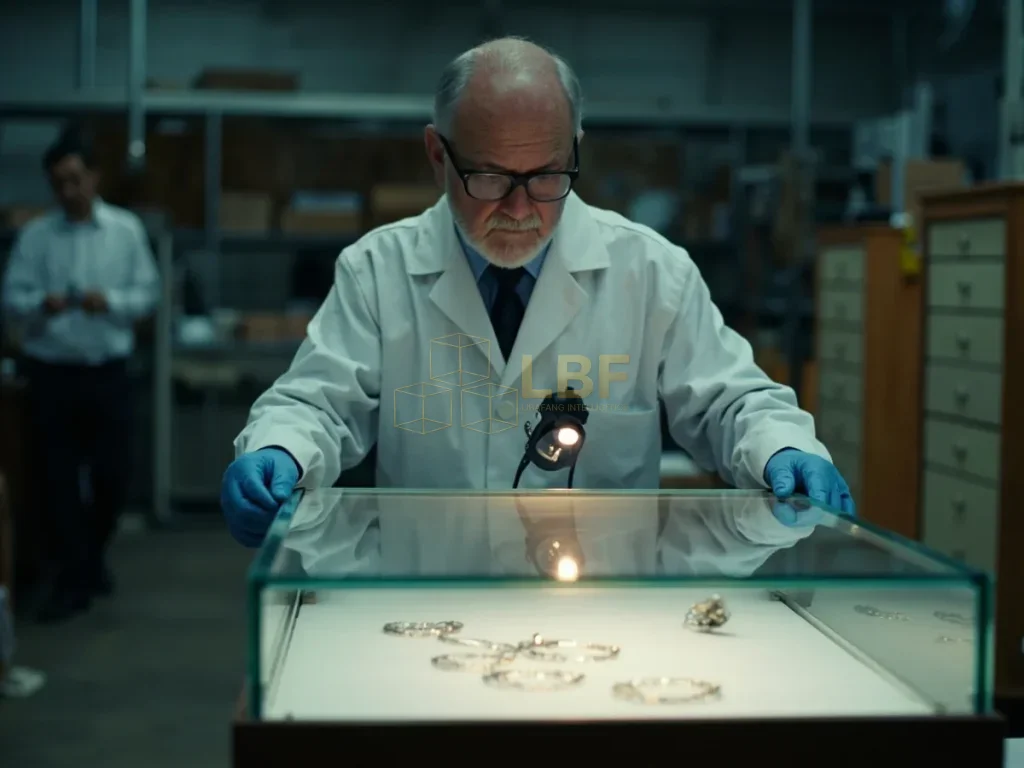
Even experienced buyers encounter issues. Watch for: grain misalignment between adjacent panels (caused by inaccurate cutting or mismatched leaves), color drift between production batches (mitigate by using veneer from a single flitch and ordering extra), and finish inconsistency (ensure the same spray operator and gun settings). Also, consider the environment: a cabinet destined for a dry climate may need a different finish formulation than one for a humid region. Finally, inspect shipments under proper lighting—what looks fine in dim warehouse light may reveal flaws under bright retail spots.
Why Libafang for Your Veneer Display Cabinets
With in-house veneer matching and finishing facilities, Libafang controls every step from flitch selection to final polish. We provide grain layout drawings, finish samples, and pre-shipment inspection reports. Our team has delivered luxury display cabinet wood veneer solutions to jewelers and museums in 30+ countries, adapting to local lighting and climate conditions. Whether you need a single showcase or a full store rollout, we ensure your veneer meets the highest standards.
Ready to elevate your retail display? Contact Libafang today to request a free design consultation and quote. Share your project details, and we’ll respond within 24 hours with a tailored proposal.