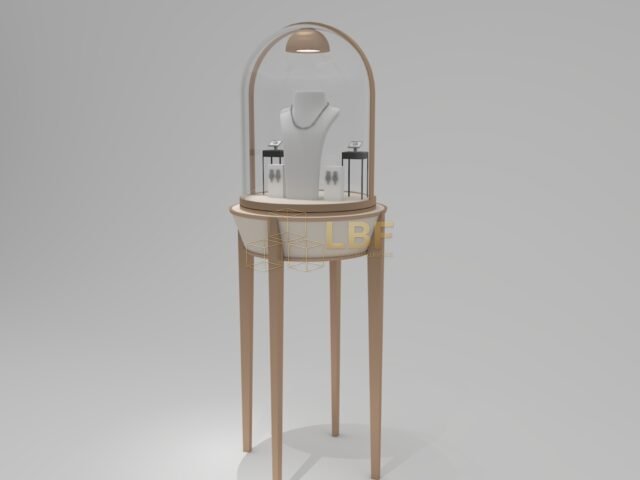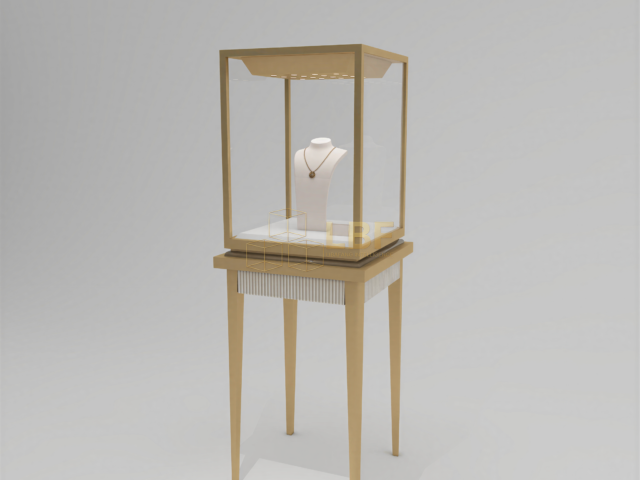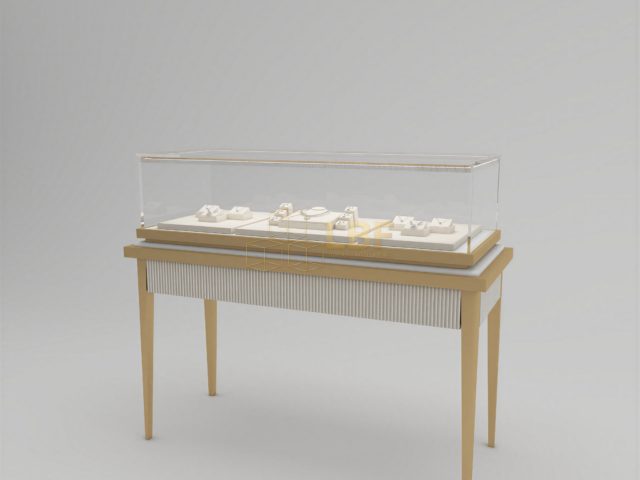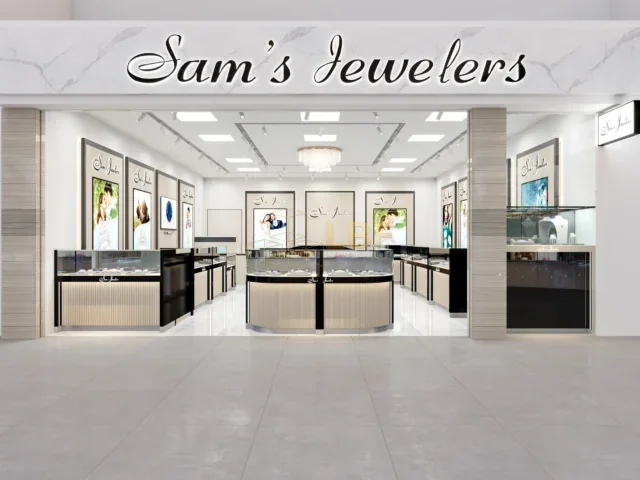
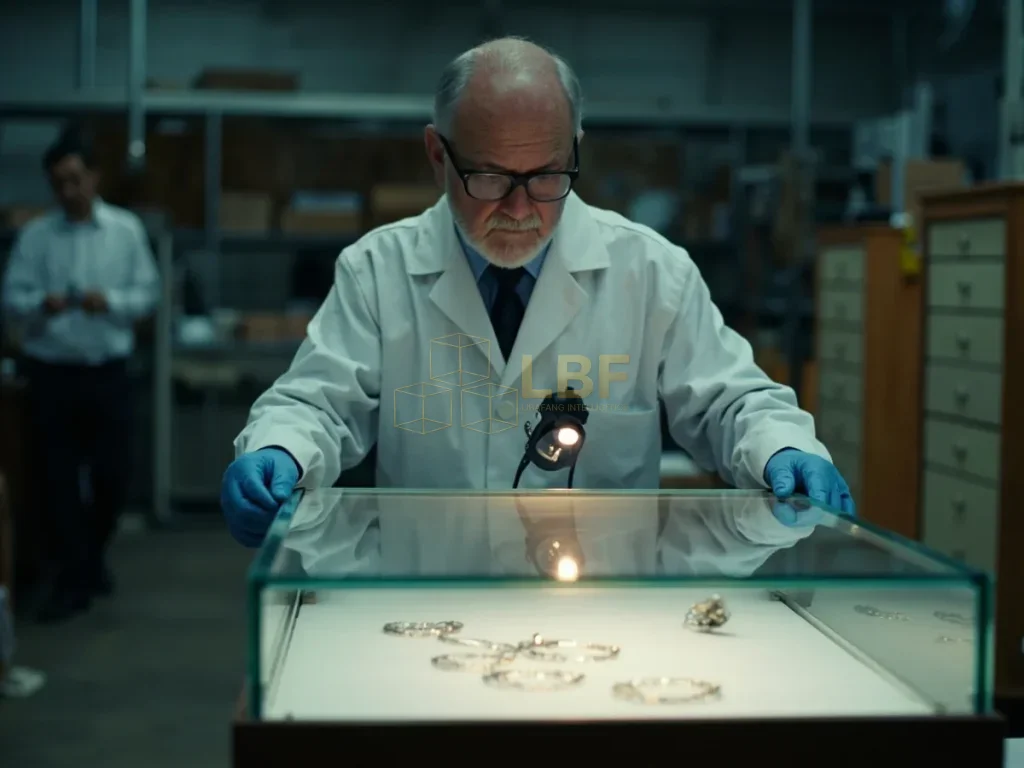
A jewelry showcase quote comparison often starts with good intentions: three suppliers, similar drawings, and a spreadsheet of totals. Then the numbers arrive and diverge by 20–40%. One quote is $1,850 per case, another $2,400, and a third throws in “installation” with no explanation. Before you assume the cheapest is a bargain or the priciest is overcharging, check what each quote actually covers. Most large gaps trace back to missing items and scope differences, not price gouging. Suppliers define “showcase,” “delivery” and “finish” differently, and those definitions move the total significantly.
Start With the Drawing and Specification Set
Every fair comparison begins with the same technical package: elevations, plan views, a materials schedule and a lighting specification. If you send a verbal brief or a single rendering, suppliers will fill gaps with their own assumptions — and each will assume something different. A shop that quotes 1.2 mm stainless steel when you expected 1.5 mm has not necessarily made an error; the spec allowed it. Before requesting prices, lock down dimensions, glass type and thickness, frame material and finish, lock type, and the lighting system. This single step removes most of the ambiguity that later shows up as a “missing item” in a jewelry showcase quote comparison.
The Line Items Most Often Missing
These are the components that routinely disappear from the cheaper quote. Ask each supplier to confirm every one explicitly:
- Glass specification: low-iron tempered glass versus standard float glass, and whether thickness is 8 mm, 10 mm or 12 mm. Upgrading a single glass panel can add $60–$150 per unit.
- Lighting and driver: LED strips, dimmable drivers, wiring, and whether the driver is included or owner-supplied. Lighting often accounts for 8–12% of showcase cost.
- Locks and hardware: keyed locks, central locking systems, and hinge quality. A central lock system may add $80–$200 per case.
- Finishing and color matching: powder coating versus brushed stainless, and custom RAL color at extra charge.
- Packing: export-grade wooden crates with foam protection versus cartons. Crating typically runs $80–$250 per unit depending on size.
- Documentation: commercial invoice, packing list, and certificates of origin are not always part of the quoted price.
When a supplier omits two or three of these, the difference can easily reach $200–$400 per showcase, which explains a seemingly large gap on a 20-case order.
Scope Differences: Delivery, Installation and After-Sales
Incoterms are the most common source of confusion. A quote on an EXW basis leaves you responsible for inland transport, export clearance and freight; a CIF quote includes ocean freight and insurance but not unloading or installation. On a full container of showcases, the difference between EXW and CIF can be several thousand dollars. Confirm the term in writing on every quote.
Installation is another frequent gap. Some factories quote only manufacturing; others include a technician’s travel, visa, accommodation and daily rate. If installation is listed as “included,” ask whether it means assembly instructions, remote video support, or an on-site technician. A wrongly assumed inclusion of three days of on-site installation can represent $1,500–$3,000 of hidden value.
Warranty and spare parts also vary. A one-year warranty on electrical components is standard; a three-year warranty covering LED drivers and locks is a real cost that should be visible in the price. Ask for the warranty schedule as a separate page so you can compare it directly.
Build a Comparison Matrix Instead of Comparing Totals
A single total figure hides too much. Instead, build a matrix with one column per supplier and one row per scope item, then mark each cell as included, excluded or optional. This forces clarity and gives you leverage in negotiation. Here is a practical sequence:
- List the 10–15 scope items that matter for your project and weight them by relative importance.
- Require each supplier to complete the same table using their own quote, not a summary email.
- Convert all figures to a single incoterm and a single currency, using the current exchange rate.
- Add estimated costs for every excluded item so the totals become genuinely comparable.
- Re-rank suppliers on the adjusted total, then look at lead time, sample policy and references.
Only after this normalization should you compare prices. A quote that looks 25% cheaper can end up at parity — or higher — once shipping, crating, lighting drivers and installation are added back in.
Ask the Questions That Expose Scope Gaps
Suppliers respond well to specific questions, and their answers tell you a lot about how they work. Ask whether the quoted price includes packing in export wooden crates; whether LED drivers are branded or supplied by the client; whether glass is low-iron and tempered; how many keys come with each lock; the lead time from deposit to dispatch; the payment schedule; and what the process is for replacements under warranty. A supplier who answers precisely in writing is easier to trust than one who shrugs off detail as “standard.”
If you are evaluating several factories at once, it also helps to send the same specification package to everyone, and to note that you are comparing quotes. At Libafang, we routinely return a line-item breakdown that shows exactly what is included, because transparent scope makes a jewelry showcase quote comparison faster for buyers and reduces change orders later in the project.
A thorough comparison takes a few extra hours and can save several thousand dollars on a typical store rollout. Review the low quote line by line, normalize every supplier to the same incoterm and currency, and ask written questions until the scope is fully clear.
Request a free design and quote from Libafang, and we will send a detailed scope breakdown alongside the price so you can compare us directly against other suppliers.