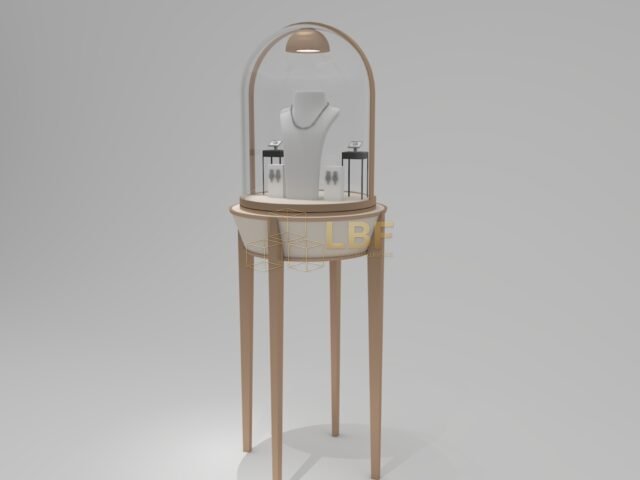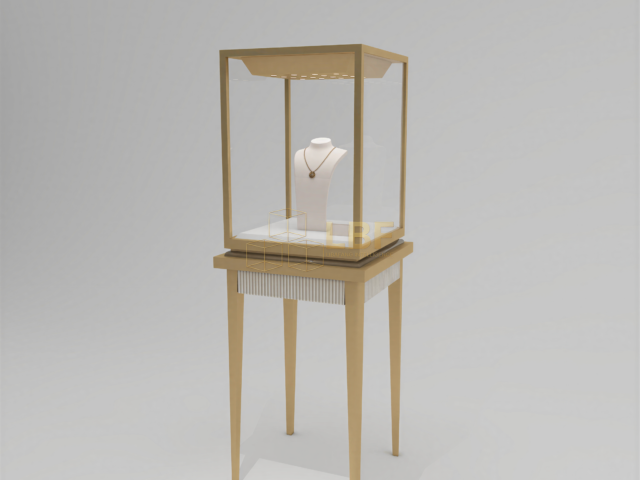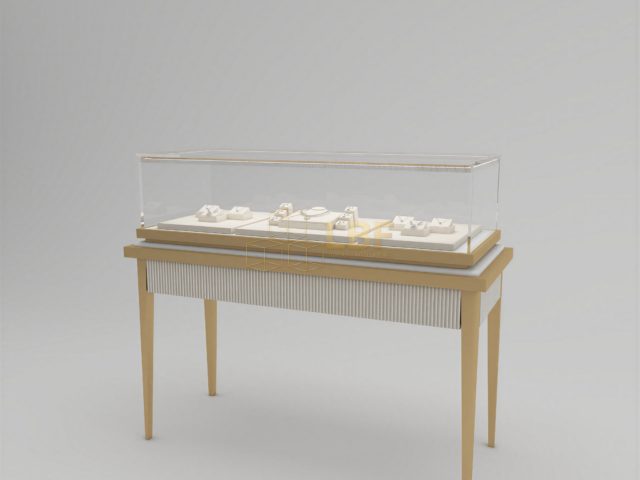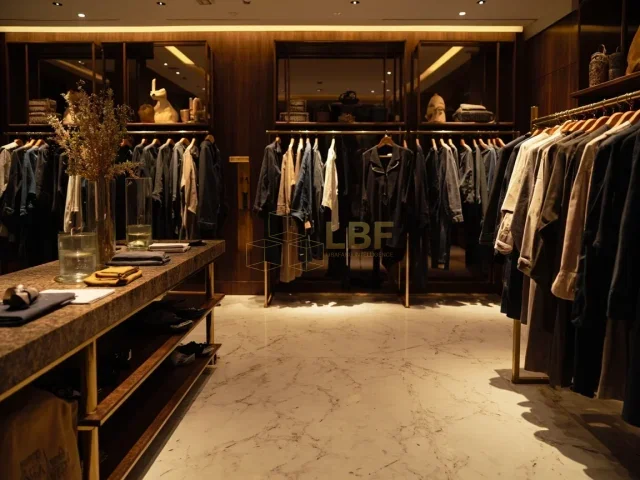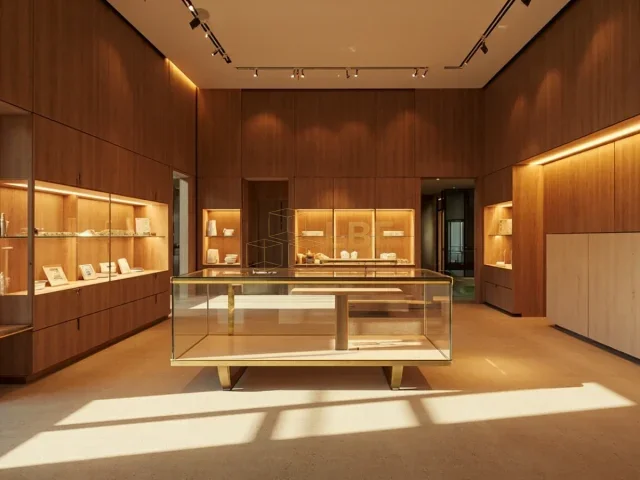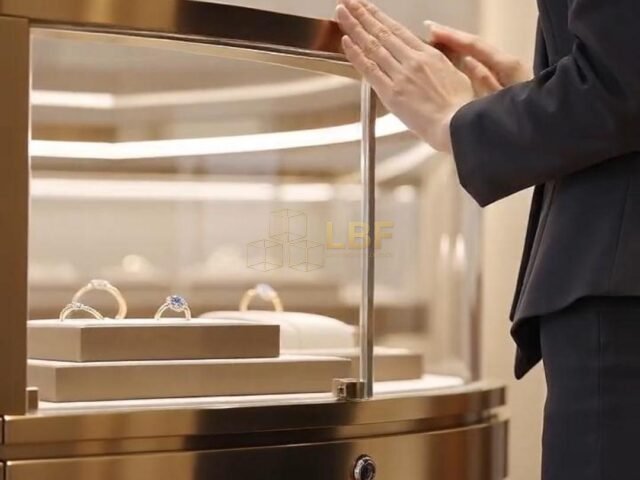

A trunk show puts your best pieces in front of clients who came specifically to see them — but it also puts your fixtures on the road, in borrowed rooms, and in front of dozens of hands over two or three days. Jewelry trunk show display counters have to do three jobs that ordinary store fixtures never face: survive repeated freight and handling, stand level and secure on someone else’s flooring, and present trays, pads and individual pieces in an order that lets one or two salespeople serve several clients at once. Get those right and setup becomes a 30-minute job instead of a two-hour scramble. Get them wrong and you spend the show protecting fixtures instead of selling.
Start from the schedule, not the catalog
Before choosing finishes, map a realistic show calendar. A brand doing 12 trunk shows a year means each counter is packed and unpacked roughly 24 times per year, or about 120 times over a five-year life. That number should drive construction. Plywood-and-laminate carcasses with glued joints often loosen within 15–20 trips; a counter built around an aluminium or steel frame with knock-down hardware, 18 mm plywood panels and machine-inserted fittings will hold alignment far longer. If your circuit is 3–4 shows a year, a lighter counter is fine and easier to move; if it is 15 or more, spend the extra 20–30% on a road-rated build.
Also check each venue before the build: door widths (a common constraint is 800–900 mm), freight elevator dimensions, whether there are steps, and whether the room can be accessed the day before. These plain facts eliminate most of the setup problems that cannot be fixed on site.
Design counters that break down and travel flat
The most practical configuration for touring jewelry is a modular counter system: 1,000–1,200 mm wide sections that lock together into a 2.4–3.6 m run, with a separate riser or tower section for feature pieces. Sections should break down into panels no heavier than about 25 kg each so that two people — or often one — can move them without equipment.
- Shipping protection: specify foam-lined flight cases or reusable double-wall cartons with 30–50 mm foam and corner blocks; unprotected counters arrive with chipped edges and scratched tops.
- Legs and levelling: four adjustable feet per section with at least 20 mm of travel handle uneven floors, thresholds and hotel carpet.
- Stability: join adjacent sections with internal bolts or concealed clips, and add a low counterweight or ballast plate to tall tower units.
- Weight budget: aim for under 60 kg per 1,200 mm section; heavier units push freight costs up and make single-person setup impossible.
- Surface protection: removable glass or acrylic tops with felt or suede inserts travel better than fixed glazed surfaces and are cheap to replace.
- Cabling and lighting: use plug-and-play LED strips with connectors rated for repeated connection, and label every lead; a lighting failure in a dark hotel ballroom is entirely avoidable.
Ask for a pre-shipment trial assembly and, ideally, photos or a short video of the packed cases. A supplier who has exported to multiple markets should also confirm the wood packaging is ISPM 15 compliant and supply a packing list for customs. Libafang builds counters to order in Guangzhou and routinely ships knock-down designs in export-grade cases, which is worth specifying at the quotation stage rather than after the first show.
Make setup a repeatable 30-minute process
Trunk show venues are rarely available for long, and access is often limited to a two-hour window. Treat setup as a documented procedure: numbered cases, a one-page floor plan showing counter positions relative to entrances and power outlets, and a packing order where lighting and hardware sit on top. A two-person team should be able to place a 3 m run, level it, connect lighting and lay out trays in 30–45 minutes.
Practical points that save time: mark counter positions on the floor plan by measurement, not by eye; carry spare bulbs, connector leads, fuses and a small tool kit; bring a tape measure, spirit level and gaffer tape; and photograph the finished layout so the next show matches it. Security is part of setup — confirm where the venue’s lockable storage is, and plan how counters are covered or locked overnight.
Lay out the counter for product handling
Handling is where a well-designed counter pays for itself. At a trunk show, the client sits or stands at the counter while the salesperson reaches for trays behind and below it. Keep the working depth between about 500 and 600 mm so staff can reach the back of the counter without leaning across a client’s hands. Feature pieces at 1,050–1,100 mm viewing height sit comfortably for seated clients; lower display areas at 750–800 mm suit trays opened flat.
Organise the surface in zones. Near the salesperson: the tray bank and a discreet open area for laid-out pieces. In front of the client: a padded presentation pad, ideally a removable suede or leatherette mat in a neutral tone that shows metal and stone colour accurately. Off to one side: a loupe, a mirror, a soft cloth and a small tray for client belongings. Use sunglass-style tray inserts with slots rather than loose rings, so pieces can be counted in seconds at the start and end of each day.
Lighting influences handling too. Specify 3,000–4,000 K LED with a colour rendering index (CRI) of 90 or above so diamonds and coloured stones read naturally, and keep light off the client’s face where possible. Avoid glare on glass by setting strips back 150–200 mm from the front edge or fitting a subtle anti-reflective coating where budgets allow.
Plan transport and handling around the pieces, not just the fixtures
Fixtures and product should travel separately. Counters go in freight or a van; jewelry goes with a person, in lockable cases, and never in checked luggage or a general freight shipment. Allow one full working day between arrival and the first appointment for assembly, cleaning and lighting checks, and pack a small ‘fix kit’ of touch-up paint, spare felt, glass cleaner and adhesive.
Before the show, do a 15-minute dry run with your team: open cases in order, assemble one section, lay out trays and time it. Whatever takes longer than expected will take twice as long in an unfamiliar room.
If you are planning a trunk show circuit and want counters built to travel, request a free design and quote from Libafang with your venue dimensions, show calendar and product mix — drawings and a packing plan follow, usually within a few working days.