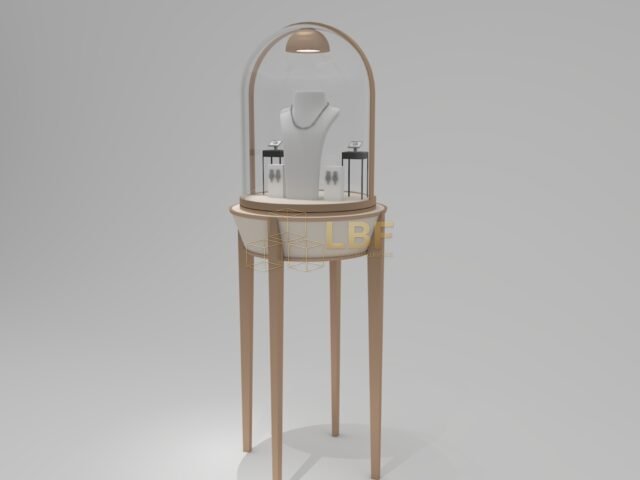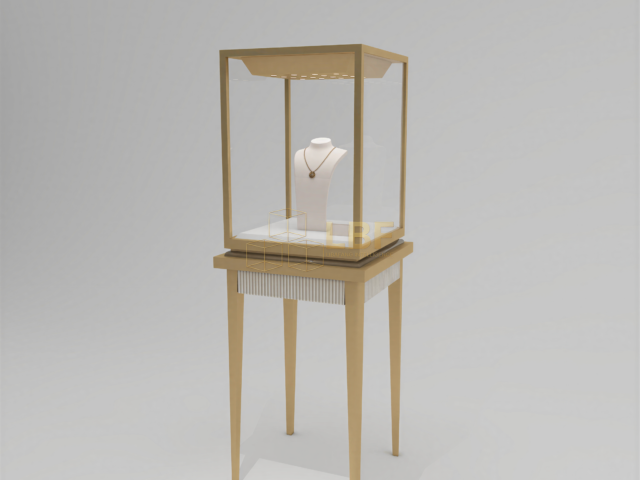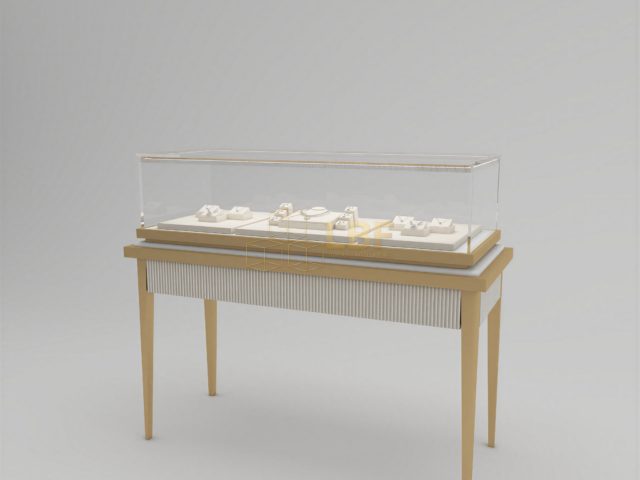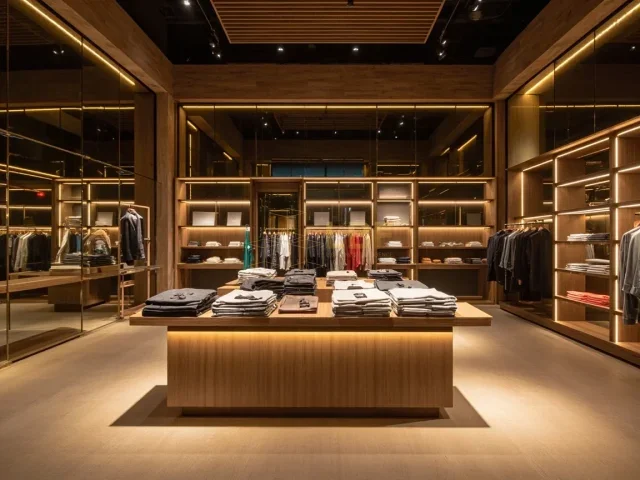
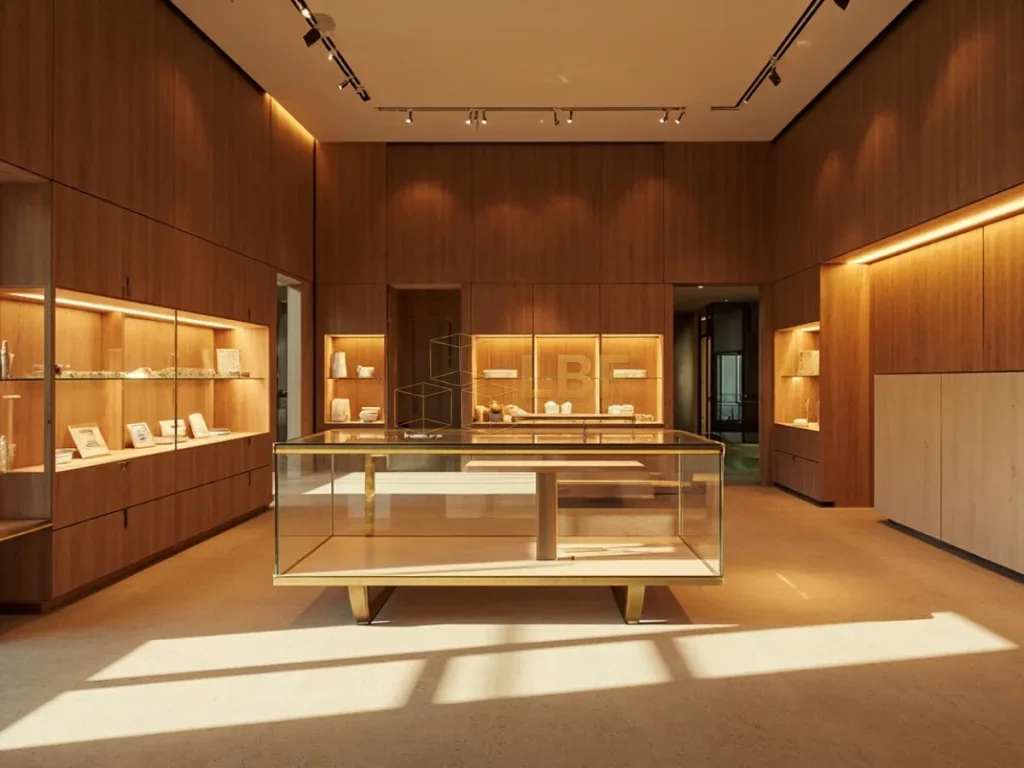
Height variation is one of the fastest ways to make a showcase look curated and valuable. Yet it is also the fastest way to make one look cluttered. Place two risers in the wrong sizes, pick three different finishes, and a clean jewelry presentation turns into a busy jumble of platforms. The solution is not to avoid height bands all together. It is to use luxury boutique display risers with a disciplined plan: one material family, a repeating height rhythm, and a clear rule for what goes on top. This guide covers the practical specs, proportions and grouping methods used in display fabrication, so a retail team can plan a showcase that reads as intentional rather than crowded.
Start With a Height Ladder, Not Individual Pieces
Most cluttered displays happen because retailers buy riser single pieces randomly, then try to make them work together. A stronger approach is to define a height ladder before sourcing anything. For most jewelry and watch showcases, three tiers are enough: a base level at 0-20 mm, a mid level at 40-70 mm, and a hero level at 90-120 mm. That gives a clear reading order from front to back without any platform disappearing into the background.
Keep the vertical step between adjacent tiers at a minimum of 30-40 mm. Gaps smaller than that tend to look accidental, read as height variation at a glance, and are difficult to label cleanly. In a typical 1800 mm wide showcase, a three- to five-block spacing plan works well: the tallest risers should sit at the back corners, medium blocks mid-depth, and low blocks toward the front edge, with the center kept relatively open. That single rule keeps the back of the case from being hidden by the products in front.
Stick to One Material Family
Visual clutter is rarely caused by height; it is caused by too many visual textures at once. A luxury look depends on restraint, so limit risers to one main material family per showcase. Common options include brushed stainless steel, matte acrylic in clear, black or ivory, or suede-wrapped MDF. Mixing a polished gold riser with a black acrylic step and a raw wooden block in one case usually fights the jewelry rather than supporting it.
If two materials are needed, treat one as dominant and use the other only as an accent under 20 percent of the total riser area. Match finishes to the case hardware where possible. For watch boutiques, a brushed stainless riser looks cohesive with stainless bracelet displays; for high jewelry, a matte ivory or deep black suede surface can reduce glare and give stones a calmer backdrop. Edge profile matters too: a 2-3 mm chamfer reads refined, while a heavy rounded edge reads more retail-casual.
Use Footprint Proportional to the Object
The top surface of a riser should be sized to its product, not to the empty space around it. As a working ratio, the riser footprint should exceed the item base by 25-50 mm on each side. A 40 mm watch case needs a top plate of roughly 90-130 mm; a necklace bust typically needs 150-200 mm of width. Risers that are too large look empty, and risers that are too small make pieces look unstable.
Depth also affects clutter perception. In a 600 mm deep case, keep total riser depth to about one-third of the case, roughly 180-220 mm, so the front zone stays clear for flat display and price tagging. Weight and stability are practical too: a small acrylic riser holding a heavy stone necklace should have a wider base than top, ideally a 1:1.3 base-to-top ratio, to avoid tipping during staff access.
Group in Odd Numbers and Leave Breathing Room
Visual balance improves when riser clusters contain odd numbers of blocks: three, five, or seven. Odd groups feel organic, while even groups can look like symmetric boxes. More important than the count is the spacing. Leave at least 30-50 mm of open space between individual risers within a cluster, and 60-80 mm between clusters. That spacing is what creates the sense of luxury: the products have room, and the eye can separate them.
- Back row: tallest risers, 90-120 mm, for hero pieces and directional lighting.
- Mid row: 40-70 mm steps, used for grouped earrings, bracelets or watch sets.
- Front row: low blocks below 25 mm, used for flat product and price tags.
- Clear zones: reserve about 20 percent of the case footprint as pure empty surface to avoid density.
Make the Lighting Work With the Height
Risers change how light hits a product. A hero at 100 mm can sit too close to a 25-degree spotlight, causing a hot spot on polished metal and a shadow on the label below. Aim for 150-200 mm of clearance between the top of the tallest riser and the light source, and choose a matte top surface under glossy stones to reduce double reflections. If the showcase uses LED strips at the front edge, keep tiers stepped back by at least 50 mm per height level so the light reaches each product face.
Consider removable risers rather than fixed platforms. Modular risers allow seasonal resets without replacing the case, and a small stock of 30 mm, 60 mm and 100 mm blocks in the same material covers most jewelry, watch and museum formats. At Libafang, modular riser sets are typically built with hidden locating pins so blocks align consistently but can be swapped between cases. For retailers planning several locations, standardizing three heights and two footprints cut reorder complexity and train staff faster.
Quality Checks Before You Order
Before finalizing a riser order, request physical or video samples under the case lighting. Check edge finish, top surface flatness against a straight edge, and the color match between tiers. For welded stainless risers, ask for the load rating; most boutique sizes handle 3-10 kg comfortably, but a museum-scale display may need reinforced internal ribs. Confirm that felt or suede pads on the underside will not mark the shelf surface, and that materials meet local retail safety requirements, including low-VOC adhesives and fire ratings where relevant.
A well-planned riser set is a quiet sales tool. It lifts perceived value, improves sight lines for customers looking into the case, and makes restocking faster because every product has a defined tier. If you are planning a boutique reset or new showcase, request a free design and quotation from Libafang and send us your case dimensions and product mix; we can propose a riser layout that creates height variation without the clutter.