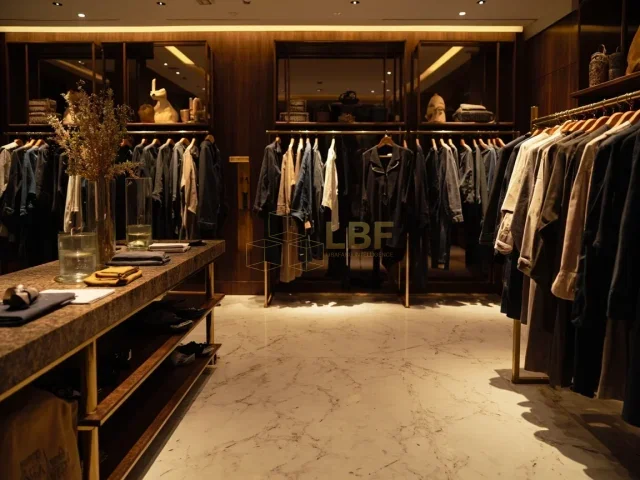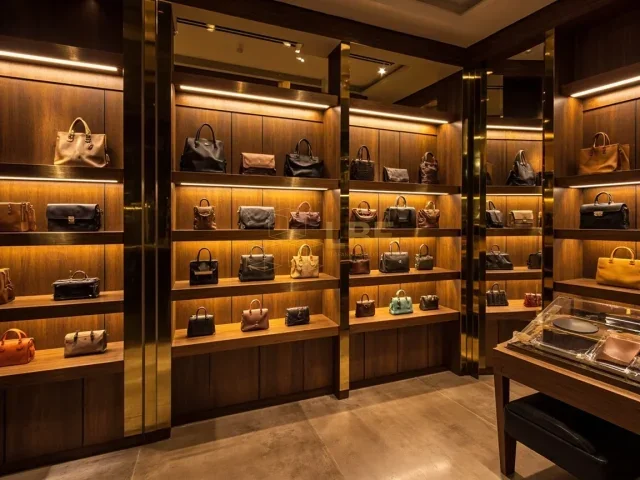
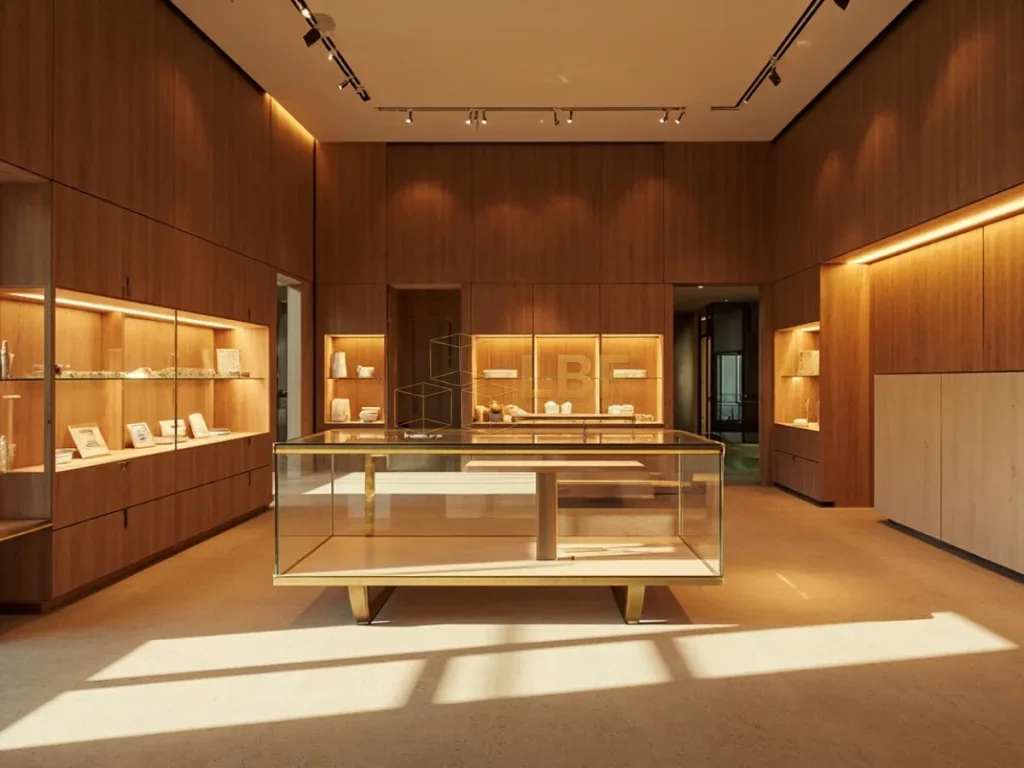
A structured handbag is a piece of engineering: leather panels under tension, a reinforced base, stiffened handles and a lining that holds volume. Put that same bag on a plain shelf for a season and gravity plus humidity start to undo the maker’s work. Handles slump forward, the gusset creases, the base corners soften, and a bag that retailed at full price starts to look like a sample. Luxury handbag display supports exist to prevent exactly this: they transfer load away from the leather, hold the silhouette the designer intends, and keep the interior open enough that a shopper can see and reach in without collapsing the form.
This article covers how supports work mechanically, which types suit which bag shapes, and the material and dimension choices that matter when you specify them for a store or museum case.
Why a handbag needs internal support, not just a nice surface
Two forces work against a displayed bag: gravity and the repeated handling of customers. In a busy boutique, a single shelf bag may be lifted, opened and refolded 20–40 times a week. Each handling compresses the gusset and softens the base; within a few months a tote can visibly lose 5–10 mm of height and develop a permanent lean.
External presentation alone—a riser, a platform, good lighting—does not solve this. External support keeps the bag upright but lets the interior collapse inward, which is where creasing starts on smooth calfskin and where quilting loses its loft. Internal support is the part that maintains volume: a form that follows the bag’s interior cavity and holds the panels in the position they were cut and stitched for.
The right support should be invisible to the customer and obvious in the result. The bag should look full but not stuffed, upright but not rigid, and readable from a distance of two metres.
Four support types and the bags they suit
Support design follows bag geometry. In practice, most retail presentation uses four categories:
- Crescent inserts — curved forms that follow the interior of hobo, slouch and half-moon bags. They maintain the dip of the top line without flattening it. Typical wall thickness is 1.5–3 mm so the insert does not read as a hard edge under the leather.
- Saddle and tote forms — rigid or semi-rigid bodies shaped to the interior footprint of structured totes, satchels and top-handle bags. These carry the base load and keep the gusset panels parallel, which is what protects the corner stitching.
- Base cradles — shallow trays or profiled pads that hold the bottom in shape while leaving the upper body soft. Useful for soft leather bags and for clutch and evening styles that should not be over-supported.
- Handle and strap rests — small hooks, bridges or armature rests that take the weight of a top handle or shoulder strap so the leather is not stretched by its own hardware during long display periods.
Many premium installations combine two of these: a tote form inside the bag, and a handle rest that carries the load of the top handles so the attachment points are not under constant tension.
Materials: what touches the leather matters most
The interior surface of a support is in continuous contact with lining and, near the top edges, with the bag’s own leather. Material choice therefore has to address abrasion, colour transfer plasticiser migration and humidity.
Micro-foam or suede-look linings are the standard for contact surfaces: they are soft enough not to polish or burnish the leather and they hold the bag in place without adhesive. Uncoated foam and some low-grade felts can leave residue or transfer dye, particularly on light-coloured lambskin, so specify a lining that has been tested for colourfastness against leather and textile linings.
The structural core should be dimensionally stable across normal retail humidity—typically 40–60% RH—and should not warp if a bag is lifted with the insert still inside. Acrylic, rigid foam board and formed polymer cores are common; each has a different weight-to-stiffness ratio, which matters if staff reposition displays daily.
Tolerance is a design decision. An insert cut to the exact interior dimension will either not fit or will over-stress the seams. A working clearance of 2–5 mm around the interior perimeter is normal, with the form touching the bag along the base and two opposite walls rather than all four.
Specifying supports for jewelry and watch retail environments
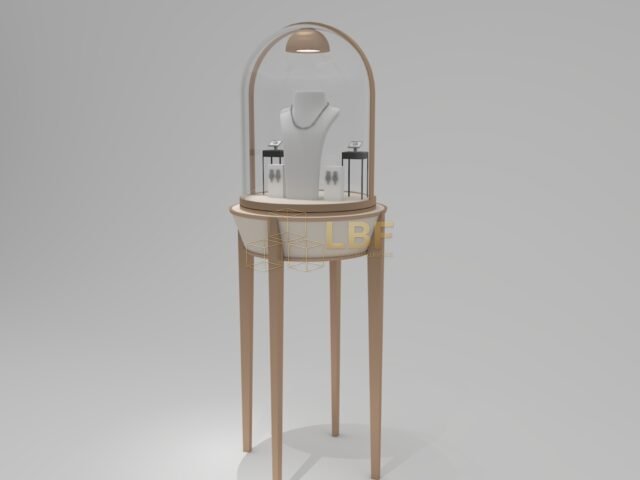
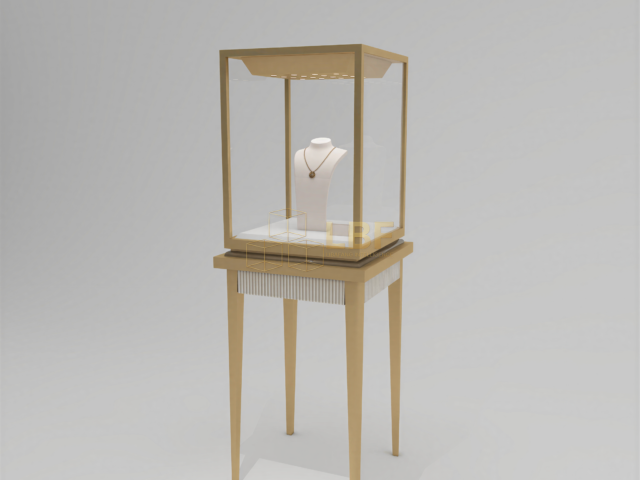
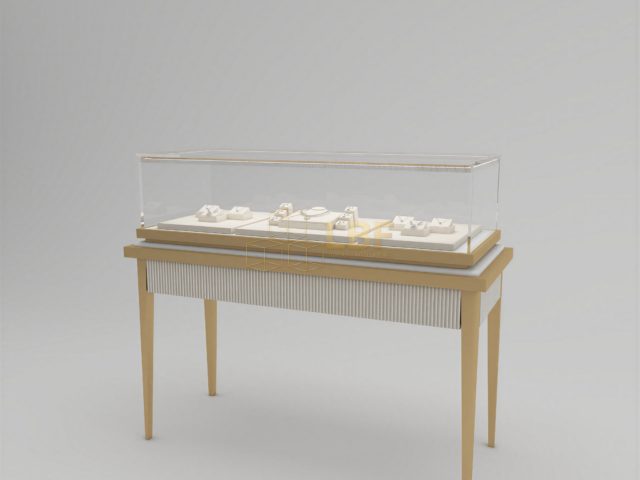
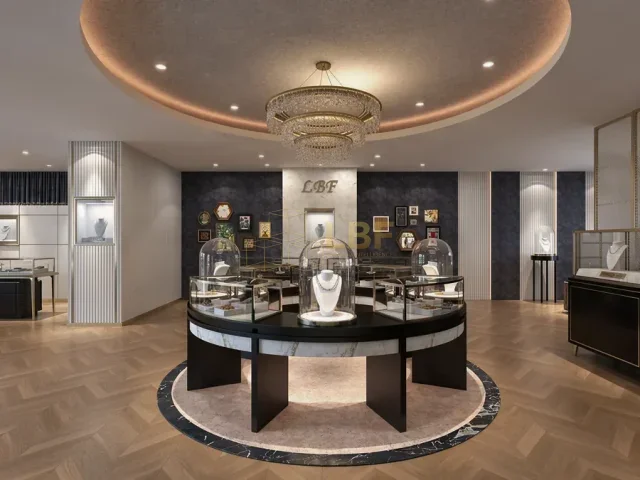
Handbag displays rarely live alone. In jewelry and watch boutiques they sit within a wider case composition, which imposes its own constraints: shallow depths, glass lids, lockable cases and lighting that reveals every surface defect.
- Measure the case first, the bag second. Record interior case depth, lid clearance and the height of any riser. A tote that stands 30 cm tall needs roughly 8–10 cm of clearance above the handle arc to avoid contact with glass.
- Match support height to bag height. As a rule, a full interior form should reach 70–85% of the bag’s interior height. Higher than that and the bag looks over-filled; lower and the top line sags.
- Check lighting direction. Raking light from the side will show any bulge where the insert presses the leather. Rotate the bag and support together during approval.
- Plan for rotation. Bags that stay on display beyond 6–8 weeks benefit from a second support profile or a periodic rest so the leather is not compressed in the same place indefinitely.
- Coordinate finishes. Support exteriors are rarely visible, but base cradles sometimes are. Specify a finish that either disappears into the case lining or reads as intentional.
For museum and archive settings the priorities shift again: inert materials, documented contact surfaces and supports that can be removed without handling the object more than necessary. Libafang builds display supports to both retail and conservation tolerances, which is why the specification stage matters more than the product catalogue.
Common mistakes that cost shape and margin
The most frequent errors are consistent across stores. Over-stuffing with tissue or generic pillow inserts creates pressure points at the seams and produces shiny patches on smooth leather within weeks. Under-supporting a structured bag lets the base bow and the handles fall inward, which reads as poor quality to a customer. Using one insert across a size run flattens the smaller bags and leaves the larger ones unsupported.
Fit is bag-specific, not brand-specific. Two totes from the same line, one size apart, can need different support profiles. The practical solution is to measure a representative sample of each style, cut profiles to those measurements, and label the supports so staff return them to the correct bag after each customer interaction.
A well-made support is inexpensive relative to the value it protects. If a support preserves the appearance of even one leather bag through an extra selling season, it has paid for itself many times over—and it protects the perception of the whole display, not just the single item.
If you are planning a handbag presentation for a boutique, jewelry store or exhibition case, send us your bag dimensions and case drawings. Libafang will propose support profiles, contact-surface materials and a dimensioned drawing for approval, plus a free design and quote so you can compare options before committing to tooling.