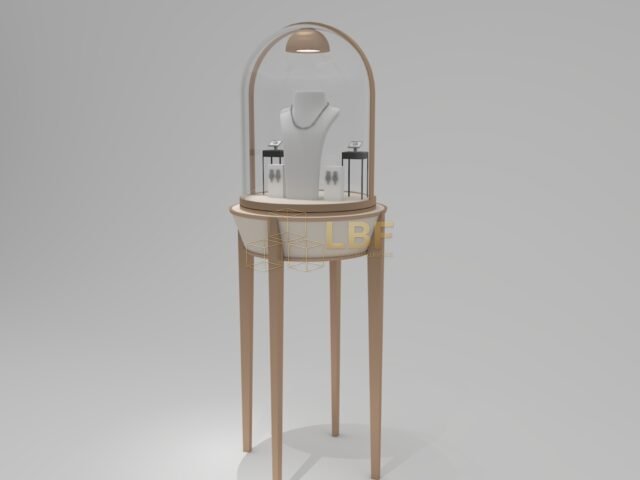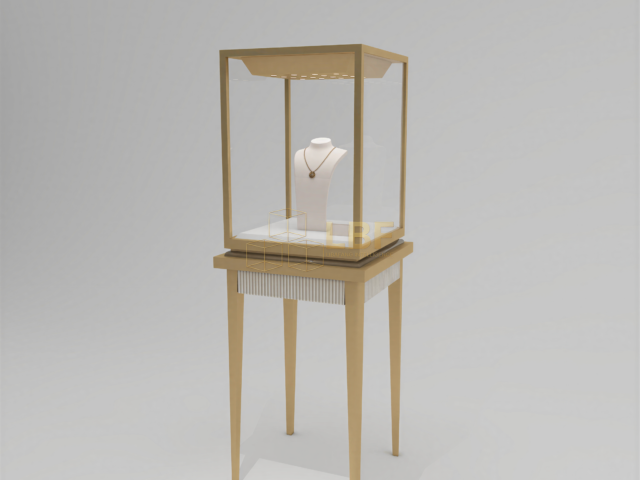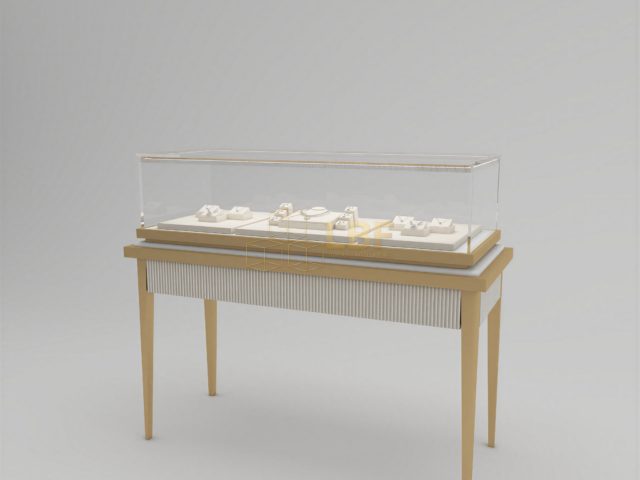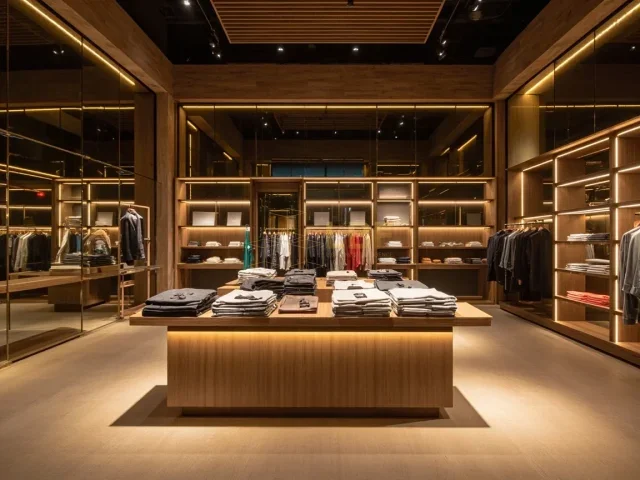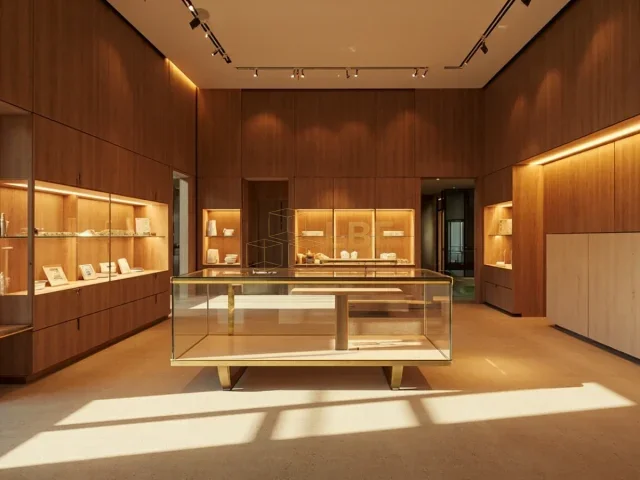
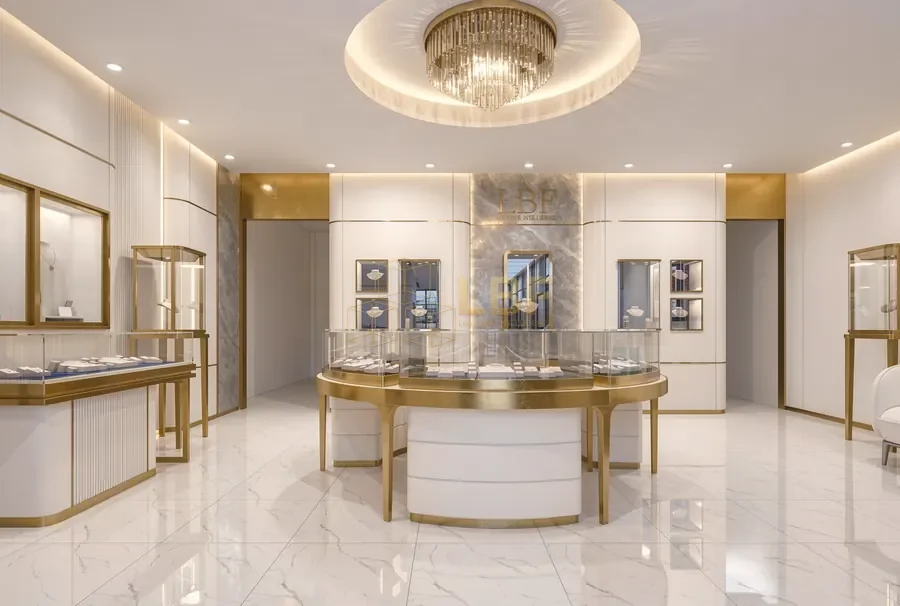
Approving a full set of display fixtures for a jewelry store, watch boutique or museum gallery is rarely a small decision. A 60-square-meter boutique might need 40 to 80 fixture units, and at typical custom-fabrication pricing that commitment can run well into six figures. The mistake that costs the most is not choosing the wrong finish — it is discovering, after installation, that the drawers do not clear the counter edge, the watch cushions do not sit at eye level, or the lockable vitrine cannot be opened fully because the aisle is 900 mm instead of 1,100 mm. Luxury retail fixture prototypes exist to catch exactly those failures while the fix still costs hundreds rather than tens of thousands of dollars.
What a Real Prototype Should Prove
A prototype is not a shop-drawing review with a sample of material stapled to it. It is a physical, full-scale or near-full-scale build of the critical fixture — usually one counter, one wall vitrine, one tower or one island — that can be loaded with the actual product and operated the way a client will operate it. Before signing off on a full store, the prototype should answer four questions definitively: does the product fit and present well, does the fixture function under daily use, does the finish survive handling, and can the design be reproduced at scale without drift.
Product fit is the first and most expensive thing to get wrong. Jewelry trays, watch rolls, ring stands and museum mounts all have real dimensions that must be measured, not assumed. A standard ring tray may be 350 × 240 mm, a watch display cushion may add 60 mm of depth, and a necklace bust can require 300 mm of vertical clearance. If the vitrine interior is 400 mm deep but the client’s tray system needs 430 mm, no amount of beautiful joinery will fix it. Build the prototype around a measured product inventory, not around a rendering.
Setting Tolerances and Dimensions Before You Cut Material
The most useful prototype conversations happen before fabrication starts, when dimensions are still negotiable. Agree on a tolerance budget up front — typically ±1 mm on glass-to-frame gaps, ±2 mm on drawer reveals, and ±3 mm on overall carcass dimensions for a custom wood or metal fixture. Confirm the human factors as well: counter working height usually sits between 900 and 1,000 mm; the primary display zone for standing customers falls roughly between 1,200 and 1,600 mm; and a lockable vitrine needs at least 600 mm of clear swing to open comfortably.
Lighting deserves the same rigor. Jewelry and watch presentations typically use 3000K to 4000K light with a CRI above 90, because lower-CRI sources make diamonds look flat and steel look grey. Confirm the beam angle, the distance from lens to product, and whether heat from the fixture will affect delicate materials. A prototype lets you test the actual LED module and dimming behaviour rather than reading a datasheet.
A Practical Prototype Test Sequence
Run the prototype through a structured sequence so nothing is signed off on appearance alone. The steps below take roughly one to three days on site and are worth every hour.
- Load the real product. Use the client’s actual trays, mounts and stock, not placeholders. Photograph every configuration.
- Operate the hardware. Open and close every drawer, door and lock at least 50 times. Check for binding, sag and alignment drift.
- Test sightlines. Stand where a customer stands, sit where staff sit, and check the display zone from 1, 2 and 3 meters away.
- Verify lighting. Measure illuminance at the product surface, check for glare on glass and confirm dimming to the intended scene levels.
- Stress the finish. Wipe with the client’s cleaning agents, test fingerprint visibility on metals and glass, and check edge details for sharp points.
- Check service access. Confirm that cabling, drivers and locks can be reached without dismantling the fixture.
Record each result against the original brief. Anything that fails gets corrected in the prototype, and the corrected drawing becomes the production standard.
What Prototypes Cost — and What They Save
A single full-scale custom fixture prototype from a Guangzhou workshop typically runs 8 to 15 percent of the cost of one production unit, depending on materials and hardware. For a boutique with 50 fixture units, the prototype is a small fraction of the total budget. Compare that with the cost of a production error: a mis-sized drawer bank across 20 wall units can mean remanufacturing, re-shipping and re-installing, easily 30 to 50 percent of the affected fixture value, plus weeks of delay on a store opening date that is already public.
Prototyping also accelerates approval. When a client can stand in front of the actual fixture and load their own product, sign-off decisions move from weeks of email to a single review session. For teams exporting to markets with strict electrical and fire requirements, the prototype is also the moment to validate wiring, LED drivers and cable routing against the destination market’s standards.
Adapting a Validated Prototype Across Stores
Once a prototype passes, treat it as the master reference for every subsequent store. Document dimensions, hardware part numbers, finish codes, lighting specifications and assembly sequence. Keep one reference unit in storage so future production runs can be compared against it. This matters especially for retailers rolling out multiple locations across different countries — the visual language must stay consistent while electrical and shipping requirements change. Libafang builds prototypes and production runs from the same documentation, which keeps the second store identical to the first.
A prototype is a control document as much as a piece of furniture. When it is measured, tested and recorded properly, it becomes the single source of truth that protects budget, schedule and brand consistency across an entire retail network.
Planning a boutique, watch salon or museum installation? Send your product dimensions, floor plan and finish references, and Libafang will return a prototype proposal with a free design and quote within a few working days.