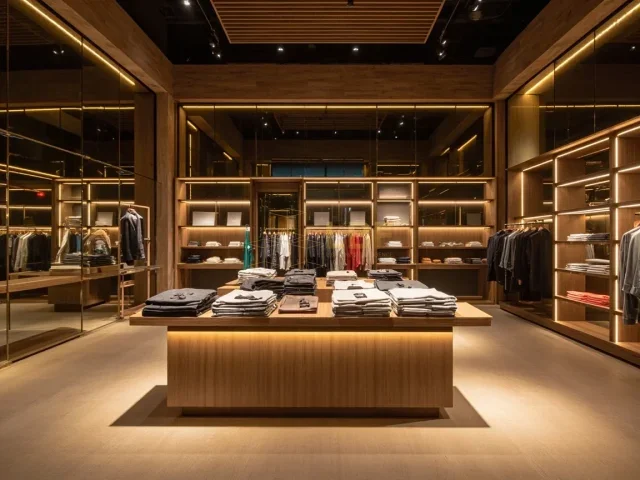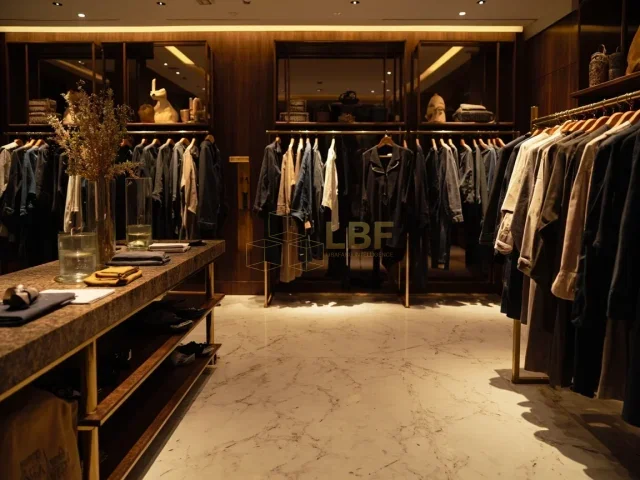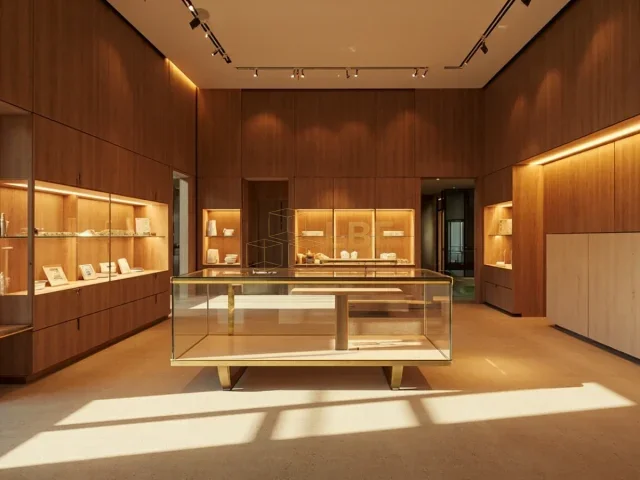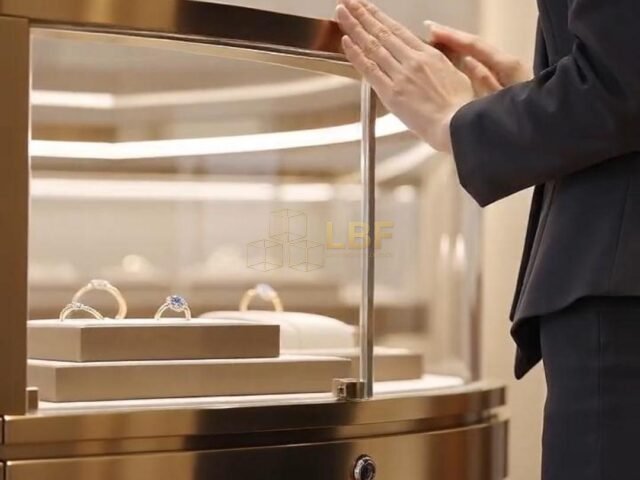
Museum display case back panels are the quietest element in any vitrine and often the hardest to specify well. A panel that is too bright competes with the object; one that is too dark swallows detail in low light. The backing also has an outsize influence on conservation: an unsuitable board can off-gas acids, trap moisture, or abrade a textile every time it is mounted. This guide covers what actually matters when you choose museum display case back panels — from reflectance figures and fabric weights to board chemistry and lead times — so the final decision is based on measurable criteria rather than habit.
Start with a Contrast Target, Not a Colour
Contrast is the main functional job of the back panel. Curators usually describe what they want as “the object should stand out,” which is not a specification. A more workable target is a luminance ratio between object and background of roughly 3:1 to 5:1, achieved through surface reflectance rather than brighter lighting. For most museum objects a matte background in the 4%–12% light reflectance range sits in a safe band: sufficient separation without a hot surround that flattens gemstone facets, watch dials or metalwork.
Reflectance can also be lower or higher for a reason. Photographs, documents and pale textiles render very well against a mid-grey around 18%, because a mid-tone background stabilises the eye’s interpretation of the object’s own tones. Dark metalwork, uncut minerals and most watch movements benefit from a slightly warmer, lower-loss surround in the 6%–8% range. Jewellery with high-fire stones and fine engraving usually needs a cooler neutral so that light bounced off the backing doesn’t drag colour into an otherwise colour-accurate display.
Material Suitability: What the Board Is Made Of
Colour and reflectance decisions are meaningless if the substrate is wrong. Museum-grade backing boards should be tested and reported as ISO 9706 permanent paper or an equivalent with an alkaline reserve, and should be explicitly described as low- or zero-outgassing. Standard MDF, particleboard and many painted plywoods are not appropriate inside a sealed case: they may release formaldehyde and organic acids that corrode silver, accelerate tarnish on watches, and discolour prints. If a rigid structural panel is required, specify a barrier film or an aluminium composite core and seal all cut edges — cut edges are where most off-gassing occurs.
Humidity buffering is the second suitability test. A paper- or cotton-based facing over an inert core will breathe slightly and help damp short-term humidity swings inside a tight case. Foam-backed panels will not, and in a case that sees large lamp-driven temperature swings a non-buffering panel can accelerate condensation risks on metal surfaces. Finally, consider abrasion: a backing that will be brushed by the object during installation needs a fabric facing with enough body to resist pilling, not a spray-coated finish.
Fabric Facings: Weight, Weave and Colour Fastness
Most museum display case back panels are faced rather than painted, because fabric distributes reflected light evenly and hides small imperfections. Three numbers to ask suppliers for:
- Weight: 180–260 g/m² suits most display panels; below 150 g/m² the weave shows through and tends to pill, above 300 g/m² it can shadow at the panel edges.
- Colour fastness to light: aim for grade 5–6 on the blue wool scale for panels that will face 50–200 lux for years, since a faded backing shifts the contrast balance you originally designed.
- Fibre content: 100% linen or cotton-wool blends are stable and visually matte; polyester blends are cheaper and lightfast but can look specular under LED spots and may crease.
Textured weaves such as linen slub or fine bouclé are effective in large cases because they break up reflections without producing visible pattern at object scale. If the case is deep (over 600 mm), a slightly heavier, more directional weave reads better across the far viewing distance.
Lighting Interaction and Glare Control
The back panel sits inside the lighting scheme, not outside it. Cases running 4000 K LED at 150–200 lux on the object will render a warm panel noticeably warmer; check the proposed backing under the actual lamp and at the actual intensity before approving a sample. Matte finishes help, but matte alone doesn’t eliminate glare in deep cases viewed from an angle. Tilting the panel by 2°–3°, or choosing a fabric with a slight directional sheen that faces away from the visitor side, removes most hot spots without touching the lighting design.
Serviceability, Lead Time and Design Consistency
Backing panels get scratched, sun-faded and occasionally marked during installation. Design them to come out. Spring clips, magnetic fixings or concealed top-hung channels mean a panel can be swapped in minutes by one technician rather than dismantled from the front. In a long gallery run, holding one approved fabric and one control sample means replacement panels match across years rather than batches.
Plan specifications early. A tested, fabric-faced panel with cut-edge sealing typically needs 2–4 weeks for sample approval plus production; bespoke colours and heavy weaves add time. Ordering backing as a design decision rather than an accessory avoids the common scenario where objects are ready but the case is not. At Libafang, panels are specified alongside the case frame and glazing so reflectance, board chemistry and fixing method are fixed in one document, and library samples are kept for repeat orders.
Specifying in Practice
Build a short specification sheet that a fabricator can price without guesswork: board type and test standard, reflectance figure with a tolerance of ±2%, fabric weight and lightfastness grade, fixing method, cut-edge sealing, and a photo of the approved control sample under the project lamps. That single page resolves most of the day-to-day ambiguity around museum display case back panels, and it gives you a reference point for condition checks two or five years after opening.
Need a backing and case specified together? Libafang provides custom display cases for museums, jewellers and watch boutiques with sample panels supplied for on-site review. Request a free design and quotation and we will propose a back-panel specification matched to your objects, lighting and humidity requirements.