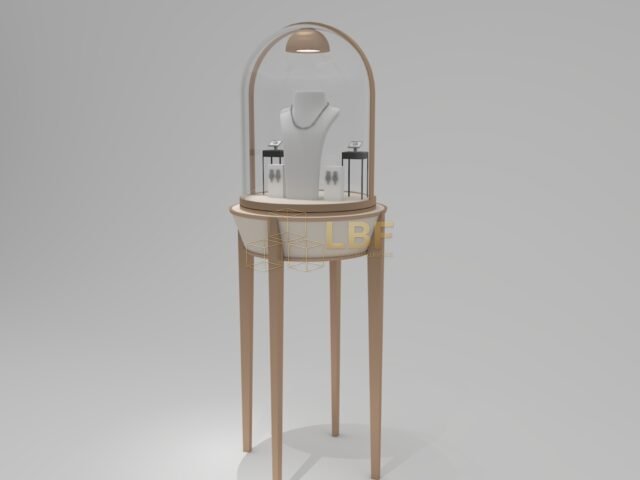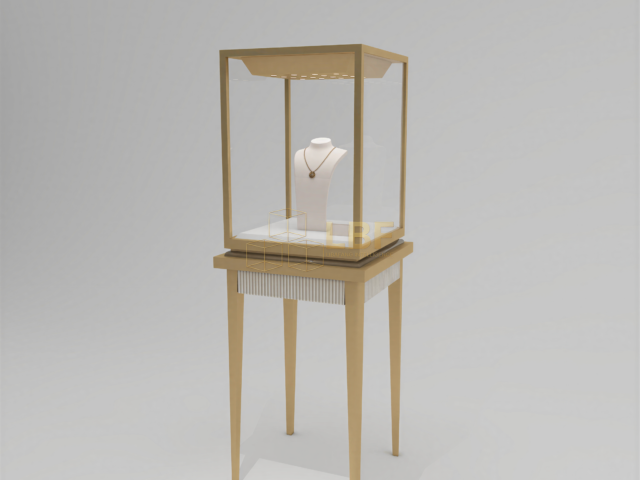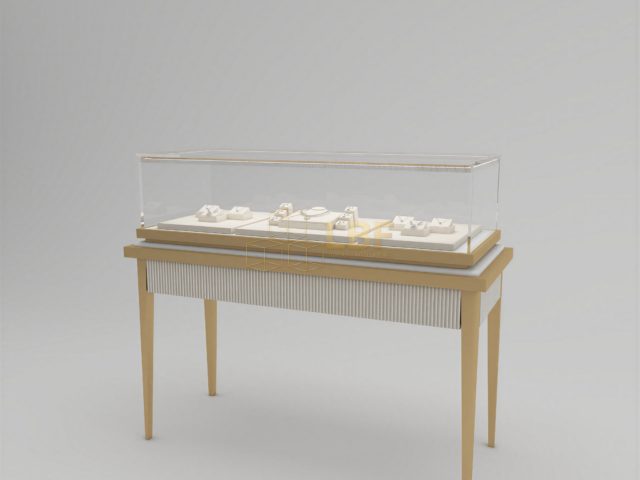
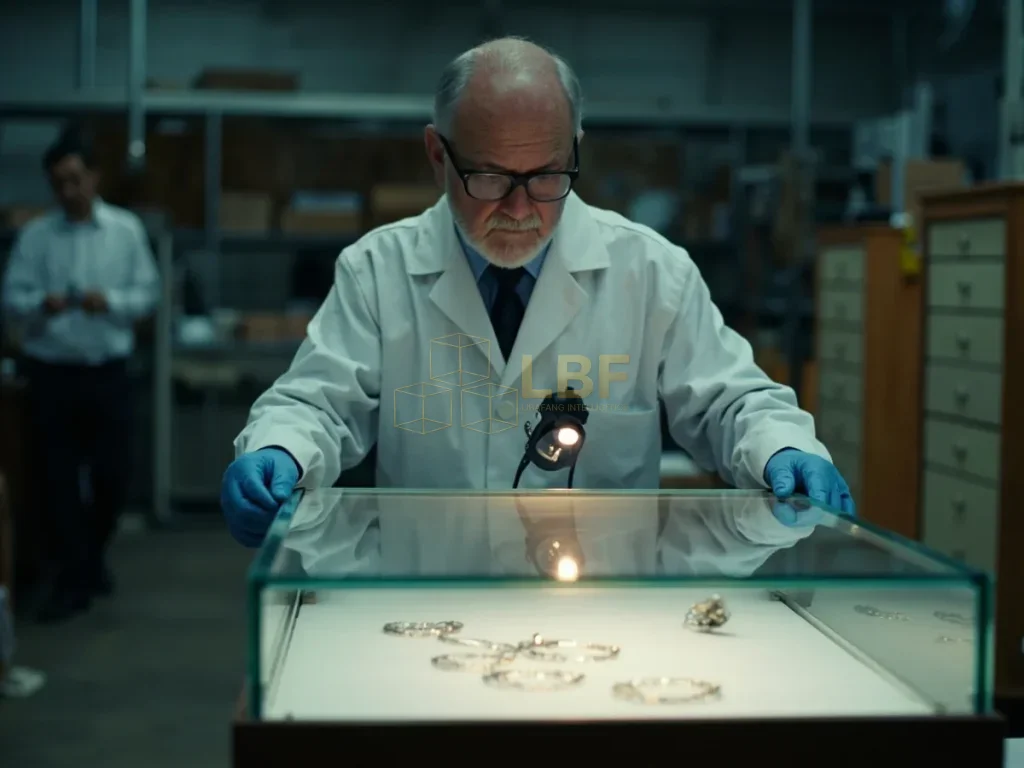
Most display case failures are not aesthetic. They are dimensional. A mount that clears the object by 4 mm but blocks the lid, a door swing that clips a plinth, a light fixture that forces a courier to remove the vitrine glass during installation — these problems are cheap to fix on cardboard and expensive to fix on finished museum-grade cases. That is why serious institutions and fabricators now treat museum display case mockups as a design deliverable, not an optional extra. A full-scale mock-up, built from foam board, MDF or 3 mm corrugated board plus the actual mount, typically costs 3–8% of the finished case price and resolves the majority of fit and access conflicts before the metal is cut.
Build the mock-up at true scale, including the invisible parts
A half-scale model hides exactly the problems that matter. Dimensions in a museum case have tolerances measured in millimetres: a 1,200 mm-wide case with an 18 mm reveal will not accept a 1,190 mm object plus a 15 mm mount if the mount also needs a lip. Build the mock-up at 1:1 and include the parts nobody photographs: the internal frame, the plinth, the deck thickness, the gasket rebound and the moving parts of the control. If the final case has a sealed deck with a 40 mm gasket compression allowance, the mock-up must have that 40 mm taken out of the usable height, not added afterwards.
For objects on loan, model with a dimensional envelope 10 mm larger than the measured object on every axis. Couriers measure; if the case has only 5 mm clearance, you will be asked to rework it on site.
Test object fit through the full range of motion
Fit is not just “does it sit inside”. It is a sequence of moves. Set the mock-up on a flat floor and walk the object through each step a technician will perform, using a surrogate of the same mass and centre of gravity — a sandbag or weighted board wrapped in foam is usually enough. Check these in order:
- Pass-through: does the object clear the opening, lintel and door frame with both hands on a lifting strap?
- Rotation: can the object be turned to its final orientation once inside, with room for fingers and gloves?
- Seating: does the mount meet the object with the deck fully down, and is the last 20 mm of travel guided rather than forced?
- Removal: reverse the whole sequence under time pressure — the true test of a case is whether a de-install can happen in a 15-minute closing window.
Pay special attention to the smallest and largest objects in the rotation, not the hero piece. Cases are often designed around one object and then re-used for a travelling show with deeper frames.
Sightline and curatorial access must be tested together
Curatorial access fails when the case is optically perfect but physically hostile. Tape a floor marking 600 mm from the intended visitor path, then crouch and view the object at eye level from a seated position (about 1,150 mm) and a standing one (about 1,600 mm). Mark on the mock-up the zone where a label rail, a case-front light or a security fitting will sit, and confirm it does not bisect the object.
Then test access with your actual team. A glass door that opens 90° on paper may only open 62° before it meets a plinth, which turns a two-person lift into a three-person lift. Common checkpoints:
Door swing and clearance: at least 750 mm of free aisle behind the operator. Deck removal: a deck that lifts out should weigh under about 20 kg for a single technician. Fasteners: if the case has more than eight tool-turned fixings per opening, installation time overshoots.
Run a deliberate failure test before sign-off
The mock-up stage exists to find the failure you did not expect. Spend one hour trying to break the design. Simulate a courier condition report with a tape measure and record every measurement. Simulate loss of power to any internal lock, and confirm there is a manual release. Simulate a mount swap by fitting a smaller object into the same cradle — if it rattles, the mount needs an adjustable insert.
Capture the results as a simple fit sheet: object ID, surrogate dimensions, clearances on all six faces, pass-through time, number of people required and any conflict noted. This document follows the case through fabrication and becomes the reference for condition reporting at install.
What good mock-ups change downstream
On a typical 20-case museum project, a disciplined mock-up phase adds roughly 2–3 weeks to the schedule and avoids the change orders that appear when a case arrives and the object will not seat. Fabricators who build mock-ups in-house can usually rework them the same day, since the mock-up uses the same deck geometry as the production case. At Libafang, mock-up builds are produced alongside shop drawings so the mount and the case frame are validated together rather than in isolation.
Keep the mock-up after sign-off. Store it flat, label it with the project number and object list, and reuse it when the gallery is refreshed. It is the cheapest way to confirm that a case can take a new acquisition before anyone commits to crating an object for travel.
Planning a new gallery or a case replacement? Send your object dimensions, viewing distances and access constraints, and request a free design and quote — Libafang can return a fit-conscious proposal, including a mock-up scope, within a few working days.